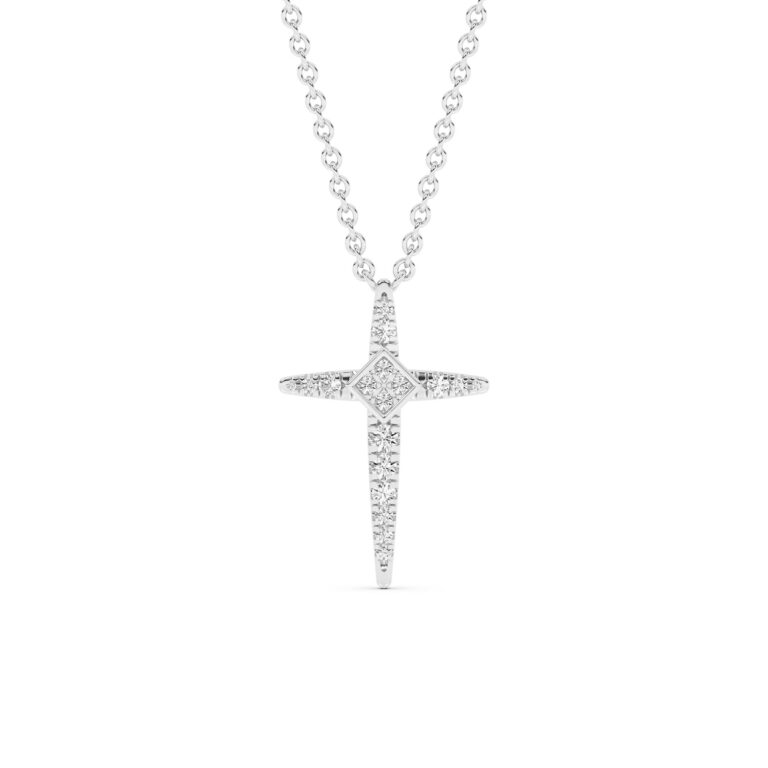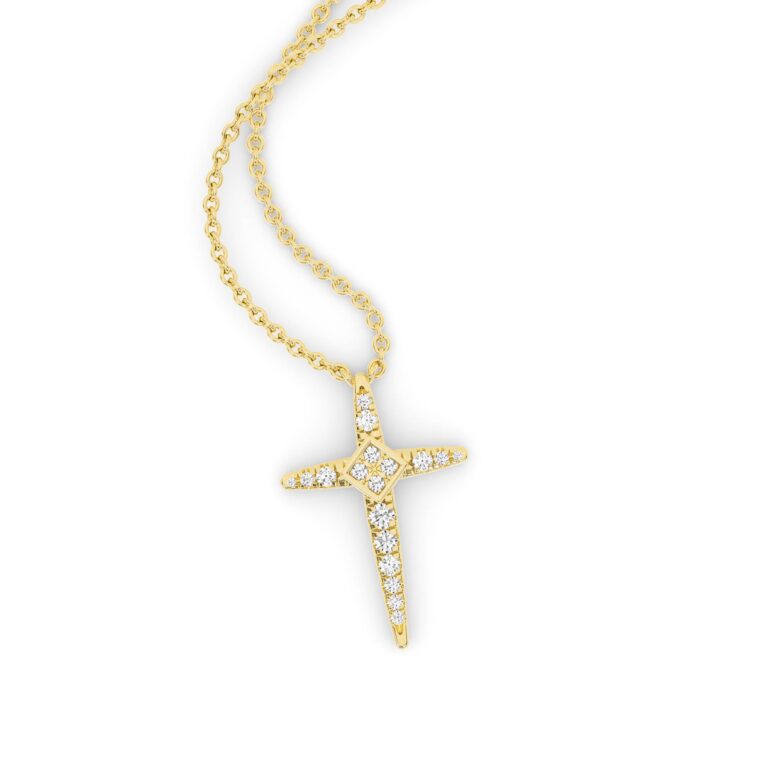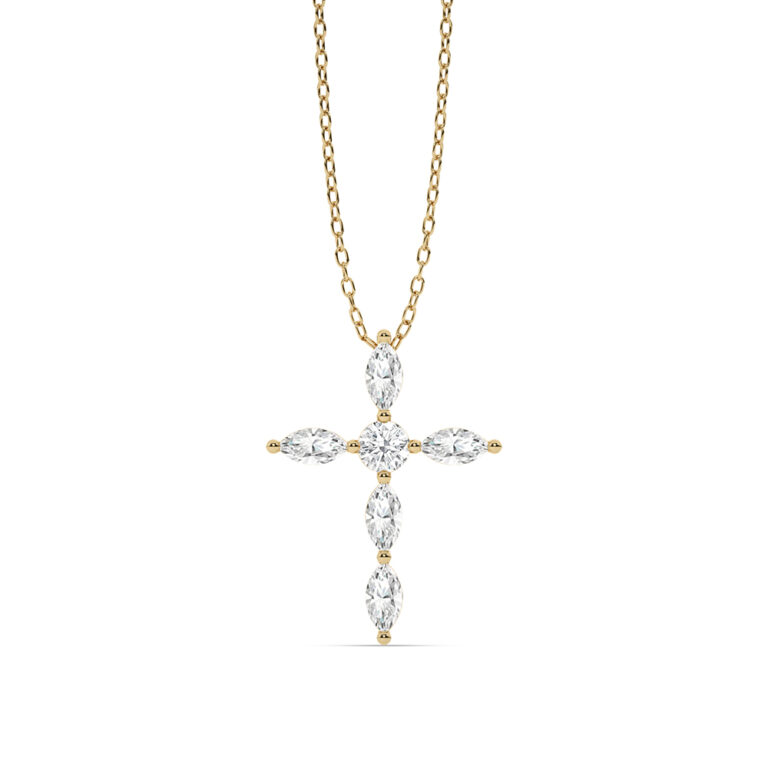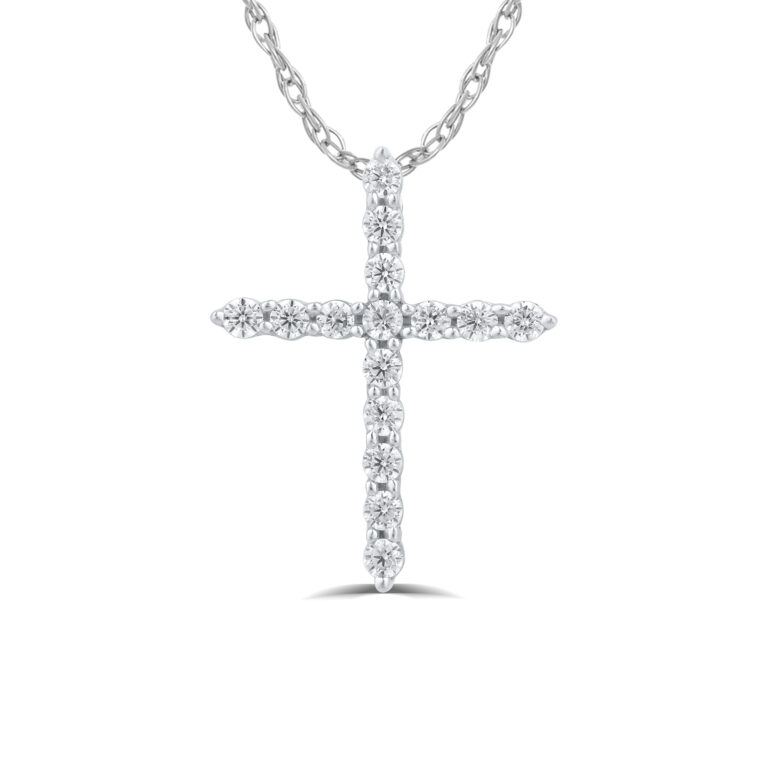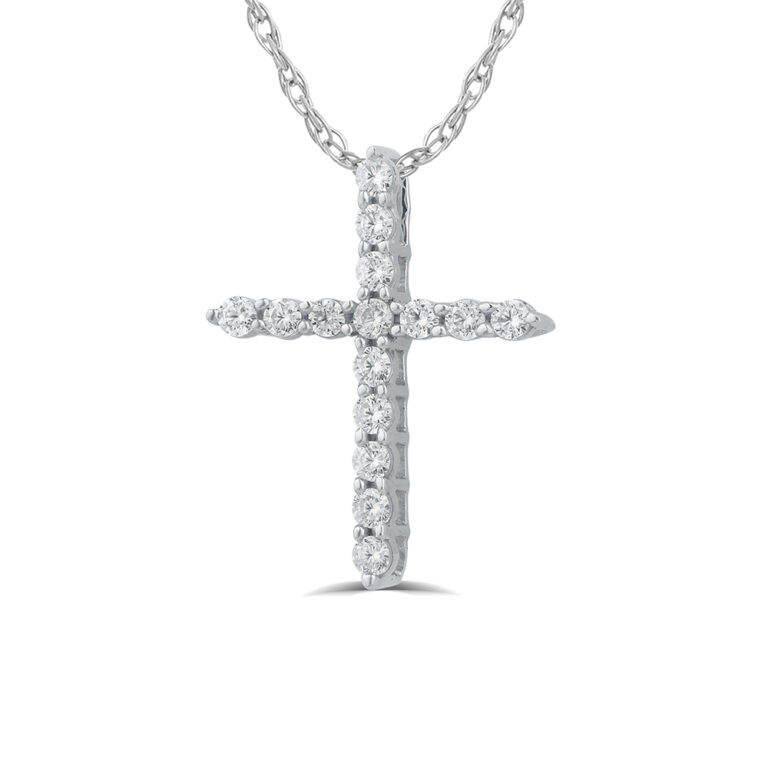
Buying fine jewelry often feels like navigating a maze of confusing terms. Many clients sit in my office worried about making the wrong choice for a diamond cross necklace gift. They frequently ask if a lab-created piece truly qualifies as a real diamond cross pendant. My answer is always a definitive yes.
After thirty-five years of sourcing and manufacturing fine gems, I can assure you the definition of a diamond remains unchanged. Only the origin of the stone has evolved.

What Defines a Real Diamond in Today’s Fine Jewelry?
A true diamond is defined entirely by its crystallized carbon structure, regardless of whether it formed underground or in a laboratory. Because of this exact chemical composition, lab-grown gems possess the identical brilliance and hardness as mined stones.
During my three decades in the trade, I have examined thousands of raw and polished crystals. Decades ago, our family business relied exclusively on earth-mined gems. However, modern science has perfected the growth process. Consequently, even a master gemologist cannot tell the difference between the two without highly specialized testing equipment.
We now craft every piece using these modern marvels because they offer our clients uncompromised quality in every lab grown diamond pendant we create.

How Does the Growth Process Create Authentic Carbon Structures?
High-Pressure High-Temperature (HPHT) and Chemical Vapor Deposition (CVD) methods recreate the exact conditions found deep within the earth to form real diamonds. By replicating this intense heat and pressure, the resulting rough stone emerges as pure, crystallized carbon. While this is true scientifically, the practical benefit for you is absolute durability.
Therefore, the stones we set will never fade, cloud, or lose their fire over time. Sitting at my grading desk, I inspect these laboratory gems daily. The structural integrity of these crystals allows our master cutters to achieve perfect symmetry on the polishing wheel, ensuring you get the best diamond shape for your cross pendant.

Why Do Industry Veterans Choose Lab-Grown Over Earth-Mined Stones?
Industry experts prefer lab-grown stones because they deliver a visibly superior, structurally identical, and conflict-free diamond without the inflated mining markup. Why pay a premium for earth-mined when a laboratory stone gives you significantly better clarity and cut for your investment?
Using our future value calculator tools, you can see exactly how much your wealth could grow five years down the line if you take the money saved by choosing a lab-grown stone over a natural one on day one and invest it, fundamentally changing how you view your overall Diamond Cross Necklace Cost.
Over the years, I watched traditional supply chains artificially inflate prices. As an added bonus, removing the mining process entirely eliminates those hidden costs. This efficiency allows us to focus entirely on the heavy gold craftsmanship of the piece. Explore La Joya’s diamond cross collection to see this value firsthand.
| Feature | Earth-Mined Diamond | Lab-Grown Diamond | Practical Benefit |
| Chemical Composition | Pure Carbon | Pure Carbon | Identical brilliant sparkle. |
| Hardness (Mohs Scale) | 10 | 10 | Resists daily scratches perfectly. |
| Origin | Excavated | Scientifically Grown | Guaranteed conflict-free sourcing. |
| Value for $2,700 | Lower Carat/Clarity | Higher Carat/Clarity | Maximizes your purchasing power. |

The Durability of 14k Gold in Daily Wear for Pendants
Solid 14k and 18k gold provide the optimal balance of tensile strength and luxurious luster for securing fine diamonds. Because these specific alloys resist bending, they keep the delicate prongs of your pendant firmly in place.
Some jewelers push platinum, but I have found it scratches easily and dulls over time. Conversely, whether you are choosing between yellow gold vs. white gold diamond cross necklaces, the high-quality metal maintains its premium finish with basic care. We engineer every setting in our collections to withstand decades of daily use.
To achieve this lasting durability, our casters precisely mix pure gold with strengthening metals.

How Does Master Craftsmanship Elevate a Real Diamond Cross Pendant?
Expert cutting and precise setting are the two factors that unlock the true light performance of a real diamond cross pendant. A poorly cut stone will look lifeless, even if it has flawless clarity. Therefore, our artisans spend hours on the cutting wheel ensuring every facet aligns perfectly to reflect maximum light.
I personally oversee our sorting process, rejecting any gem that shows the dreaded “bow-tie” effect or poor proportions. After polishing, our setters secure each gem into thick gold baskets rather than flimsy mounts. This meticulous engineering prevents the piece from twisting or flipping while worn—a crucial detail when mastering how to wear a diamond cross necklace elegantly.
Conclusion
Generations of my family have built our reputation on delivering true luxury and honesty to our clients. Choosing a lab-grown centerpiece is simply the smartest way to acquire a stunning, heritage-quality piece that captures the true meaning of a diamond cross necklace. La Joya Jewelry remains committed to providing you with expertly crafted diamond necklaces and modern heirlooms that will shine brilliantly for a lifetime.