Buying a diamond engagement ring is one of the most high-stakes purchases you will ever make. It is easy to feel overwhelmed by technical jargon and confusing grading reports. This diamond clarity guide will give you the exact tools you need to make a wise choice.
By looking past the marketing noise, you can secure a truly premium piece of fine jewelry without wasting your budget on invisible details.

What Is Diamond Clarity and How Is It Measured?
Diamond clarity measures the presence of internal characteristics called inclusions and external characteristics known as blemishes on a standard grading scale. Because these grades are assigned under severe 10x magnification, what a lab worker sees through a lens is vastly different from what you see in daily life.
In my 35 years in the diamond industry, I have watched countless buyers stress over tiny grading details that do not impact the stone’s actual beauty. When clients sit down in my office, my first goal is to shift their focus away from a piece of paper and back to the diamond itself.
Consequently, they learn how to buy for pure visual perfection rather than an abstract rating.

Decoding the Clarity Scale: What You Actually See
The standard clarity scale includes Flawless (FL), Internally Flawless (IF), Very Very Slightly Included (VVS1-VVS2), Very Slightly Included (VS1-VS2), Slightly Included (SI1-SI2), and Included (I1-I3). While this scale provides a strict technical framework, it rarely tells the whole story of how a gem performs on the hand.
For over three decades, I have examined thousands of stones across these categories to find the best long-term value for my clients. As a result, as any good diamond clarity guide should note, I know exactly which grades offer true luxury and which ones simply drain your funds.
Before you trust a piece of paper, it helps to understand who actually prints it. Independent gemological laboratories use strict, scientific rules to grade every diamond under heavy magnification. Because this process is highly technical, I often sit down with clients and encourage them to review the official grading methods from trusted institutions like the International Gemological Institute.
While these labs provide a perfect baseline for facts, my job is to translate their raw data into real-world beauty for you. Consequently, you can feel completely safe knowing your stone is certified by neutral scientists but hand-selected by a jewelry expert.
| Clarity Grade | Technical Meaning | Real-World Visual Impact | Expert Verdict |
| FL / IF | No internal flaws at 10x zoom. | Completely clear to the bare eye. | Overpriced for daily wear. |
| VVS1 / VVS2 | Minute flaws hard to see at 10x zoom. | Completely clear to the bare eye. | Beautiful, but still a premium cost. |
| VS1 / VS2 | Minor flaws seen at 10x zoom. | Completely clear to the bare eye. | The “Smart Luxury” sweet spot. |
| SI1 / SI2 | Noticeable flaws at 10x zoom. | Flaws may be seen by the bare eye. | Requires strict expert curation. |
Why Is the “Eye-Clean” Secret Better Than a Flawless Certificate?
An “eye-clean” diamond has flaws that are entirely invisible to the naked human eye, typically falling within the VS1 or VS2 clarity range. Since these tiny marks cannot be seen without special tools, paying double the price for a Flawless stone is a poor use of your budget.
I often explain to couples that big brands try to sell the certificate, but true experts sell the stone. Because of this, I guide my clients toward the VS1 and VS2 ranges, ensuring they get a visually perfect diamond.
As an added bonus, those saved funds can go toward a larger carat weight or a more intricate 18k gold setting.
Are Black Inclusions Worse Than White Inclusions?
Black inclusions are dark carbon spots that are easily visible, whereas white or translucent inclusions blend into the facet reflections of the diamond. Knowing this visual difference is crucial because not all stones with the same grade look the same in real life.
Throughout my family’s third generation in this business, we have learned to read the actual stone rather than just the grade. Because of this, we know that a white feather mark hidden in the corner is much better than a dark carbon speck sitting right under the top table.
To achieve this level of high-end curation, we hand-select every diamond. As a result, even stones with slight inner marks remain visually perfect.

How Does Diamond Shape Change the Clarity Rules?
Brilliant cuts have complex faceting that scatters light and hides inclusions, while step-cut diamonds have long open facets that make imperfections highly visible. Because of this stark difference in light performance, the shape you choose directly dictates how much you need to spend on clarity. Over the years, I have seen buyers make the critical mistake of applying the same clarity rules to every single shape. To prevent this, every comprehensive diamond clarity guide must emphasize that intense sparkle easily masks minor internal marks, making a VS2 a great choice for a round brilliant. Conversely, if you want an emerald or Asscher cut, those step cuts act like clear windows into the soul of the stone. Therefore, you must upgrade to a VS1 or higher for those specific shapes to avoid seeing visible flaws.
Brilliant cuts have complex faceting that scatters light and hides inclusions, while step-cut diamonds have long open facets that make imperfections highly visible. Because of this stark difference in light performance, the shape you choose directly dictates how much you need to spend on clarity.
Over the years, I have seen buyers make the critical mistake of applying the same clarity rules to every single shape. ITo prevent this, every comprehensive diamond clarity guide must emphasize that intense sparkle easily masks minor internal marks, making a VS2 a great choice for a round brilliant.
Conversely, if you want an emerald or Asscher cut, those step cuts act like clear windows into the soul of the stone. Therefore, you must upgrade to a VS1 or higher for those specific shapes to avoid seeing visible flaws.

How Do Lab-Grown Diamonds Improve Clarity and Value?
Lab-grown diamonds are crystallized in highly controlled environments, resulting in stones that consistently achieve high clarity grades without unpredictable inclusions. Since mined diamonds are formed by chaotic geological processes deep underground, finding a truly clean stone is rare and extremely expensive.
I strictly advocate for lab-grown gems because they represent the modern, intelligent choice for sophisticated buyers. Because they bypass the artificial scarcity markup of the earth-mined industry, my clients get direct access to beautifully pure, high-clarity stones.
The clean look of lab-grown diamonds comes from brilliant modern science. These stones grow in controlled rooms that copy natural pressure, but they leave out the chaotic dirt found deep in the earth. To see exactly how this works, you can read about the fascinating science of diamond growth from GIA.
Because of this highly clean environment, the resulting diamonds have far fewer internal marks. As a result, you get a premium, pristine gem that makes the absolute most of your luxury budget.
What Is the Artisan’s Secret to Setting Diamonds?
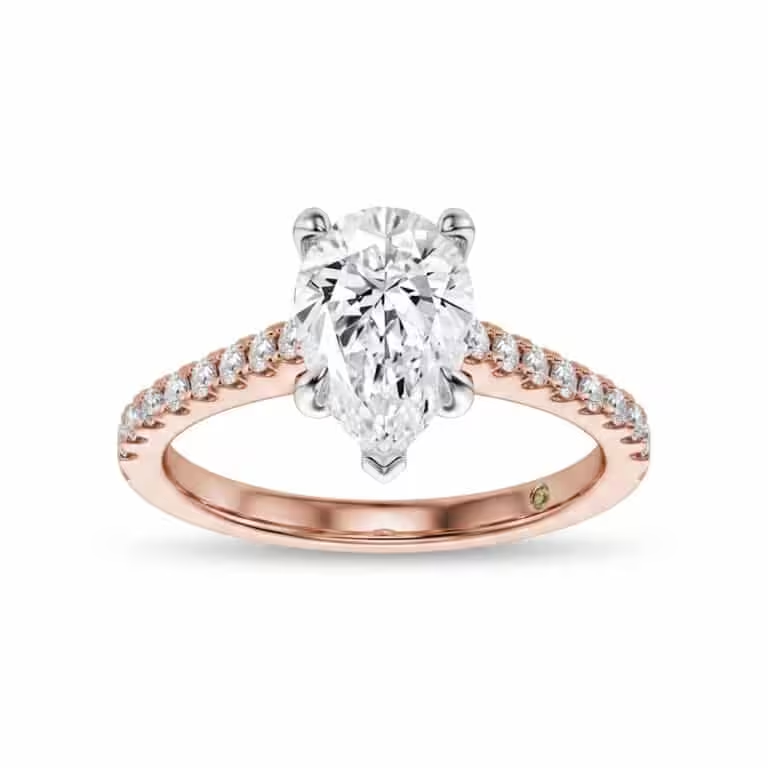
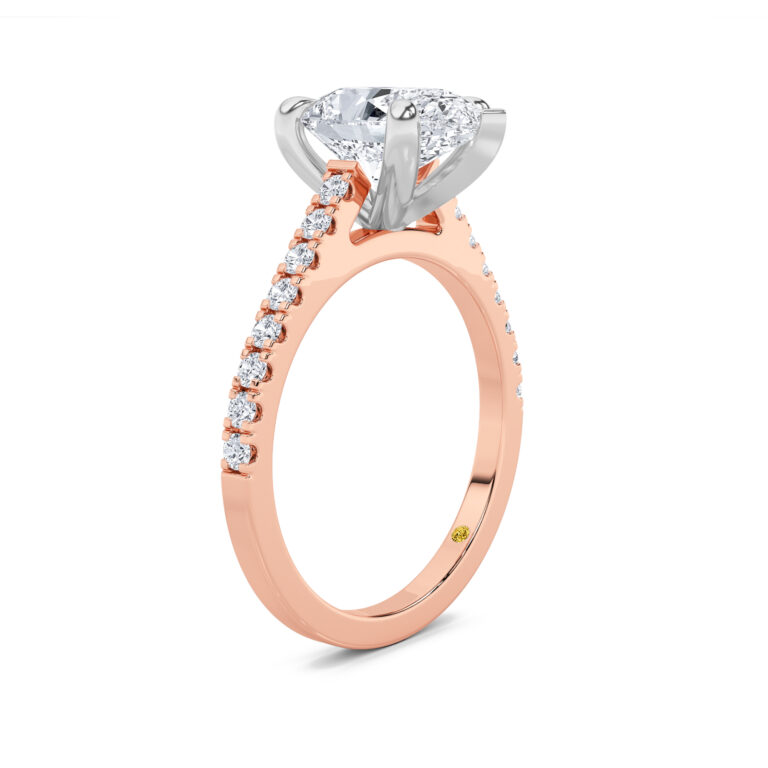
A master artisan can strategically place the metal prongs of a setting directly over a minor edge inclusion, effectively hiding the flaw from view. By using this bespoke technique, a skilled jeweler can elevate the final appearance of the piece far beyond its base clarity grade.
This is where my three decades of custom manufacturing experience truly benefit the final design. When evaluating a stone, I always look closely at where the inclusion is located. If there is a small mark near the outer edge, we can often cover it completely with a sturdy prong in a premium 14k or 18k yellow, white, or rose gold setting.
This specific level of bespoke craftsmanship is something mass-producers simply cannot offer.
A Final Word on Quality
At La Joya Jewelry, we hope this diamond clarity guide proves that true luxury is found in expert craftsmanship and intelligent choices, not in overpaying for invisible details. By focusing on eye-clean lab-grown diamonds and premium solid gold settings, we ensure that your ring is a timeless investment.
My family has built its legacy on this exact standard of honest, high-end quality.