Buying a diamond engagement ring is a very big deal. It is easy to feel lost in the endless charts and rules. Over the past 35 years in my office, I have helped many couples beat this exact stress. My family has worked in the diamond trade for three generations. Because of this, I want to share the practical facts you actually need. This diamond color guide gives you the clarity to pick a truly stunning stone.
What Is Diamond Color?
Diamond color is the measurement of how little color a diamond has, rather than how much.
Because of this counterintuitive fact, I spend a lot of time explaining what this means to confused clients. A chemically pure diamond has no hue, much like a drop of pure water. Over three decades of sourcing stones, I see buyers overpay because they miss this basic concept.
Consequently, understanding this absence of color is your first step toward smart luxury.

How Does the D-Z Scale Work?
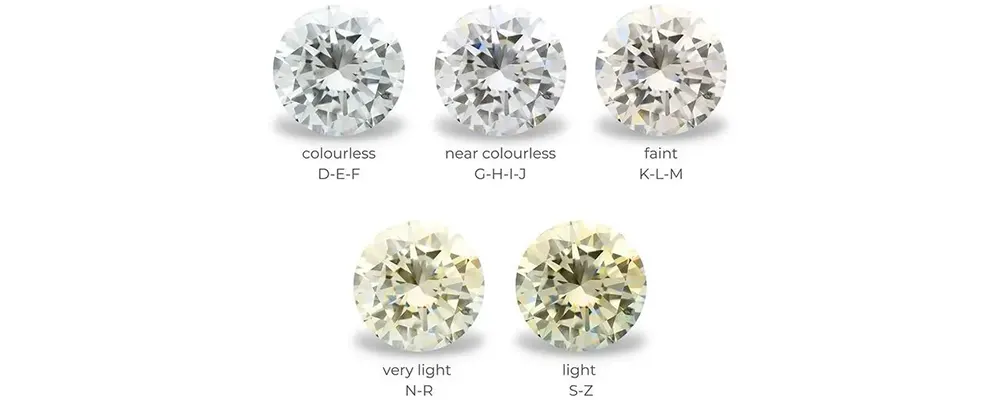
The D-Z scale grades diamond color from D (completely colorless) to Z (light yellow or brown).
Before the mid-20th century, the jewelry industry used a chaotic mix of letters, numbers, and Roman numerals to describe diamond color. It wasn’t until the Gemological Institute of America (GIA) developed the standardized D-to-Z scale that buyers finally had a universal language. Today, this scale remains the absolute benchmark for evaluating a diamond’s pristine lack of color.
At La Joya, we focus on the top tiers because luxury buyers rarely drop below a K grade. We group these into Colorless (D, E, F), Near Colorless (G, H, I, J), and Faint (K, L, M). By keeping your search in these top tiers, you ensure a highly premium look.
Why Does Metal Color Change a Diamond’s Look?
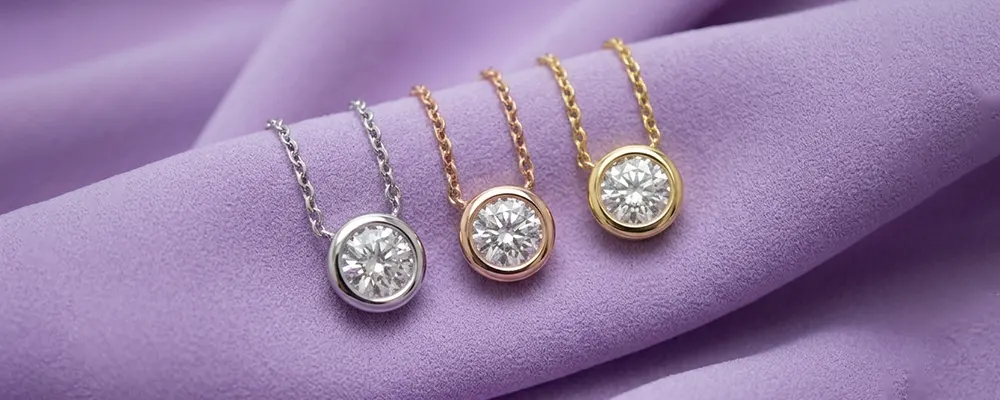
The metal color of a ring setting acts like a mirror that reflects directly into the diamond. Because a diamond reflects its surroundings, the gold color you choose completely changes how the stone faces up.
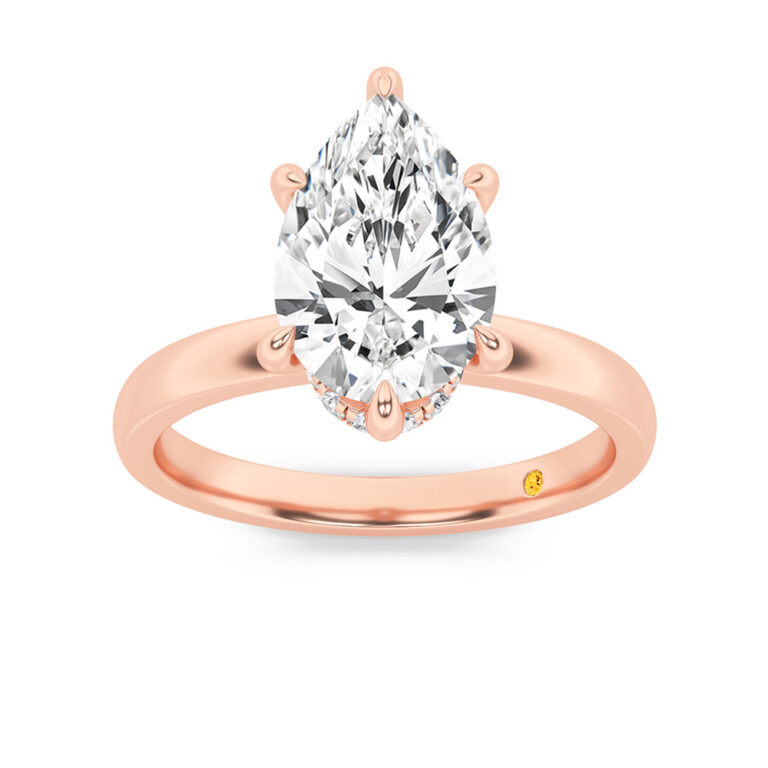
I always teach clients this crucial metal synergy trick as the most valuable lesson in any practical diamond color guide. Once you understand this synergy, you realize that setting a diamond in 14k or 18k yellow or rose gold naturally pulls those warm tones right into the stone.
Therefore, paying a massive premium for a colorless D-grade stone in a yellow gold band is an unnecessary waste of your budget. Instead, a G, H, or even I-color diamond will look perfectly icy white when contrasted against that warm gold.
As an added bonus, this saves you money that you can invest back into a larger carat size. Ultimately, you should save the premium D, E, or F grades strictly for white gold settings
Diamond Color and Gold Matching Chart
| Gold Setting Choice | Recommended Diamond Color Grade | The Practical Benefit |
| 10k, 14k, or 18k White Gold | D, E, or F (Colorless) | Keeps the icy, bright white look perfectly uniform. |
| 10k, 14k, or 18k Yellow Gold | G, H, or I (Near Colorless) | Contrasts with warm gold so the diamond still looks pure white. |
| 10k, 14k, or 18k Rose Gold | G, H, or I (Near Colorless) | Blends nicely with the pink metal to mask slight color tints. |
How Do Graders View Diamonds Versus Real Life?
Laboratories grade diamond color face-down against a stark white background, but in real life, diamonds are worn and viewed face-up. While this strict laboratory standard is necessary for science, it does not match daily life.
When I examine a mounted ring, or when a client wears it, we view it from the top. Because a fantastic cut returns so much bright light to the eye, it easily hides slight color tints. This is why I advise focusing on the cut first. A well-cut near-colorless stone will outshine a dull colorless stone every single time.
Why Do Certain Diamond Shapes Show More Color?
Diamond shapes with sharp points or large open facets reveal color more easily than a standard round brilliant cut. Because of how light travels through different shapes, your chosen cut dictates color visibility.
A round brilliant cut hides color beautifully due to its intense sparkle. However, shapes with sharp points, like pears and marquises, tend to trap and show color right at their tips. Similarly, step cuts like emeralds and Asschers have large open facets that act like clear windows.
Since they do not scatter light the same way, any faint tint becomes much more obvious. If you choose these fancy shapes, I strongly recommend bumping up your color grade to ensure a premium look.
Why Are Lab-Grown Diamonds Better for Color Purity?
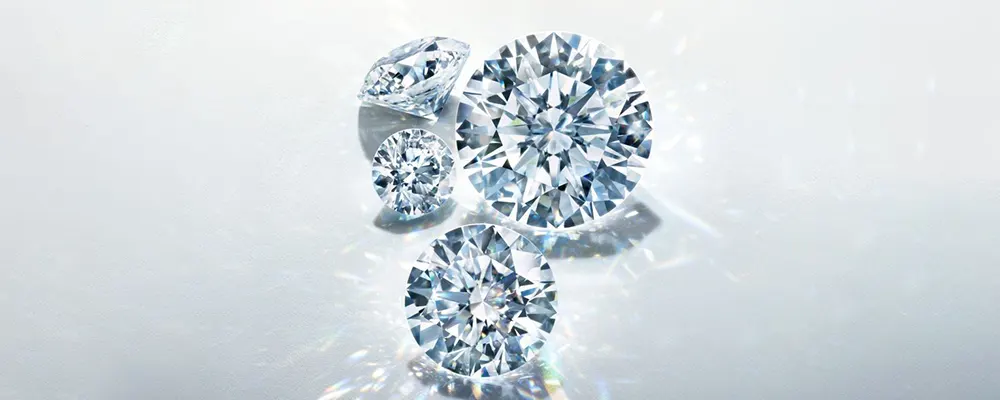
Lab-grown diamonds offer pure color because they form in a controlled space that stops muddy undertones.
Earth-mined diamonds are subjected to chaotic elements deep in the ground. Because of these wild conditions, mined stones can develop bad brown, green, or milky undertones. These bad hues are not always clear on a certificate.
Lab-grown diamonds represent the modern, intelligent choice for the smart buyer. They avoid these murky hues entirely. Because color grading requires incredibly subtle distinctions, it should never be left to guesswork.
For our ‘Smart Luxury’ collections, we rely on the strict, independent grading standards of the International Gemological Institute (IGI), the global pioneer and leading authority in lab-grown diamond certification. This ensures the G-color you purchase is a true, undisputed G-color.
Conclusion
Over three generations in the diamond industry, my family has learned that true luxury is about making smart choices. By using this diamond color guide, you can confidently pick a stone that balances pristine beauty with lasting value.
At La Joya, our commitment is to provide you with expert craftsmanship and premium lab-grown diamonds that will take your breath away for a lifetime.