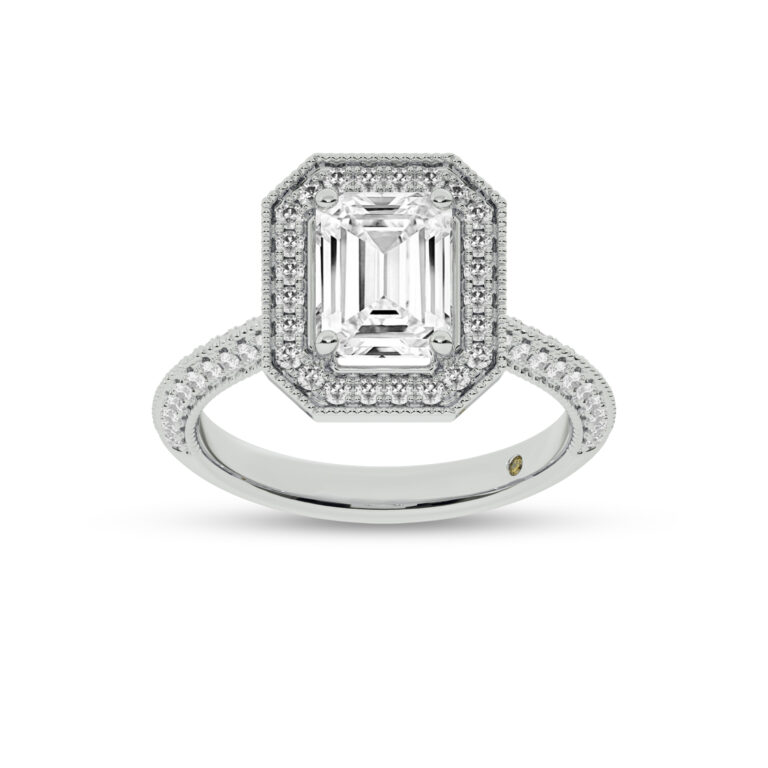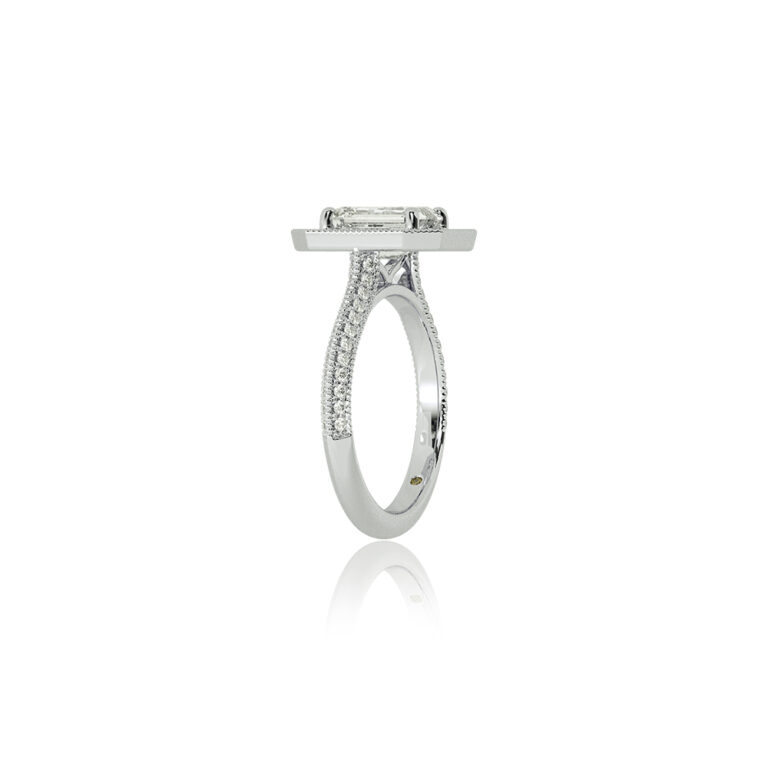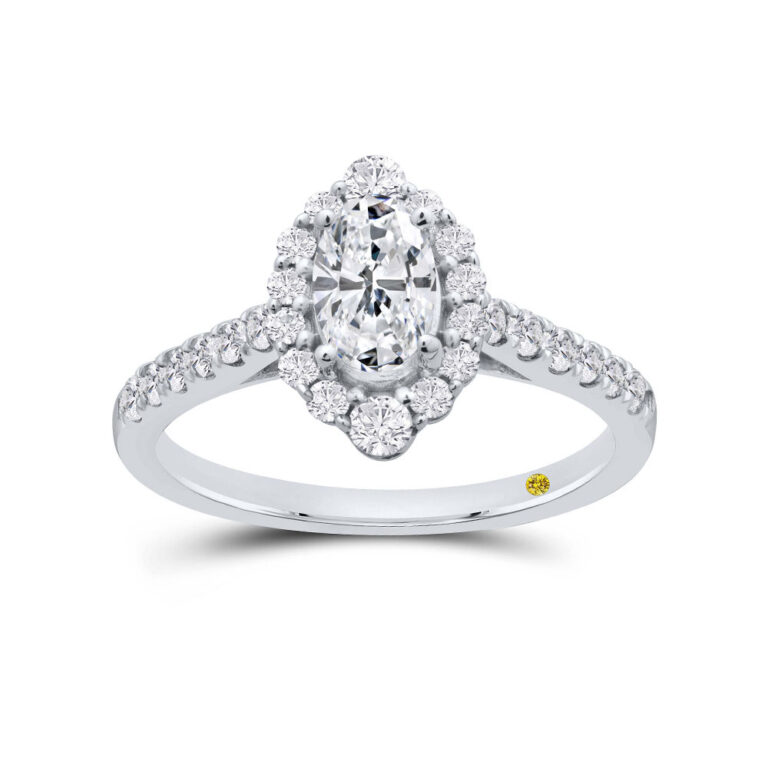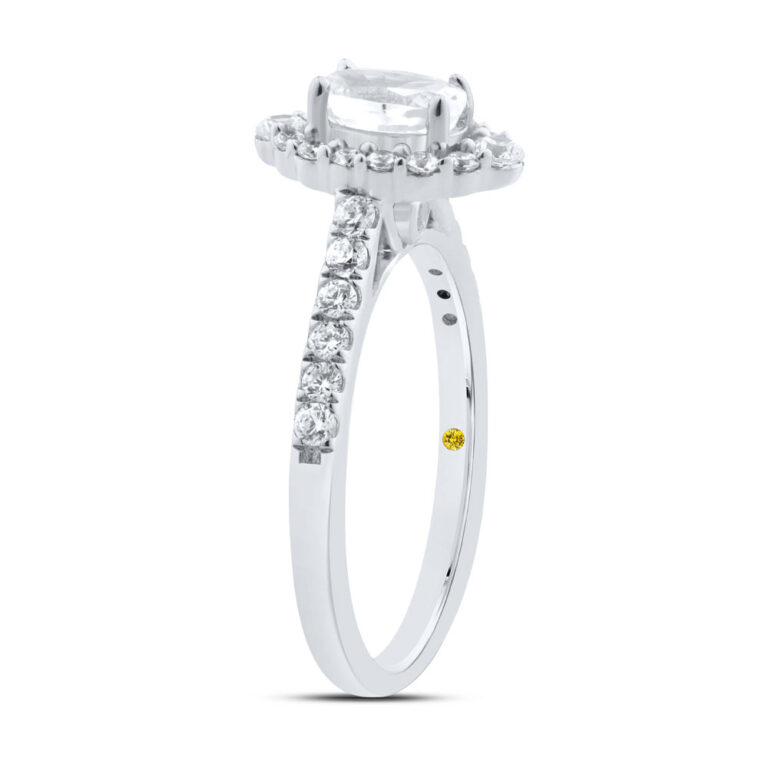
In my 30 years of manufacturing and supplying jewelry, I have seen thousands of couples overwhelmed by the sheer noise of the market, but this emerald cut halo engagement ring guide is designed to cut through that jargon. You likely want a ring that looks spectacular and maximizes your budget, but you’re terrified of making a “blind” purchase.
I promise you this: by the end of this guide, you will know exactly how to buy a stunning emerald cut halo ring like an industry insider, focusing on smart, data-backed decisions that prioritize beauty and value.
Why Choose an Emerald Cut Halo Engagement Ring?
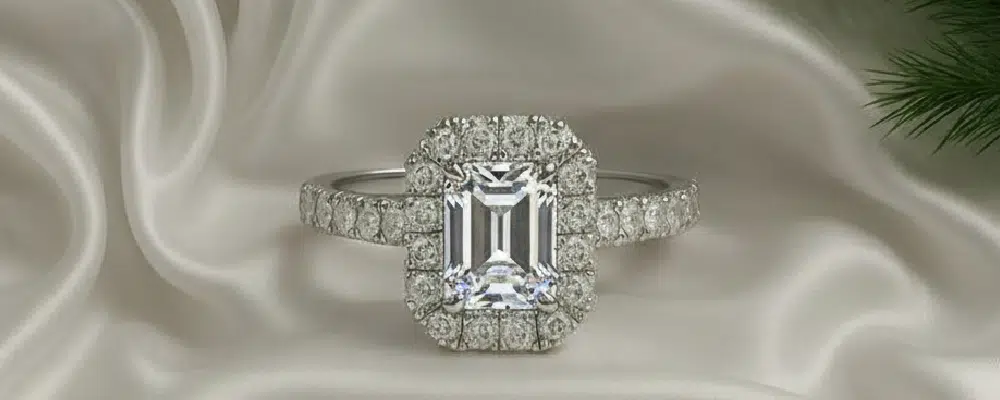
An emerald cut halo engagement ring is the ultimate choice for the confident wearer who values sophisticated, understated elegance over blinding sparkle.
Unlike round halo diamond engagement rings that hide flaws with aggressive sparkle, the emerald cut is known as a “step cut.” It features long, parallel facets that create a mesmerizing “hall of mirrors” effect.
In my experience, this cut is for the confident wearer. It doesn’t scream for attention; it commands it. However, because it is an open window into the stone, it requires a higher quality diamond. Trends in 2024 and 2025 show a massive surge in elongated shapes, with many couples moving toward emerald cut halo engagement rings to achieve a sophisticated, finger-slenderizing look.
For a deep dive read our indepth halo engagement ring guide
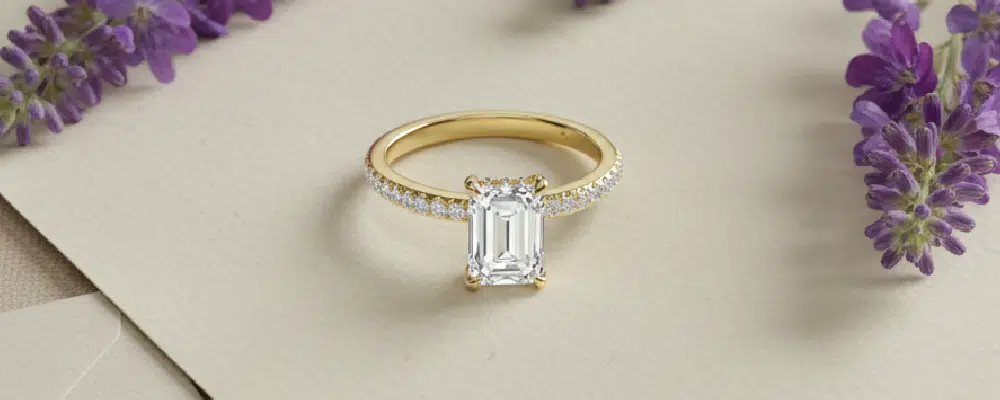
How Does a Halo Setting Maximize Size and Protection?
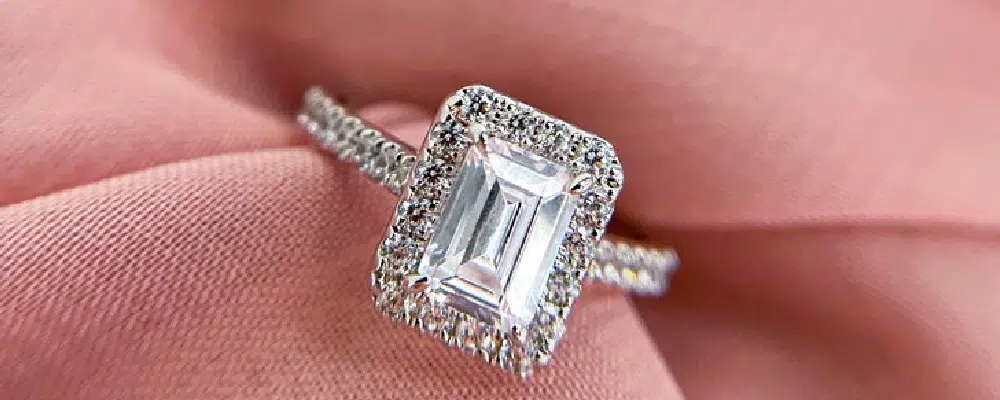
A halo setting maximizes the ring’s presence by adding a circle of accent diamonds that can make the center stone appear up to 0.5 carats larger from a viewing distance. It is one of the oldest and most effective tricks in the jeweler’s book.
1. Visual Impact and Diameter
For an emerald cut, which can sometimes look smaller than a round diamond of the same weight due to its depth, our collection of halo engagement rings restores that “wow” factor.
If you are looking for maximum finger coverage, you might even consider double halo engagement rings. These feature two concentric circles of diamonds, creating a substantial, brilliant surface area that rivals much larger solitaires.
2. Structural Protection
Emerald cuts have beveled corners, but they are still susceptible to chipping if hit at the wrong angle. A halo acts as a diamond bumper, protecting your main investment from daily knocks.
Why Are Lab-Grown Diamonds the Smart Choice for Emerald Cuts?
Lab-grown diamonds are the superior financial choice for emerald cuts because they allow you to afford the high clarity grades this shape demands.
In the past, buying a high-clarity emerald cut required a fortune because natural diamonds with high clarity are incredibly rare. Today, lab diamond engagement rings have revolutionized the industry.
-
Identical Quality: They are chemically, physically, and optically identical to mined diamonds.
-
Massive Savings: Recent market data indicates lab-grown stones are trading at 80% to 95% less than their mined counterparts. For example, a high-quality 2-carat mined diamond might cost upwards of $30,000. That same 2-carat stone, grown in a lab, can be found for under $1,800.
-
The Ethical Edge: They are 100% conflict-free.
In my professional opinion, there is zero financial sense in buying a mined diamond for an engagement ring in 2025. The “resale value” argument for mined diamonds is largely a myth for the average consumer; you will never get back what you paid retail. Therefore, put your money into what you can see: a bigger, cleaner, brighter lab-grown stone.
Why Do I Recommend Gold Over Platinum for Engagement Rings?
I strongly advise against platinum for halo rings because, despite its reputation, it develops a dull, matte gray patina over time that is difficult to maintain. This is where I differ from many “luxury” blogs, but my advice comes from decades of handling repairs and refinishing.
Many people are sold platinum because it is “pure” and “heavy.” However, platinum is a softer metal in terms of scratch resistance. When platinum scratches, the metal displaces, creating a ridge. Over time, it loses its shine rapidly.
Why Gold is Superior:
-
14k & 18k White Gold: These are plated with rhodium, a platinum-group metal that is incredibly hard and shiny. When white gold scratches, it can be easily polished and re-plated to look brand new.
-
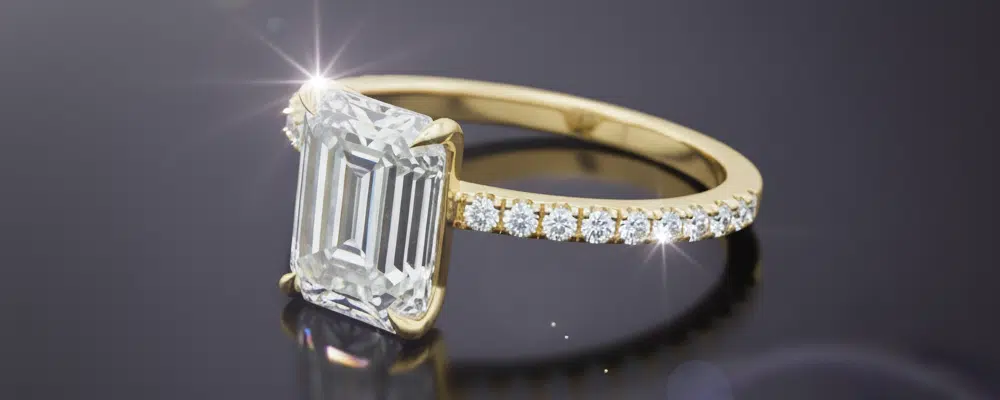
Yellow & Rose Gold: These metals are trending heavily. Specifically, rose gold halo engagement rings offer a warmth that contrasts beautifully with the icy white “hall of mirrors” of an emerald cut stone.
-
Cost Efficiency: Platinum is dense and expensive. By choosing gold, you save money that can be reinvested into a larger center diamond.
Why Is Clarity Critical for Emerald Cut Diamonds?
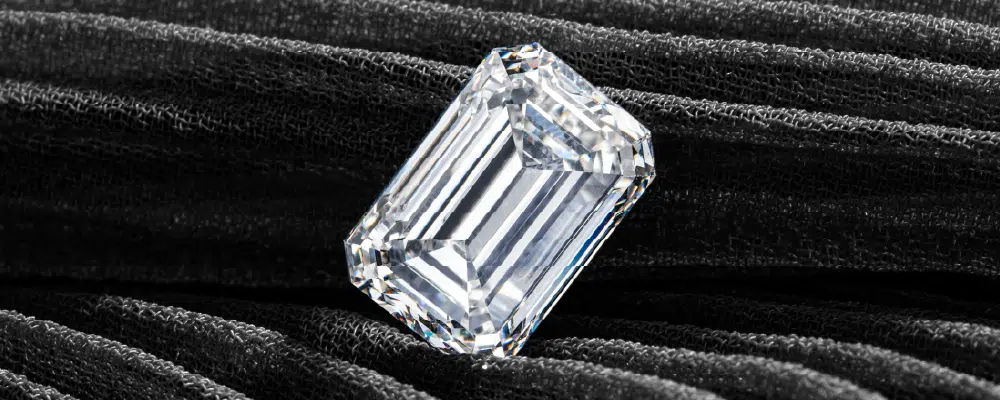
You must prioritize Clarity above all else when buying an emerald cut because the open “step-cut” faceting acts like a clear window into the stone.
According to the Gemological Institute of America (GIA), step cuts do not conceal inclusions as well as brilliant cuts. Inclusions that would be invisible in oval cut halo engagement rings will look like obvious specks of dirt here. Because of the large, open table (top facet), you can see right to the bottom of an emerald cut diamond. No emerald cut halo engagement ring guide would be complete without pointing this fact out
The Risk: Inclusions that would be invisible in oval cut halo engagement rings will look like specks of dirt in an emerald cut.
My Advice: Do not go lower than VS1. With lab-grown prices being so accessible, I usually recommend aiming for VVS2 or VVS1. Why risk seeing a flaw when perfection is affordable?
How Does Color Affect an Emerald Cut Halo?
Emerald cuts reveal “body color” more easily than other shapes because they do not break light into a rainbow dispersion as aggressively. This means it shows “body color” more easily.
The Halo Contrast: In a halo setting, if your center stone has a yellow tint (G or H color) and your halo stones are bright white, the center stone will look dirty by comparison. My advice is to stick to the D, E, or F (Colorless) range.
What Is the Ideal Ratio for an Emerald Cut?
The ideal length-to-width ratio for a classic, elegant emerald cut falls between 1.35 and 1.45.
The Look: This creates a rectangle that is neither too boxy (square) nor too skinny. If you cannot find this specific ratio in standard inventory, you may want to design your own engagement ring to ensure the dimensions match your vision.
Quick Specs: Emerald Cut Buying Cheat Sheet
| Spec | Recommended Grade | Why? |
|---|---|---|
| Clarity | VVS1 – VS1 | Step cuts show flaws easily, so the diamond must be eye-clean. |
| Color | D – F | Body color is more visible and should match a white halo. |
| Ratio | 1.35 – 1.45 | The classic, elegant rectangular proportion. |
| Metal | 14k White Gold | Brighter finish and easier maintenance than platinum. |
| Setting | Cathedral / High-Set | Allows a wedding band to sit flush. |
Because emerald cuts come in such vastly different ratios, ‘stock’ or pre-made halo mountings rarely fit them perfectly. Forcing a unique emerald cut into a standard halo frame leaves awkward gaps or stresses the stone. To ensure the tiny accent diamonds perfectly hug the clipped corners of your center stone, you almost always need a custom-engineered basket.
The “Wedding Band Gap” Issue
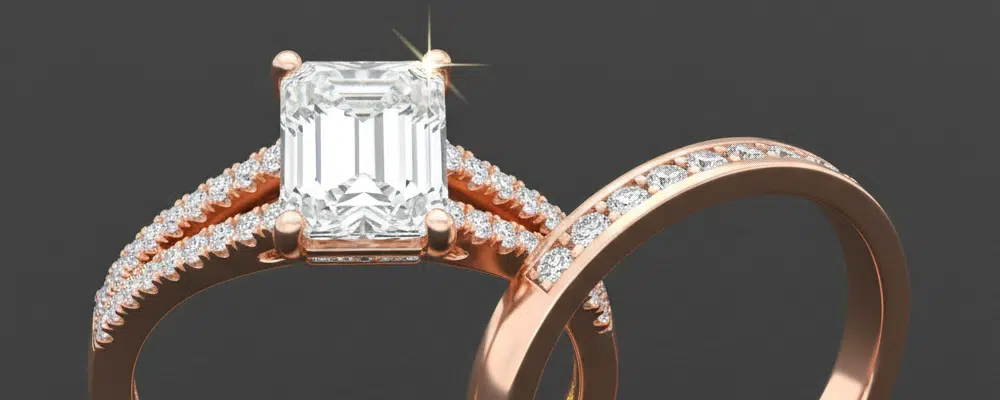
The “Wedding Band Gap” occurs when the elongated structure of an emerald cut halo sits too low on the finger, physically blocking a straight wedding ring from sliding underneath it.
Because emerald cuts are naturally long and the halo adds extra width, the basket often extends wider than the shank, creating an unavoidable space between your engagement ring and wedding band. Many brides find this gap frustrating because it disrupts the seamless, stacked look they envisioned and can sometimes pinch the skin between the rings.
To avoid this, you must specifically request a “high-set” or “cathedral” mounting, which elevates the entire halo assembly to create enough clearance for a standard band to pass below. Alternatively, if you prefer a low-profile ring for comfort, you will likely need to purchase a custom “curved” or “shadow” band that contours perfectly around the rectangular shape of the halo to close the gap.
Beware the “Black Box” & “Windowing”
The “Black Box” effect, technically known as extinction, is a severe cutting flaw where the center of an emerald cut diamond appears dead, dark, or hollow rather than reflecting light.
This phenomenon happens when the pavilion (bottom) facets are cut at incorrect angles—either too deep or too shallow—causing light to leak out the bottom of the stone instead of bouncing back up to your eye. Unlike round diamonds that can hide minor cutting errors with intense sparkle, the long, open mirrors of an emerald cut reveal this darkness instantly, creating a large, unappealing dead zone in the middle of your ring.
A high-quality emerald cut should exhibit a bright, alternating “on-off” pattern of light across the entire surface, known as the “hall of mirrors” effect, with no large patches of static darkness.
To ensure you aren’t buying a “black box,” always view a video of the stone in dynamic lighting and reject any diamond where the center remains dark while the stone is in motion.
Conversely, if the diamond is cut too shallow, it suffers from ‘Windowing.’ This creates a dead, transparent hole in the center of the gem where light leaks straight through the bottom. You can literally read text through a badly windowed stone. A high-quality emerald cut will trap light and burst it upward, rather than acting like a piece of clear glass.
Planning an Upgrade? Do Not Modify an Existing Halo
Many couples assume they can simply drop a larger center stone into their halo setting down the road. I strongly advise against this. Stretching or altering a halo stresses the microscopic prongs holding your accent diamonds, making them prone to falling out. If you want to upgrade later, the safest method is to extract your diamonds, melt down the original gold, and cast a mathematically perfect, brand-new custom setting.
The Bottom Line
To conclude this emerald cut halo engagement ring guide, remember that this style is a statement of elegance that requires a smart buying strategy. By choosing a high-clarity lab-grown diamond and setting it in gold rather than platinum, you are securing a ring that is visually flawless, structurally sound, and financially intelligent.