The fine jewelry industry has undergone a technological renaissance. It has shifted from digging massive holes in the earth to harnessing the fundamental physics of carbon crystallization.
Over my 35 years evaluating precious gems, I have watched this scientific evolution fundamentally redefine the premium engagement ring. You want to make an intelligent, value-driven investment in a breathtaking center stone. To achieve that, it is absolutely essential to understand exactly how lab created diamonds are manufactured.
This deep-dive article pulls back the curtain on that incredible technology. We will explore the multi-million dollar plasma reactors and massive hydraulic presses that create our flawless centerpieces. Furthermore, it proves once and for all that modern engineering surpasses unpredictable earth extraction.
What Is the HPHT Diamond Growth Process?
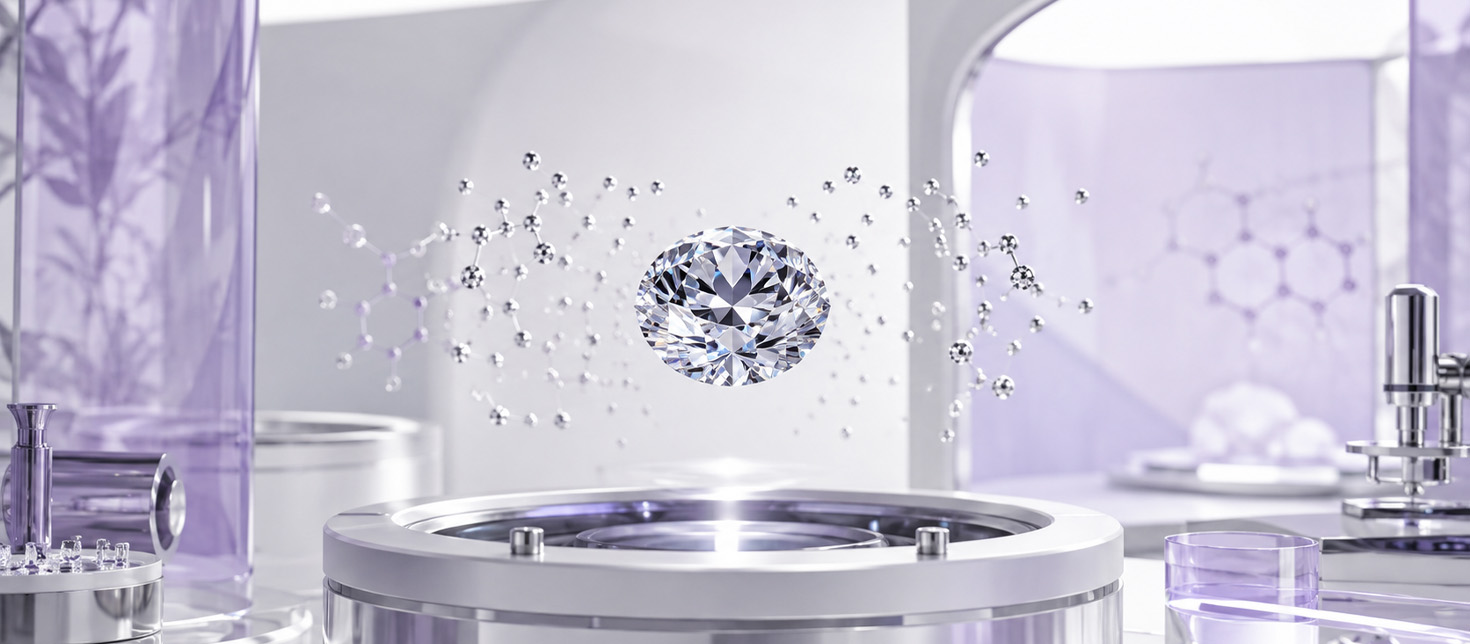
The High Pressure High Temperature (HPHT) process is a diamond manufacturing method that mimics the deep-earth environment. It does this by applying extreme heat and crushing mechanical pressure to a pure carbon seed. Under these intense forces, that seed crystallizes into a raw diamond.
When I first toured an HPHT facility, the sheer scale of the engineering was staggering. These massive metallic presses apply over 1.5 million pounds of pressure per square inch. Simultaneously, they heat the internal chamber to nearly 3,000 degrees Fahrenheit.
This controlled environment perfectly replicates the chaotic tectonic forces found deep within the earth’s mantle. Consequently, the resulting gemstone possesses the exact same structural integrity and brilliant optical properties as a mined stone.
What Is the CVD Diamond Growth Process?
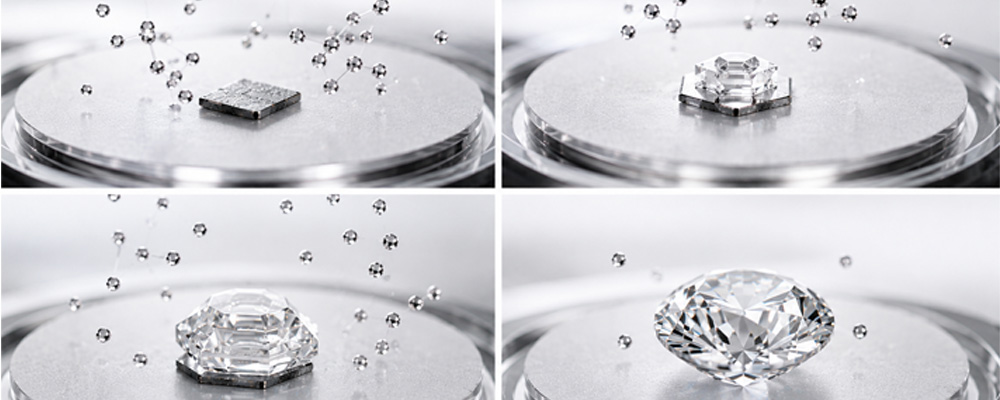
Chemical Vapor Deposition (CVD) is a highly advanced manufacturing technique that grows diamonds above ground. It does this by introducing carbon-rich gases into a vacuum chamber and breaking them down with microwave energy until pure carbon layers onto a seed.
This method represents the absolute cutting edge of gemological science, utilizing ultra-hot plasma fields to deposit carbon atom by atom onto a microscopic diamond slice.
Whenever a discerning client wants to know how lab created diamonds are manufactured with such remarkable purity, I explain the power of the CVD process. This highly controlled environment entirely eliminates the unpredictable elements of nature.
As a result, master growers can meticulously dictate the crystal’s clarity and color profile. This absolute precision prevents the heavy metallic inclusions sometimes found in early earth-mined stones.
HPHT vs. CVD: The Manufacturing Metrics at a Glance
For clients who love the technical details, understanding the distinct scientific signatures of these two methods is fascinating. While both processes yield a chemically and physically identical final gemstone, their growth environments leave entirely different microscopic footprints.
Here is exactly how the industry’s two leading cultivation methods compare under the microscope:
| Manufacturing Metric | HPHT (High Pressure High Temperature) | CVD (Chemical Vapor Deposition) |
| Scientific Method | Extreme heat and crushing mechanical pressure | Microwave energy and carbon-rich plasma |
| Growth Environment | Molten carbon inside massive metallic presses | Carbon gases sealed in a vacuum chamber |
| Crystal Formation | Grows outward as a 14-sided cuboctahedron | Builds layer-by-layer in a flat tabular shape |
| Inclusion Profile | Potential for microscopic metallic traces | No metal catalysts utilized; exceptionally high clarity |
| Chemical Purity | Typically contains trace nitrogen during formation | Inherently produces ultra-rare Type IIa purity |
Which Diamond Growth Method Is Superior?
Neither the CVD nor the HPHT growth method is inherently superior, as both highly regulated processes produce genuine, chemically identical diamonds. Additionally, these stones face up brilliantly white and structurally flawless.
In my three decades of curating premium bridal jewelry, I have found that the specific manufacturing method matters far less than the strict grading standards applied to the final cut and polished stone.
Whether your breathtaking center diamond was born in a glowing plasma reactor or a high-pressure press, it will perfectly anchor a recycled 14k or 18k solid gold setting, delivering an heirloom-quality masterpiece that honors your highest ethical and financial standards.
The Type IIa Secret: The Pinnacle of Diamond Purity
Type IIa diamonds are the most chemically pure diamonds in existence, representing less than two percent of all traditionally mined stones because they are completely devoid of the microscopic nitrogen impurities that cloud standard gems.
Over my 35 years examining thousands of carats at the bench, I have historically seen this elite level of optical purity reserved exclusively for museum archives, royalty, or global billionaires. However, when clients ask exactly how lab created diamonds are manufactured today, the most staggering revelation is that our high-tech reactors grow these incredibly rare Type IIa crystals by default.
Because the controlled laboratory environment perfectly isolates pure carbon, we completely eliminate the unpredictable chemical chaos found deep within the earth.
How Does Nitrogen Affect Diamond Brilliance?
Nitrogen impurities act as microscopic barriers inside a standard diamond’s crystal lattice, disrupting light refraction and subtly muting the stone’s overall brilliance and visual fire.
In the vast majority of mined stones, these trapped nitrogen atoms absorb certain spectrums of light, which is what causes the faint yellow or brown tints you often see in commercial jewelry. Because Type IIa lab-grown stones lack this nitrogen, white light travels through the crystal structure completely uninhibited.
As a master jeweler, examining these pure stones under a loupe remains a thrilling experience; the perfect internal light return generates blinding rainbow flashes and an absolute clarity that standard mined stones simply cannot match. By mastering the exact science of carbon crystallization, we deliver the top two percent of global diamond purity directly to your custom setting.
How Long Does It Take to Grow a Diamond?
It typically takes between three to eight weeks to grow a gem-quality lab-created diamond. However, it depends entirely on the desired carat weight and the specific technological process being utilized.
While the earth requires millions of years of random, chaotic geological shifts to crush carbon into a rough gem, our controlled manufacturing environments accelerate this exact same physical transformation. Importantly, this process does not compromise a single optical property.
Understanding exactly how lab created diamonds are manufactured on this condensed, highly efficient timeline demonstrates exactly why we can offer such visually massive, premium center stones without the inflated, multi-layered markups of the traditional mining cartel.
The Bottom Line
Securing a flawless symbol of your commitment no longer requires participating in a murky, ecologically devastating global supply chain. Now that you understand how lab created diamonds are manufactured using absolute scientific precision, you can confidently invest in a technologically advanced gemstone. This choice maximizes both your budget and your moral values.
To see how this cutting-edge science fits into our overarching brand philosophy, read to our Ultimate Guide to Lab-Grown Diamonds, or explore our next dedicated article to uncover the profound environmental benefits of leaving the earth undisturbed.