In my decades in the fine jewelry industry, I have watched thousands of couples walk out of my office with a perfectly brilliant, pristine diamond ring. Whether they purchased a mined stone or a lab-grown diamond, my parting advice is always the exact same: fine jewelry is designed to last a lifetime, but it is not indestructible.
Continuing my family’s third-generation legacy, I have seen exactly what daily wear and tear can do to precious metals and gemstones. The good news is that maintaining that day-one sparkle does not require expensive chemicals or constant trips to the jeweler. It simply requires a few smart, consistent habits.
Here is exactly how to care for your lab-grown diamond jewelry to ensure it remains a brilliant heirloom for generations to come.
Do Lab-Grown Diamonds Require Special Care?
Lab-grown diamonds do not require special care because they share the exact same physical, chemical, and optical properties as naturally mined diamonds.
Because they are composed of pure crystallized carbon, lab-grown diamonds score a perfect 10 on the Mohs hardness scale, making them just as durable and scratch-resistant as stones pulled from the earth. Caring for a lab-grown diamond and caring for a mined diamond are absolutely identical processes.
With the right daily habits, your jewelry will maintain its structural integrity forever, supported by La Joya’s comprehensive lifetime warranty as a built-in safety net for your investment.

How to Clean Your Lab-Grown Diamond Jewelry at Home
The safest and most effective way to clean lab-grown diamond jewelry at home is using a soft-bristle toothbrush, mild dish soap, and warm water.
The Gentle Soap and Warm Water Method
Cleaning your diamond with mild dish soap and warm water is the most reliable way to break down the daily buildup of natural skin oils, lotions, and dirt. Simply soak the piece in a bowl of warm (not hot) soapy water for 10 to 15 minutes.
Afterward, use a brand-new, soft-bristle baby toothbrush to gently scrub the piece using circular motions, paying special attention to the pavilion (the underside of the stone) where grime tends to collect and block light return.
Using an Ultrasonic Cleaner Safely
Ultrasonic cleaners use high-frequency sound waves to remove deep-seated dirt, but they should only be used on sturdy, solid settings like solitaires. You should strictly avoid ultrasonic cleaners if your ring features a delicate pavé band, a hidden halo, or micro-prong settings. The intense vibrations can easily shake small accent diamonds loose over time.
Always confirm your specific setting style before placing it in a machine.
What to Avoid When Cleaning Diamond Jewelry
When you care for your lab-grown diamond jewelry, you must completely avoid using household cleaning agents like bleach, chlorine, acetone, and abrasive scrubbing pads. While the diamond itself can withstand chemical exposure, these harsh chemicals will aggressively pit, discolor, and weaken the gold or platinum prongs holding your stone securely in place.
Here is a quick reference guide to help you protect your investment. Understanding exactly how to clean diamond jewelry means knowing what tools to avoid entirely.
| Cleaning Agent / Tool | Safety Rating | Why It Matters |
|---|---|---|
| Mild Dish Soap | Highly Safe | Breaks down heavy grease without harming metal alloys. |
| Baby Toothbrush | Highly Safe | Soft bristles clear tight spaces without scratching gold. |
| Microfiber Cloth | Highly Safe | Dries the piece neatly without leaving tiny lint fibers. |
| Baking Soda | Unsafe | Gritty texture will scratch soft gold and silver bands. |
| Liquid Bleach | Very Unsafe | Eats away at gold alloys and weakens the entire ring. |
| Toothpaste | Very Unsafe | Acts like sandpaper on your smooth metal settings. |
How Often Should You Clean Your Lab-Grown Diamond Ring?
You should give your lab-grown diamond ring a light soapy rinse once a week and a deeper scrub every two to four weeks to maintain optimal visual brilliance.
Because diamonds are natural grease magnets, even a thin layer of everyday hand lotion or cooking oil will immediately mute the stone’s sparkle. Your cleaning frequency should scale with your lifestyle. If you frequently apply cosmetics, use hairspray, or work with your hands, lean toward a bi-weekly deep clean.
How to Store Lab-Grown Diamond Jewelry Properly
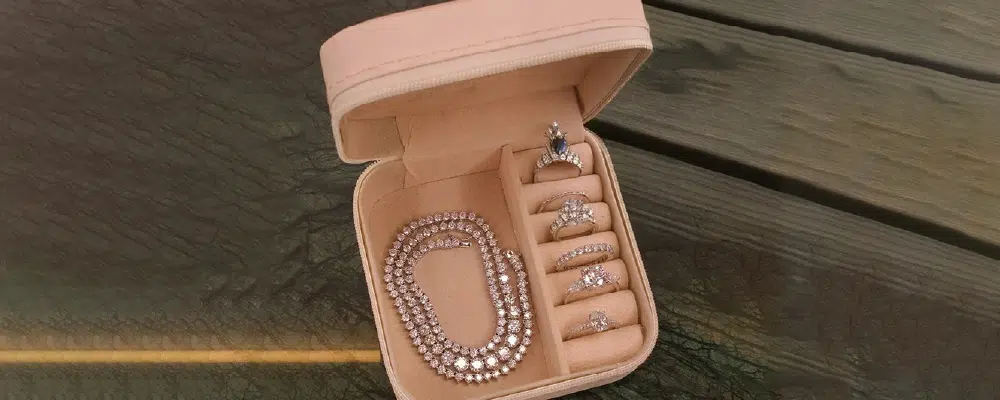
Proper storage for lab-grown diamond jewelry requires keeping individual pieces separated in a cool, dry place to prevent physical scratching and metal degradation.
Keeping Pieces Separated to Prevent Scratches
Because diamonds are the hardest material on earth, storing them loosely in a drawer guarantees they will permanently scratch your other gold bands, softer gemstones, and even other diamonds. You should always store your fine jewelry in individual soft pouches, dedicated fabric-lined compartments, or the original padded La Joya box to ensure complete physical separation.
Controlling Humidity and Temperature
You should never store your fine jewelry in a humid bathroom or in direct, prolonged sunlight. Constant exposure to moisture and extreme temperature fluctuations can accelerate the tarnishing of metal finishes and weaken the integrity of certain jewelry alloys over time. Instead, opt for a dark, climate-controlled environment like a bedroom dresser or a safe.
Protecting Your Investment: Warranties, Insurance, and Replacement
Protecting your diamond investment requires utilizing comprehensive manufacturer warranties, securing third-party insurance, and safely storing your official IGI certification documents.
While taking care of the physical ring is your daily responsibility, true peace of mind requires a safety net. Every piece we craft at La Joya is backed by a robust lifetime warranty covering manufacturing defects and structural integrity.
However, life happens. That is why we also offer an exclusive 40% loss replacement guarantee—a unique differentiator that goes far beyond standard industry warranties. I highly advise keeping your independent IGI grading reports safely filed away, as these documents are strictly required by third-party jewelry insurance providers if you ever need to file a claim for loss or theft.
When Should You Take Your Diamond Jewelry to a Professional?
You should take your diamond jewelry to a professional immediately if you notice a loose stone, or proactively schedule a routine inspection once every twelve months.
Signs Your Setting Needs Attention
The most critical warning signs that your setting needs immediate professional repair include a visibly bent prong, a clicking sound when you tap the ring near your ear, or a physical gap between the diamond and the metal. If you notice any of these issues, take the ring off immediately and store it safely until a master jeweler can retighten the head.
Annual Professional Inspections and Cleaning
Scheduling a professional inspection once a year is mandatory for everyday-wear pieces like engagement rings or wedding bands. During this visit, a jeweler will check prong security under intense magnification and use commercial-grade ultrasonic and high-pressure steam cleaners to restore a blinding level of brilliance that is simply impossible to achieve at home.
Everyday Habits That Keep Your Jewelry Looking New
The most effective way to care for your lab-grown diamond jewelry day-to-day requires simple habits, primarily putting your pieces on last when getting dressed and removing them first before physical activities.
Think of your jewelry as the finishing touch. Put your rings and necklaces on after you have applied perfumes, lotions, and hairsprays to prevent chemical buildup. Conversely, take them off before doing the dishes, lifting weights at the gym, or swimming in a chlorinated pool.
Wiping your pieces down with a dry, lint-free microfiber cloth before placing them in their box is an effortless, ten-second routine that will dramatically extend the life and sparkle of your La Joya jewelry.