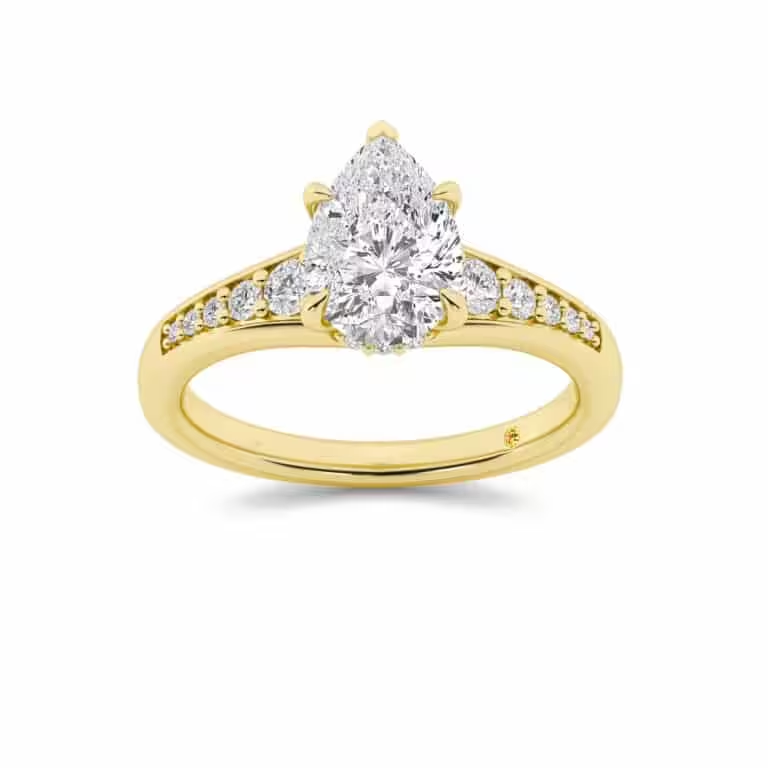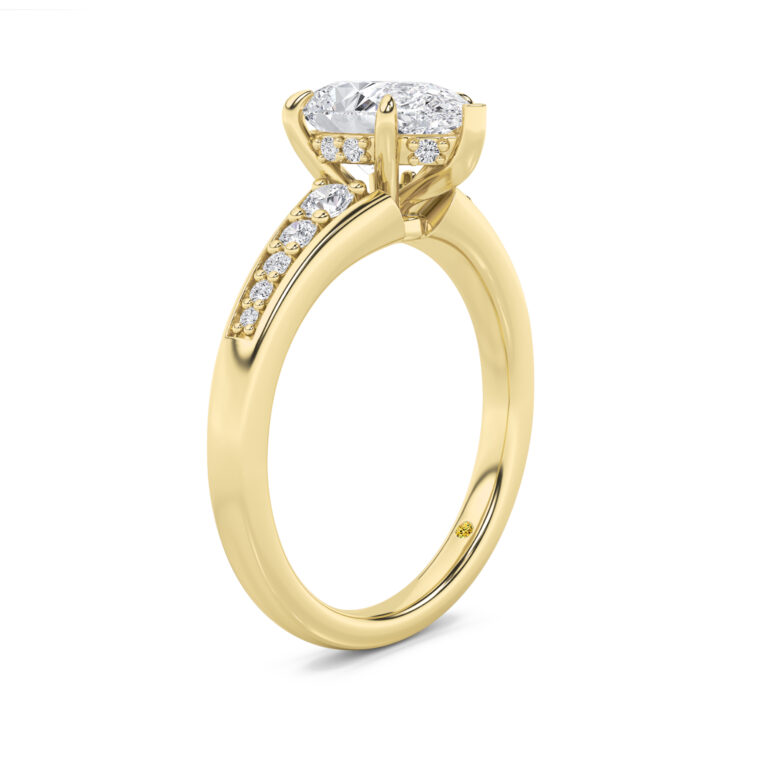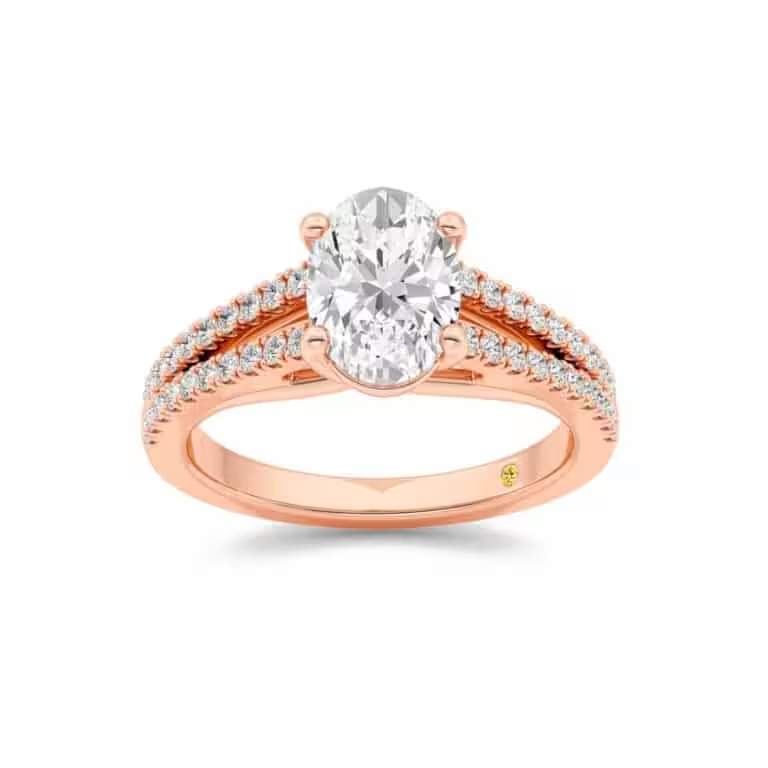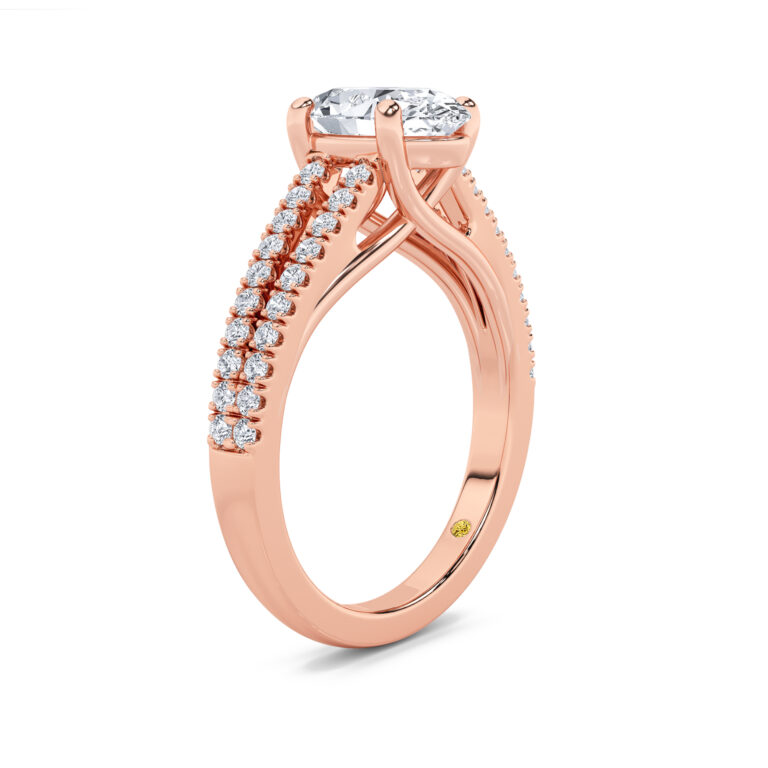
Deciding on the perfect center stone for a proposal can feel like a trap. You want a gift that shows your love. You also want to make a smart money decision.
Luckily, proposing with a lab grown diamond has become the top choice, paving the way for couples to secure stunning, affordable engagement rings without financial stress.
Over my 35 years at the jewelry bench, I have helped thousands of couples. I have never seen a change as exciting as this one. The lab grown diamond social acceptance level has reached an all-time high. This change completely rewrites the rules of engagement jewelry. Today, a lab-made ring is a top option. It shows smarts and modern values.
The Science Erasing the Old Stigma
The lab grown diamond social acceptance rate has jumped past 60 percent. More than half of new proposals now feature these stones. The old idea calling these gems as fake has completely vanished.
Buyers finally understand the basic physics of crystal growth. These stones have an exact atom grid to mined gems. Because of this, they share the exact same physical traits.
The conversation has moved from questioning roots to loving pure sparkle. Most receivers today really like these clean stones. They offer total honesty and true peace of mind.
For those comparing early big steps, understanding the difference between a promise ring vs engagement ring shows how jewelry hopes change over time.

Why Do Progressive Values Favor Lab-Grown Synthesis?
Modern couples put first earth care and deep human rights. A lab-created diamond fits these beliefs perfectly. Standard deep-earth mining carries a hidden and bad history.
In contrast, lab making provides a completely conflict-free choice. So, making a clean buying choice is now a modern status symbol.
Buying a high-tech gem shows you are a smart buyer. Our workshop pairs these very clean stones with beautifully made gold bands. This mixes old-school making ways with new gem science.
You get a ring that feels right. If you want to build a truly special symbol of love, you can design your own engagement ring to match your exact beliefs and style likes.
The Blue Nuance and Boron Contamination
True lab grown diamond social acceptance requires complete making honesty. Many big brands say all lab stones are perfect. They hide a common build flaw known as blue tint. This light blue tint happens during the HPHT (High Pressure High Temperature) growth process. Scientists add boron to remove unwanted yellow shades. However, too much boron ruins the stone’s natural look.
According to teaching reports by the Gemological Institute of America (GIA), tiny bits like boron can change the color look of diamonds grown in man-made spaces. I use my loupe to filter out these low-grade stones.
You must look at the diamond under proper lighting to make sure your diamond looks bright, crisp, and completely natural.
Avoiding the CVD Tiger-Stripe Strain
CVD means chemical vapor coating. It is a popular way to grow beautiful diamonds. However, some labs rush the growth process to save money. This fast growth creates inside stress marks within the crystal grid. Jewelers call these flaws tiger-stripes.
They make the finished diamond look a little bit blurry. The stone loses its sharp, crisp sparkle.
I test every stone under special light at my bench. This deep test makes sure your diamond has zero inside stress. True value requires this level of bench-level checking. Knowing how to spot these details is a key part of how to choose the perfect classic engagement ring without losing visual sparkle.

Consumer Sentiment and Market Dynamics
| Metric Category | Lab-Grown Engagement Jewelry | Mined Diamond Engagement Jewelry |
| Current US Market Share | Approximately 61% of New Proposals | Approximately 39% of New Proposals |
| Average Carat Size Selected | 1.9 to 2.5 Carats Total Weight | 1.0 to 1.2 Carats Total Weight |
| Primary Consumer Association | Intelligent Value, Purity, and Ethics | Historical Tradition and Supply Rarity |
| Common Crystal Structure Type | Type IIa (The Purest Chemical Form) | Type Ia (Contains Structural Nitrogen) |
Does Carat Scale Lower Ethical Prestige?
The low cost of lab gems lets people buy much larger stones. This directly grows the rich look of the ring. Buyers always want the greatest physical size their money can buy.
By proposing with a lab grown diamond, you get the most from your budget. You can easily get an amazing 3 stone diamond engagement ring for a fair price. Family members only respond to the blinding light bounce and size. They cannot spot the root of the carbon atoms.
Your smart choice delivers a clear visual look. This visual effect has sped up lab grown diamond social acceptance everywhere, allowing couples to get a lab grown solitaire engagement ring that makes a huge statement.
Laser Inscriptions and Prong Safety
Every high-quality lab diamond features a tiny laser writing. Grading labs place this number on the stone’s outer edge.
Big-box jewelers often cover this writing with a prong. This mistake leaves you guessing about your stone’s true self.
At La Joya, a master setter places prongs with exact care. We lock the diamond while keeping the laser number clear. You can read the ID code easily through a jeweler’s loupe. This careful skill protects your stone and brings total peace of mind.
For a deep look of how build bases work with side stone spots, read our deep guide on engagement ring settings & shanks.

Why Does A Premium Gold Settings Validate Your Decision?
Setting your stone in a top gold setting makes sure the piece feels highly rich. I always warn clients against thin, weak bands. High-karat gold has a clear physical weight and shape holding.
White gold is highly good at holding clear diamonds. Its mirror-polished baskets stop color leaking across the faces. Yellow and rose gold mixes offer a warm, romantic contrast.
Putting money in a solid gold build proves your drive for quality. It turns a modern stone into a timeless family treasure. Whether picking a clean simple look or a fancy halo diamond engagement ring, the precious metal acts as the solid base.
How to Address Traditional Family Members?
Explaining the exact chemical makeup quickly calms old-school family members. Some relatives believe a true diamond must come from the ground. I always tell clients to use a simple ice cube comparison.
Think of ice made inside a modern kitchen freezer. Now compare it to ice taken from a frozen lake. Both builds are completely exact water crystals.
Lab diamonds and mined diamonds are both pure crystal carbon, a science fact tracked deeply across map and science lists like Wikipedia.
Once older relatives learn this fact, all social worry goes away. They respect your money smarts.
Many couples use these savings to move smoothly into buying complete lab created diamond bridal sets that match perfectly for the big day.
Is Resale Value a Legitimate Concern?
Resale value is a useless detail when buying bridal jewelry. An engagement ring serves as a lasting sign of marriage loyalty. It is not a quick cash trade like a stock market.
Also, standard mined diamonds take huge falls in dealer price right away. The huge starting savings from lab stones stay in your bank account. True money safety is much more classy than overpaying for an earth history story. Choosing lab-grown is simply the smarter way to build riches.
It allows buyers to look at detailed, old-school skill like vintage style engagement rings without paying a high price for real age.
Ethical Greenwashing in Diamond Foundries
Not all diamond labs work with the same clean rules. Some huge factories rely heavily on cheap, dirty coal power. This habit creates a huge dirt trail. It goes against the earth-friendly promise of lab-grown stones. I only buy diamonds from factories using proven clean power.
We put first suppliers that run on solar or hydro-power. This clean energy rule protects the earth. It makes sure your ring shows true pureness from the inside out.
For smart buyers walking through the modern market, La Joya’s solitaire collection and top settings provide honest buying you can trust completely.