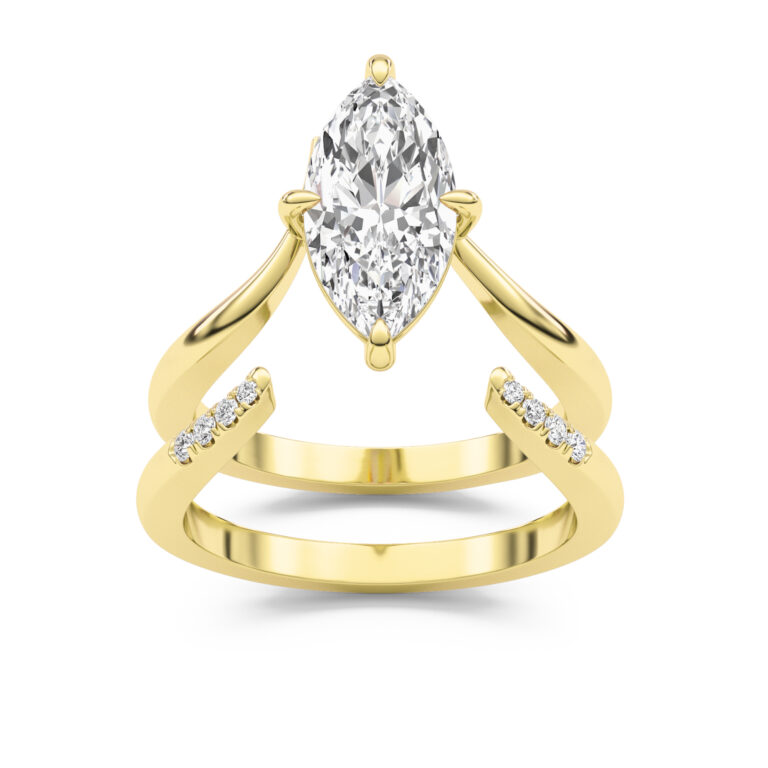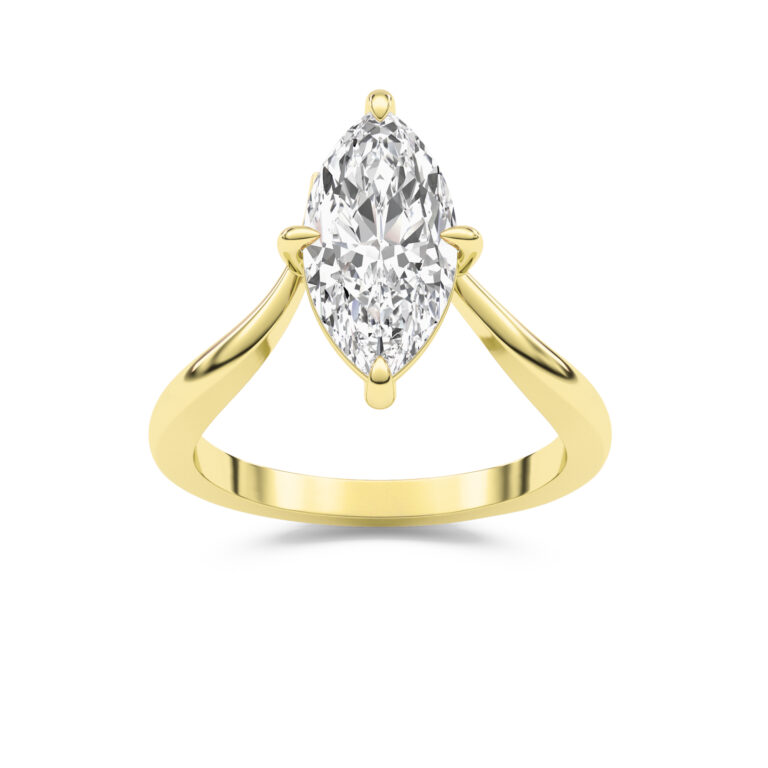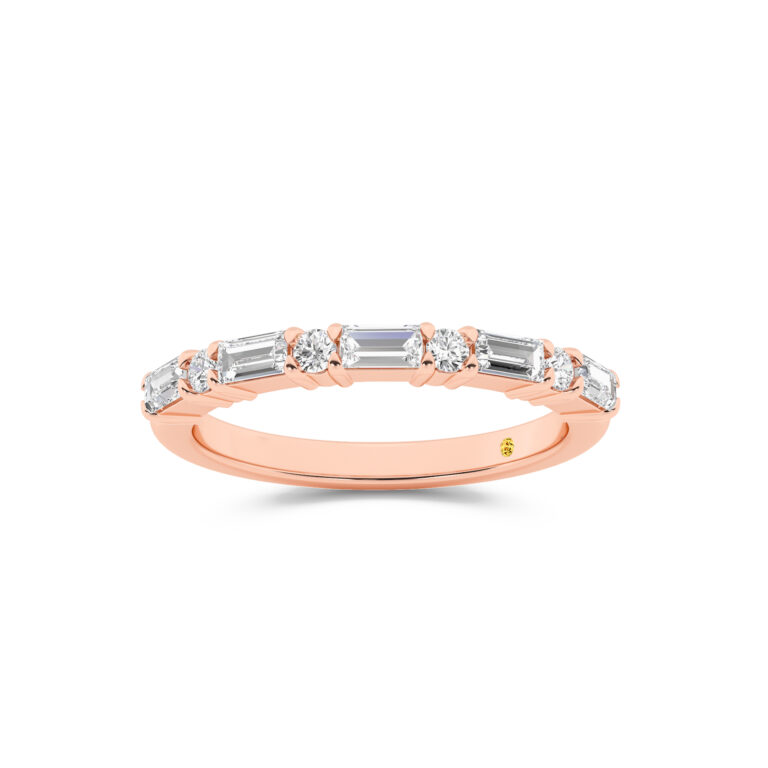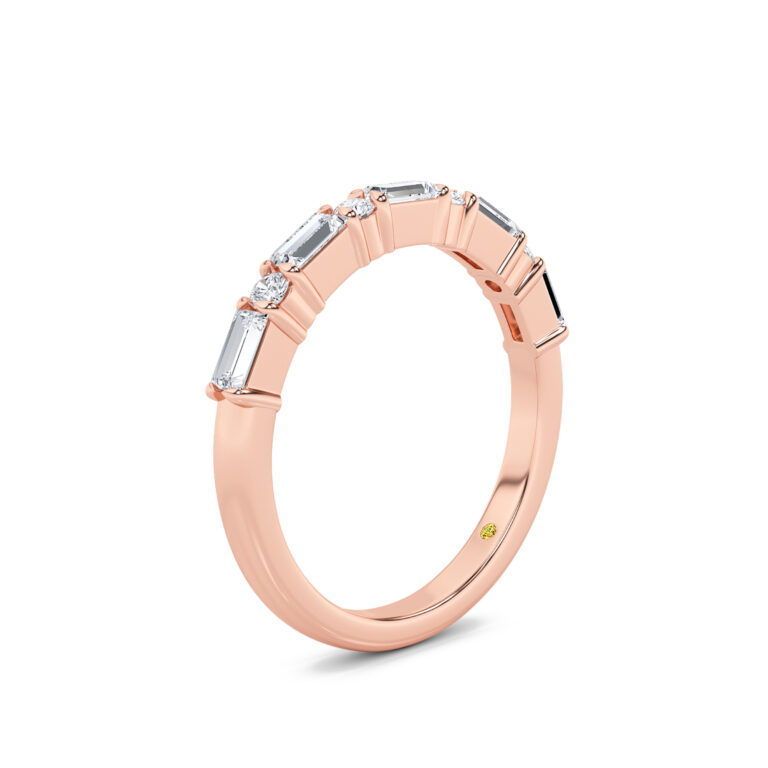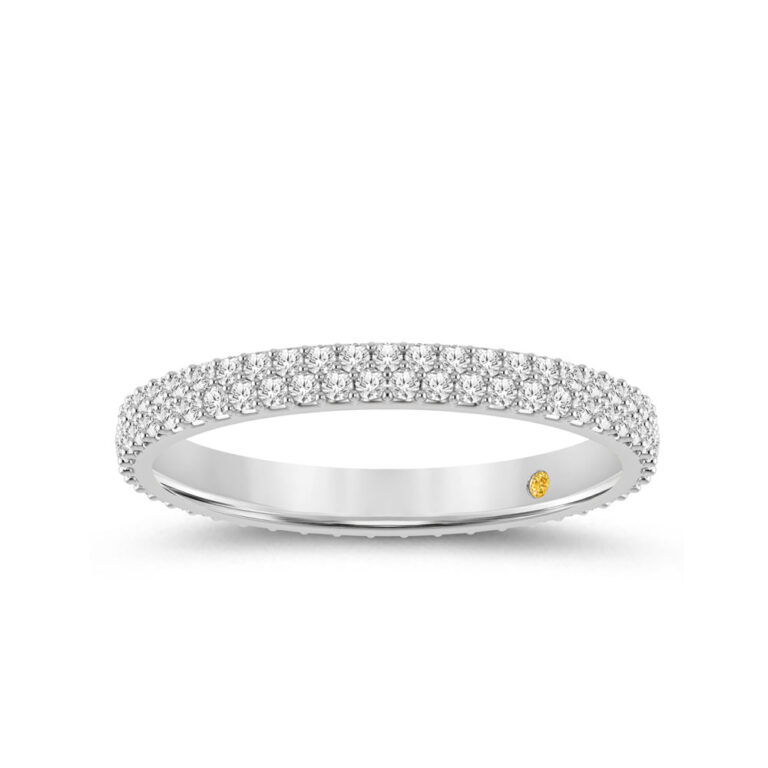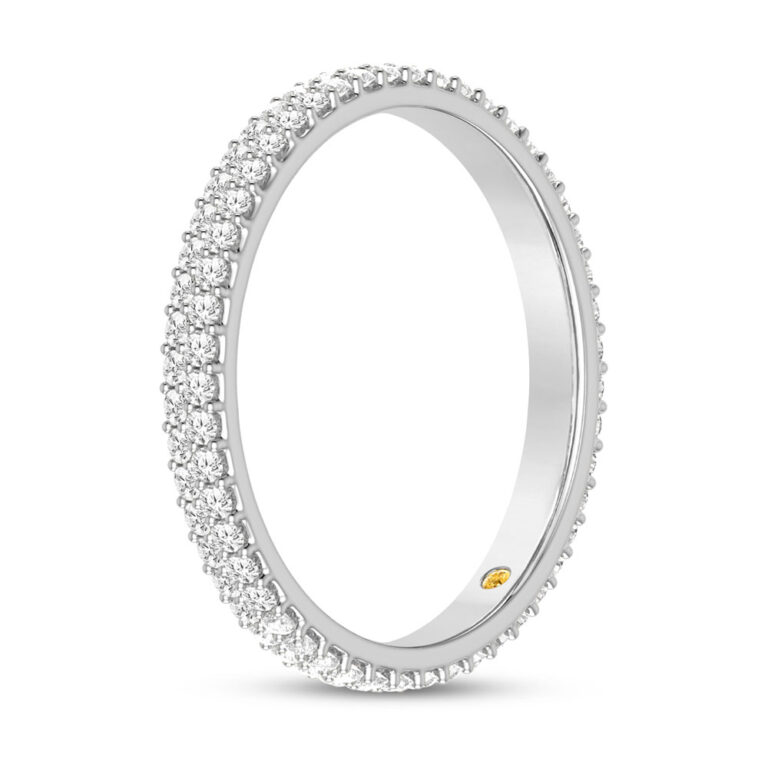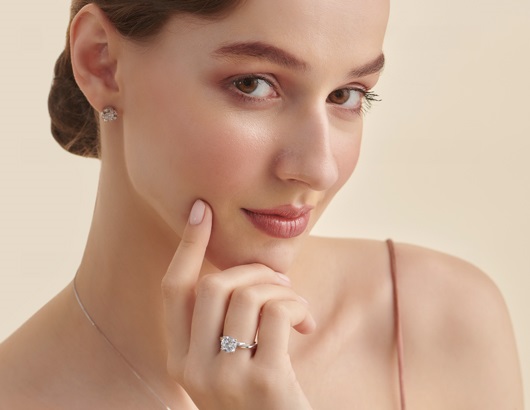
Finding the perfect match to complement your lab created diamond engagement ring often brings unexpected stress. Buyers quickly realize that assembling beautiful real diamond wedding rings requires dozens of tiny, visually identical stones. Because nature creates gems with vast variations in color and clarity, matching them perfectly takes immense effort. Traditional jewelers pass the high cost of this human sorting labor directly to the consumer.
In my office, I see clients struggle with these inflated, outdated pricing models daily. Over my 35 years of manufacturing fine jewelry, I have watched modern technology solve this problem completely. Today, science offers a smarter way to achieve flawless beauty without the legacy markups. Consequently, choosing modern laboratory gems allows you to invest your budget into superior carat weight and robust gold craftsmanship.

What Makes a Lab Grown Diamond Wedding Band Optically Superior?
A lab grown diamond wedding band offers superior optical matching because the stones are grown in controlled environments to identical color and clarity grades.
During my three decades in the diamond trade, I have spent countless hours hunched over parcels of mined stones with a jeweler’s loupe. Sorting natural diamonds to find twenty identical gems for a single eternity style is an exhausting, inefficient process.
Earth-mined stones naturally carry slight variations in their crystal structure or underlying tint. Because of this inconsistency, finding a truly uniform row requires sifting through thousands of carats. That intense labor forces traditional retailers to charge exorbitant premiums just for the manual sorting effort.
With lab-grown gems, we eliminate this guesswork entirely. Since these diamonds develop under precise scientific conditions, pulling a mathematically perfect set is guaranteed. This structural consistency translates into a brilliant, uniform sparkle that natural stones rarely achieve at a similar price point.

Are Lab-Grown Stones Legally Considered Real Diamonds?
Lab-grown stones are fully considered real diamonds because they possess the exact same pure carbon structure and optical properties as mined gems.
Many legacy buyers mistakenly believe that laboratory creations are mere simulants like cubic zirconia or moissanite. That assumption is scientifically and factually incorrect. In fact, the US Federal Trade Commission revised their jewelry guides years ago to remove the word “natural” from the fundamental definition of a diamond.
To understand this concept, simply compare ice formed in your freezer to ice carved from a natural glacier. Both types of ice are frozen water that will cool your drink exactly the same way.
Similarly, laboratory gems share the identical refractive index and perfect hardness as stones pulled from the earth. By making this intelligent choice, you secure genuine real diamond wedding rings without paying a hefty mining tax.
How Do the 4Cs Apply to a Lab Diamond Wedding Band?
The traditional grading metrics of cut, color, clarity, and carat apply strictly to a lab diamond wedding band just as they do to natural stones.
When you shop for these premium pieces, you are still evaluating the fundamental quality of a genuine carbon crystal. However, choosing a laboratory origin completely changes the ease of finding high-grade specifications.
In nature, discovering a flawless, colorless gem is like hunting for a needle in a haystack. This extreme rarity drives earth-mined prices up astronomically.
Conversely, scientific growth environments actively encourage chemical purity and eliminate the chaotic debris found in the earth’s crust. As a direct result, you can easily demand stunning colorless grades and exceptional clarity for your multi-stone designs.
Furthermore, modern technology ensures that master craftsmen can cut these pristine materials to strict microscopic tolerances.
What Is the Environmental Impact of Earth-Mined Versus Grown Gems?
Choosing a lab grown diamond wedding band drastically reduces environmental damage by eliminating the massive earth displacement required by traditional mining.
To extract just one carat of a natural diamond, mining operations often blast and remove nearly 250 tons of earth. Such aggressive excavation creates massive craters, disrupts delicate local ecosystems, and consumes millions of gallons of water.
Our family has spent three generations in the jewelry business, and we clearly recognize the growing consumer demand for ethical alternatives. Producing gems in a controlled laboratory is surgically precise and generates a tiny fraction of the mineral waste.
Additionally, these modern creations are guaranteed to be one hundred percent conflict-free. Therefore, when you wear these stunning real diamond wedding rings, you showcase a symbol of enduring love and rich history rather than ecological destruction.
How Does Gold Purity Protect Your Precious Investment?
Gold purity protects your jewelry by blending the metal’s natural flexibility with strengthening alloys to hold small stones securely over time.
Pure twenty-four karat gold is simply too soft to grip the tiny gems used in eternity styles. Therefore, we mix it with harder metals to create highly durable 14k or 18k alloys. Selecting a 14k white, yellow, or rose gold setting strikes the perfect balance between enduring beauty and everyday toughness. Because the metal is properly hardened, the small prongs will not easily bend or snap during normal daily wear.
In my office, I strictly avoid overly soft metals and actively advise against using platinum. While some push platinum for its density, it scratches easily and develops a dull patina that requires expensive professional repolishing. Consequently, investing in solid gold guarantees your precision-cut gems remain safely locked inside a brilliant, low-maintenance foundation.
Understanding the core differences between these origins helps sophisticated buyers make informed financial decisions. Let us review exactly how modern technology outpaces legacy sourcing across several critical categories.
| Feature | Earth-Mined Diamonds | Lab-Grown Diamonds |
| Chemical Structure | Pure carbon lattice | Pure carbon lattice |
| Stone Matching | Extremely difficult and highly inconsistent | Flawless mathematical precision |
| Sorting Labor | Astronomical markups for manual human sorting | Minimal effort due to uniform growth |
| Environmental Cost | Displaces roughly 250 tons of earth per carat | Surgically precise with minimal mineral waste |
| Retail Pricing | Legacy premiums severely inflate the final cost | 75% to 85% less expensive for identical quality |
Conclusion
Purchasing a symbol of your marriage should never involve paying hidden fees for outdated sorting methods or destructive mining practices. By embracing modern crystal growth, you guarantee flawless optical perfection across every millimeter of your setting.
At La Joya Jewelry, we dedicate our deep expertise to crafting uncompromised gold pieces, including stunning diamond bridal sets, that celebrate your unique legacy. Ultimately, your lifelong commitment deserves the smartest, most brilliantly matched real diamond wedding rings available to