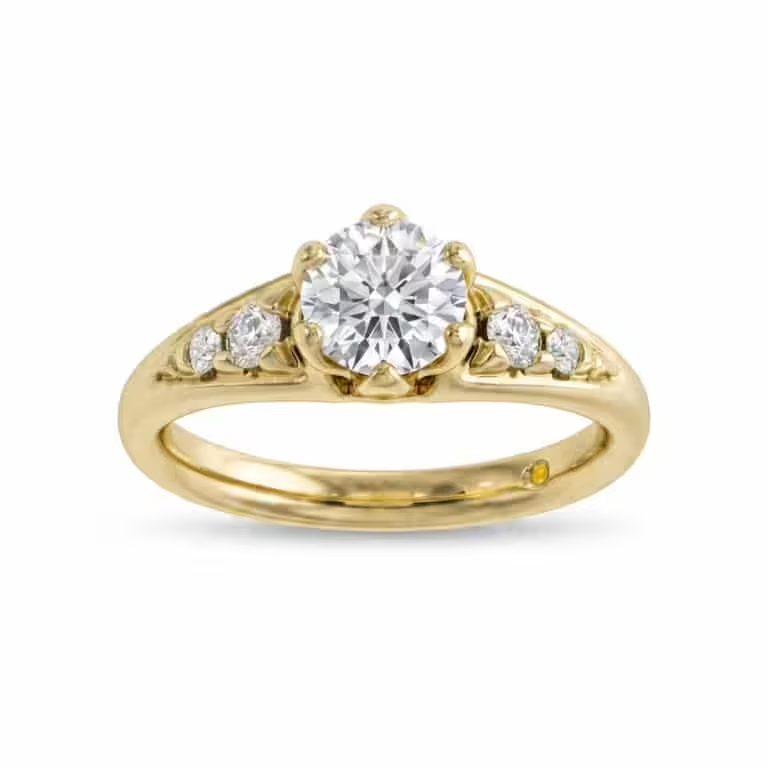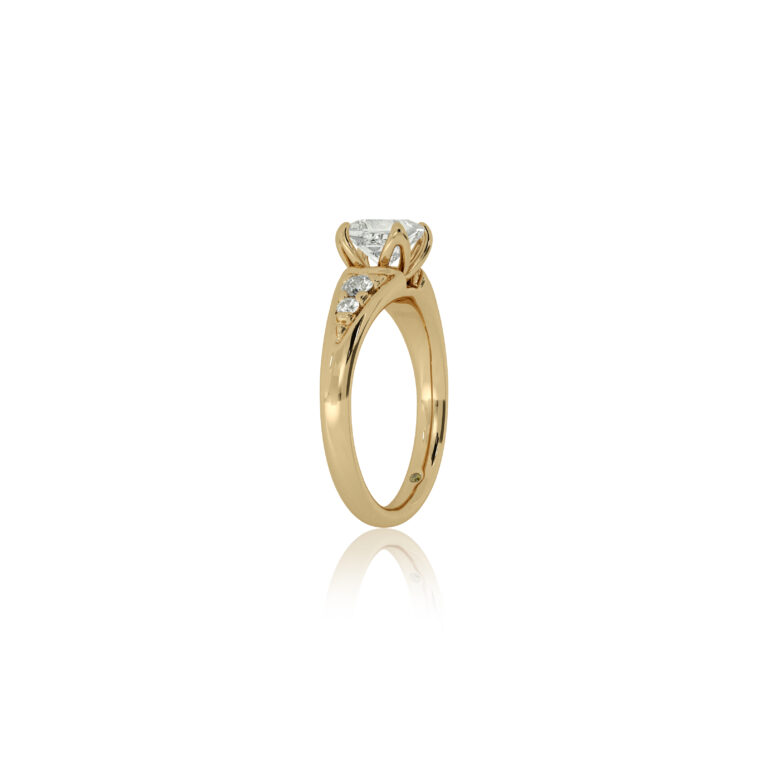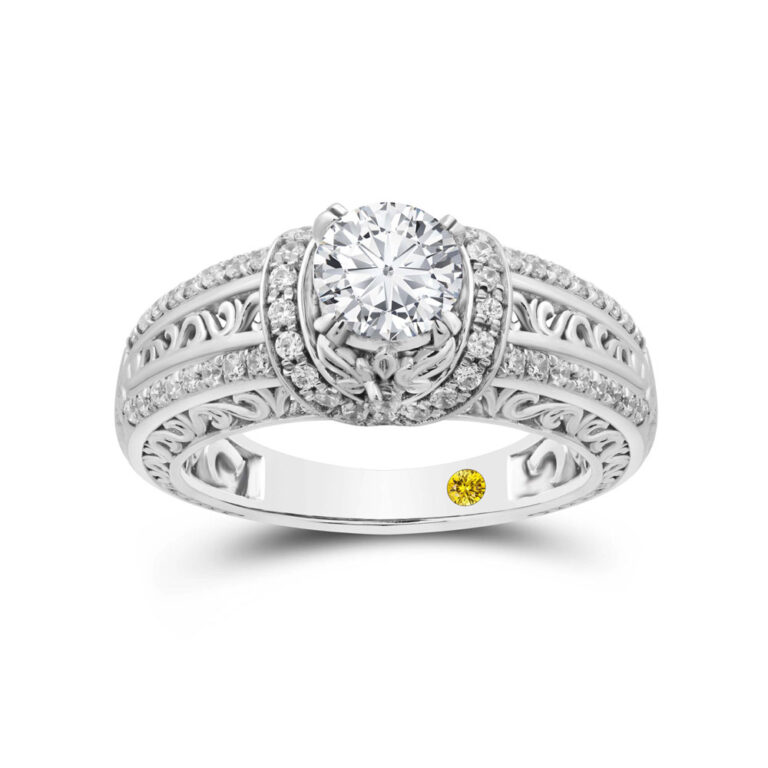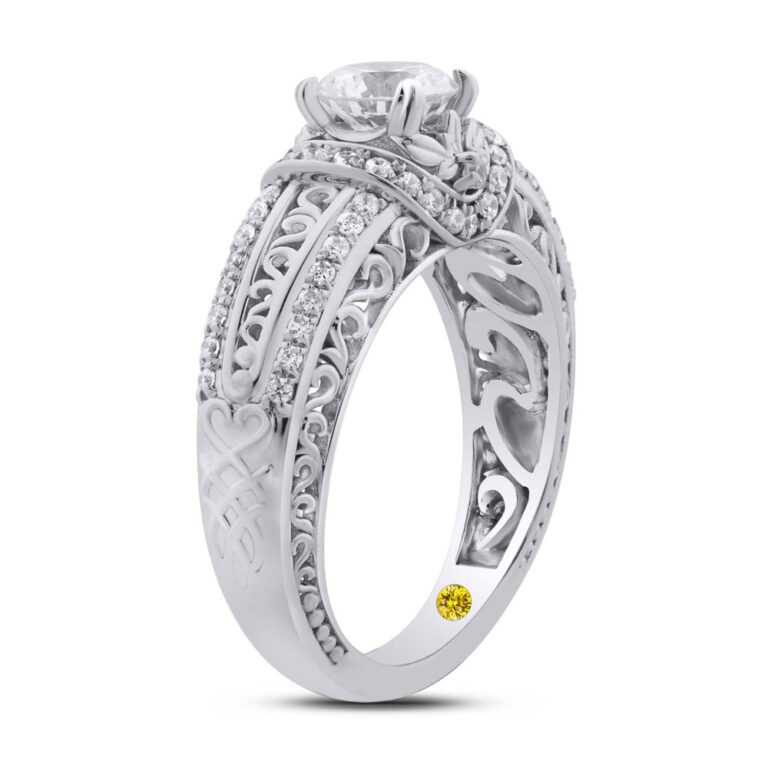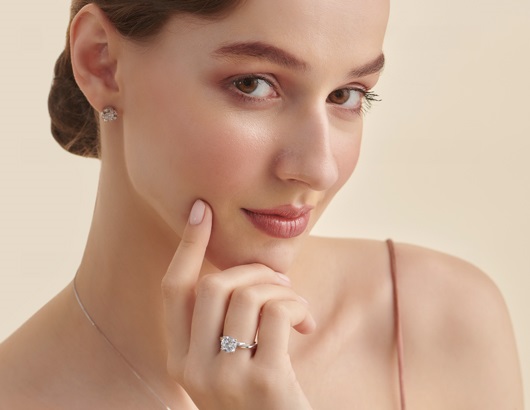
Choosing the right diamond shape requires balancing personal style, finger structure, and budget to find a stone that truly represents your unique love story. You’re searching for a symbol of your love that’s as special as your partner—something truly unique and not a design you see every day. The pressure to get this right is real. After more than thirty years in the jewelry business, I’ve guided countless couples on this exact journey. I’ve learned that choosing the right diamond isn’t just about the 4Cs (cut, color, clarity, and carat). It’s a personal mission to find a shape that truly tells your unique love story.
This guide is here to help. We’ll explore the world of diamond shapes, helping you find that one of a kind unique engagement ring. You’ll discover how different cuts complement various styles. Additionally, you will learn how to leverage the amazing value of lab grown diamond engagement rings to find a spectacular stone. By the end, you’ll have everything you need to make a choice that is both smart and straight from the heart.

Round Diamond vs. Fancy Shape Diamonds – What’s the Difference?
Why Is the Round Brilliant Cut So Popular?
When most people think of a diamond, they picture the iconic Round Brilliant. It’s the undisputed champion of sparkle, designed with 58 facets to maximize light return and create that dazzling fire and brilliance. While it’s a timeless choice, it’s just the beginning of what’s possible. As a veteran in this industry, I’ve seen a shift over the years. My clients, particularly a younger generation of buyers—both men and women—are looking for something that stands out. They want a ring that reflects their individuality.
What Are Fancy Shape Diamonds?
A ‘fancy shape’ is defined as any diamond cut other than the standard Round Brilliant, covering styles from the elegant Oval to the dramatic Marquise. This includes everything from the classic elegance of an Oval or Cushion cut to more dramatic and unique shapes. Examples include Marquise or Pear. The beauty of a fancy shape is that it allows for a more personal expression. It’s a way to break from tradition and find a stone that truly resonates.
How Lab-Grown Diamonds Enable More Choice and Value
The most remarkable thing about lab-grown diamonds is that they are grown as rough crystals and then cut into these various shapes, just like mined diamonds. The precision and technology involved today allow us to create flawless, stunning stones in any shape imaginable, and at a fraction of the cost.
This makes a larger, more impactful stone a real possibility for a greater number of people, making our collection of affordable engagement rings an accessible dream for many. You can learn all about diamond shapes in our full guide to all the different shapes.

The History and Meaning Behind Popular Diamond Shapes
To truly appreciate a diamond shape, you have to understand its history. As a purveyor of fine jewelry for over 30 years, I find that a story adds so much value to the piece. It’s not just a stone; it’s a piece of art with a lineage.
-
The Rose Cut (1500s)
One of the oldest cuts, the rose cut has a flat bottom and a dome-shaped crown of triangular facets. It was designed to sparkle in candlelight and has a romantic, antique feel. It’s a shape that appeals to the sentimental soul, someone who cherishes history and nostalgia. -
The Old Mine Cut & Cushion Cut (1700s)
With its recent celebrity popularity, the Old Mine Cut is back in the spotlight. As the predecessor to the modern Cushion cut, its signature rounded square shape and chunky facets were originally designed to dazzle in candlelight. This soft, pillowy appearance gives it a distinct vintage feel, making it a wonderful choice for those who appreciate the old-world charm of vintage inspired engagement rings. -
The Marquise Cut (18th Century)
Legend has it that King Louis XV commissioned his royal jeweller to create a diamond shape that resembled the smile of his mistress, the Marquise de Pompadour. This cut is all about drama, grandeur, and an adventurous spirit. Its elongated shape, a hallmark of the marquise solitaire diamond engagement ring, also gives the illusion of a larger carat weight. Understanding these origins helps you connect with the diamond on a deeper level.
Understanding these origins helps you connect with the diamond on a deeper level. For a woman, a historic cut can symbolize a timeless love story. Meanwhile, for a man looking to buy a gift, it shows a level of thoughtfulness that goes beyond a simple purchase. It’s about buying into a legacy, a story.

What Your Diamond Shape Says About Your Personality
Each diamond shape has its own unique character, and I often tell my clients that choosing one is a bit like a personality test. Here’s how I see the most popular shapes and the personalities they often attract:
-
The Timeless Round Brilliant Diamond
The Round Brilliant diamond is the ideal choice for someone who values tradition, symmetry, and unparalleled brilliance. The Round Brilliant is all about symmetry and unparalleled brilliance, the signature of a classic diamond solitaire engagement ring. If you’re someone who is reliable and has a balanced outlook on life, this is your shape. -
The Creative Oval Cut Diamond
The Oval cut is for the individual who is sophisticated and creative. It combines the brilliance of a Round cut with an elongated silhouette that makes the finger appear longer and more slender. It’s a modern twist on a classic, embodied perfectly in the oval solitaire engagement ring. -
The Modern Princess Cut Diamond
With its sharp, geometric lines, the Princess cut is for the person who is bold, confident, and has a modern, regal aura. It’s a great choice for someone who loves clean, contemporary designs. It offers a brilliant sparkle while retaining a unique, structured look, as seen in many princess cut solitaire engagement rings. -
The Elegant Emerald Cut Diamond
The Emerald cut is for the person who appreciates understated elegance and clarity. Unlike the Round Brilliant, this step-cut diamond emphasizes the stone’s purity and depth, creating the stunning “hall of mirrors” effect found in an emerald cut solitaire engagement ring. It’s a statement of sophisticated confidence, a choice for someone who values quality and discernment over overt sparkle. -
The Sentimental Cushion Cut Diamond
As I mentioned, the Cushion cut has a vintage soul. It’s for the person who is nostalgic, warm, and romantic. Its rounded corners and soft facets give it a gentle, classic feel. It’s the perfect shape for a love story that feels like it’s straight out of a fairy tale. -
The Adventurous Pear Shaped Diamond
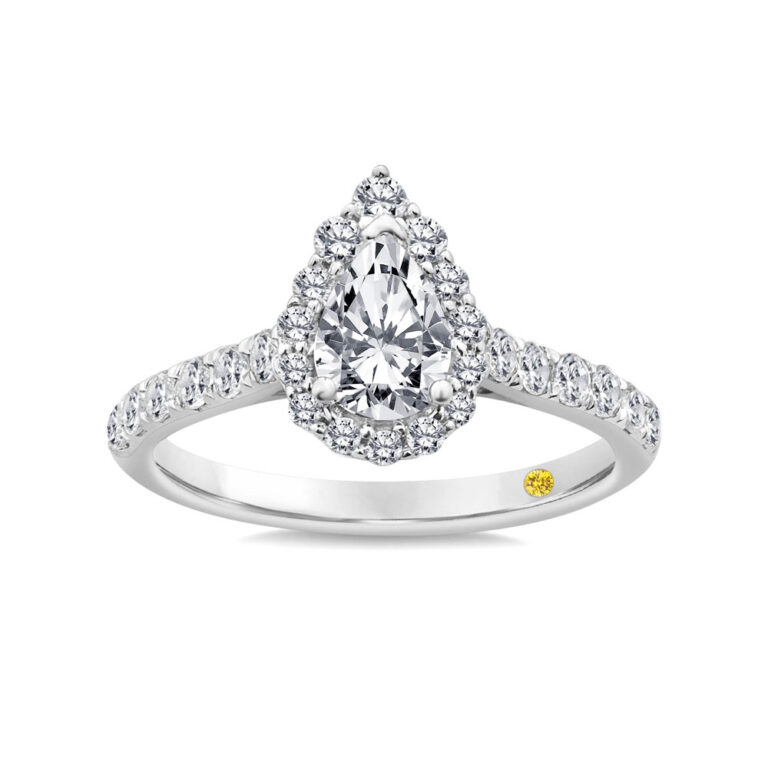
A Pear-shaped diamond is a teardrop with a brilliant sparkle. This shape is for the individual who is both graceful and adventurous. It’s a versatile cut that can be worn with the point facing up or down, and a pear solitaire engagement ring offers a unique look that symbolizes individuality and growth in a relationship
How to Choose a Diamond Shape That Complements Your Hand
Beyond personality, knowing how to choose a diamond shape also involves considering physical proportions. As a veteran jeweller, I’ve learned to pay attention to these subtle details.
-
For Shorter Fingers
For women with shorter fingers shapes with an elongated form, like the Oval, Marquise, or Pear, can create the illusion of longer, more slender fingers. -
For Broader Fingers
For women with broader fingers, a larger surface area is your friend. Oval and Marquise cuts work well here, as do some of the square shapes. A three-stone engagement ring with smaller side stones can also help balance the look. -
For Slender Fingers
For people with slender fingers, a delicate, classic round solitaire engagement ring or a subtle Princess cut will look stunning without overpowering the hand. A Cushion cut can also be a beautiful, soft choice.
The key is to find a shape that feels balanced and harmonious on the hand. I always encourage my clients to try on different styles to see what feels right.
Practical Considerations: Size, Price, and Sparkle
1. Which Shapes Look the Biggest? (Visual Size vs. Carat Weight)
Diamond shapes with elongated geometries, such as the Oval, Pear, and Marquise, typically appear larger than round diamonds of the same carat weight. This visual trick occurs because these shapes have a larger top surface area (table), spreading the carat weight out rather than holding it deep within the stone. If maximizing the visual impact of your engagement ring is a priority, opting for an elongated fancy shape is a smart strategy to get more “look” for your budget.
2. Relative Price: Why Different Diamond Shapes Cost Different Amounts
The shape of a diamond significantly influences its price, with the Round Brilliant typically commanding the highest premium per carat. This is because cutting a round diamond requires removing a significant amount of the original rough crystal to achieve perfect symmetry. In contrast, fancy shapes like the Cushion, Oval, or Princess cut generally retain more of the original rough during the cutting process, making them more cost-effective. Understanding this price difference is a key secret in knowing how to choose a diamond shape that stretches your budget further.
3. The “Bow-Tie” Effect
The “bow-tie effect” is a visual phenomenon found in elongated diamond shapes like Ovals, Pears, and Marquises, appearing as a dark, bow-tie-shaped shadow across the center of the stone. While a subtle bow-tie can add depth and contrast to the diamond, a severe or distinct black mark can detract from the stone’s beauty. At La Joya, we meticulously curate our lab-grown diamonds to ensure that this effect is minimal and does not compromise the stone’s brilliance.

How the Right Setting Enhances Your Diamond’s Shape
The engagement ring setting plays a functional and aesthetic role, securing the stone while visually influencing the diamond’s apparent shape and size. A diamond’s shape is only half the story. The other half is the setting. The right setting not only holds the diamond securely but also enhances its beauty and complements its shape.
-
Prong Setting
This is a classic choice for all shapes. A four-prong setting is great for a Princess or Radiant cut, while a six-prong setting is the traditional and secure choice for a Round Brilliant, making it the iconic solitaire engagement ring. -
Halo Setting
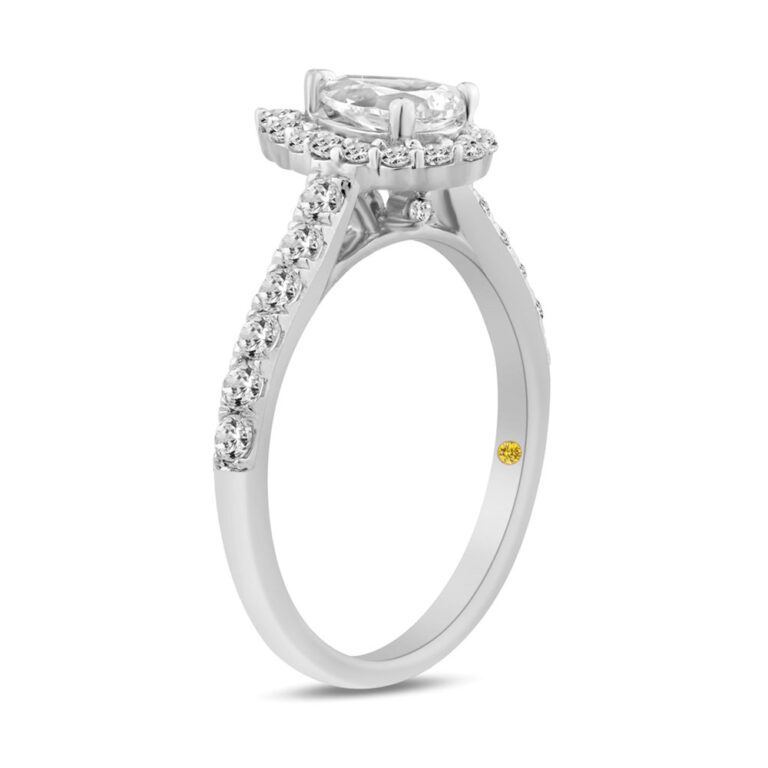
This setting, found in our halo engagement ring collection, surrounds the center diamond with a “halo” of smaller diamonds, making the center stone appear larger and more brilliant. It works exceptionally well with Oval, Cushion, and Pear shapes and if you are still figuring out how to choose a diamond shape that looks substantial on the finger.
A modern twist on this is the engagement ring with a hidden halo, which features a halo visible only from the profile, adding a secret sparkle. -
Bezel Setting
For the active individual who wants maximum security, the bezel setting is a great choice. The diamond is completely surrounded by a thin metal rim, which protects the edges of the stone. This setting gives a modern, sleek look and is a great option for an Emerald or Princess cut. -
Pavé Setting
A pavé engagement ring features a band lined with tiny, closely-set diamonds that add continuous sparkle. This setting complements almost any center stone shape and is a wonderful way to add extra brilliance to the ring.
The right combination of a diamond shape and one of these settings is how you create a truly one-of-a-kind piece.

What Are the Advantages of Lab-Grown Diamonds?
For years, the conversation around diamonds was dominated by a single narrative: scarcity, tradition, and value retention. Today, that conversation has shifted. I’ve seen a dramatic change in what my clients are looking for. They want beauty and quality, but they also want transparency and ethical sourcing. This is where lab-grown diamonds shine.
I’ve made the decision to sell only lab-grown diamonds because they are, in every meaningful way, identical to their mined counterparts. They have the same chemical composition, the same physical properties, and the same fiery brilliance. The only difference is their origin.
By choosing a lab-grown diamond, you are choosing a stone with a traceable, ethical history. You are getting far more for your money. This means you can afford that larger, more spectacular lab created diamond engagement ring in the fancy shape you’ve fallen in love with, without the traditional high-end price tag.
This value also opens up the wonderful possibility of creating a custom design engagement ring. This allows you to bring your unique vision to life without compromise. It’s a smart choice for the modern consumer who wants to make a beautiful statement that aligns with their values.

The Bottom Line – Which Diamond Shape is Best for Your Unique Engagement Ring
The process of choosing a diamond is deeply personal. Ultimately, understanding how to choose a diamond shape comes down to finding the balance between your personal aesthetic, the shape of your hand, and the history that speaks to you.
The right diamond shape, paired with the perfect engagement ring setting, will result in a ring that tells your love story for a lifetime. To find the ideal choice for your budget and style, browse our complete collection of lab diamond engagement rings.