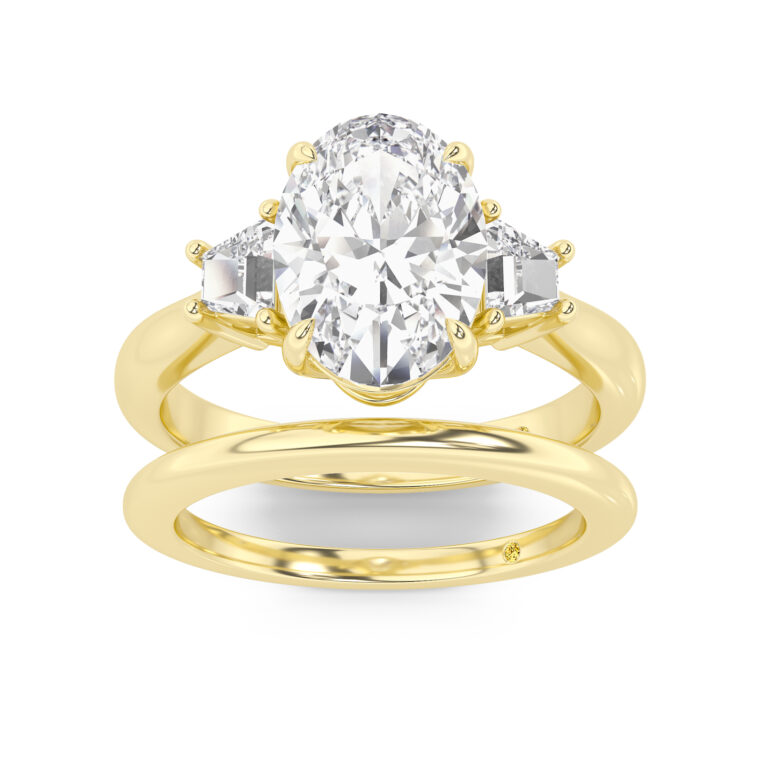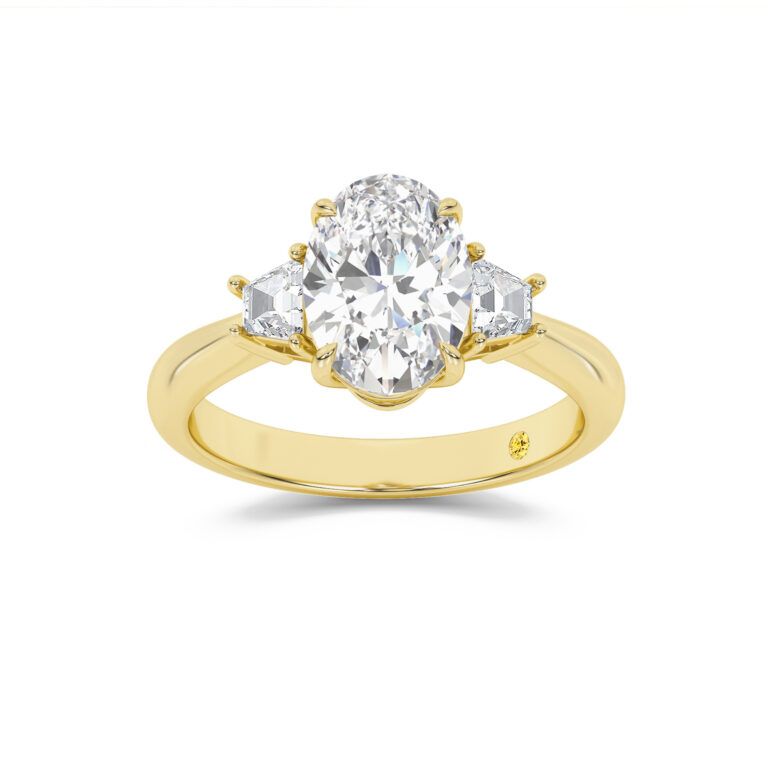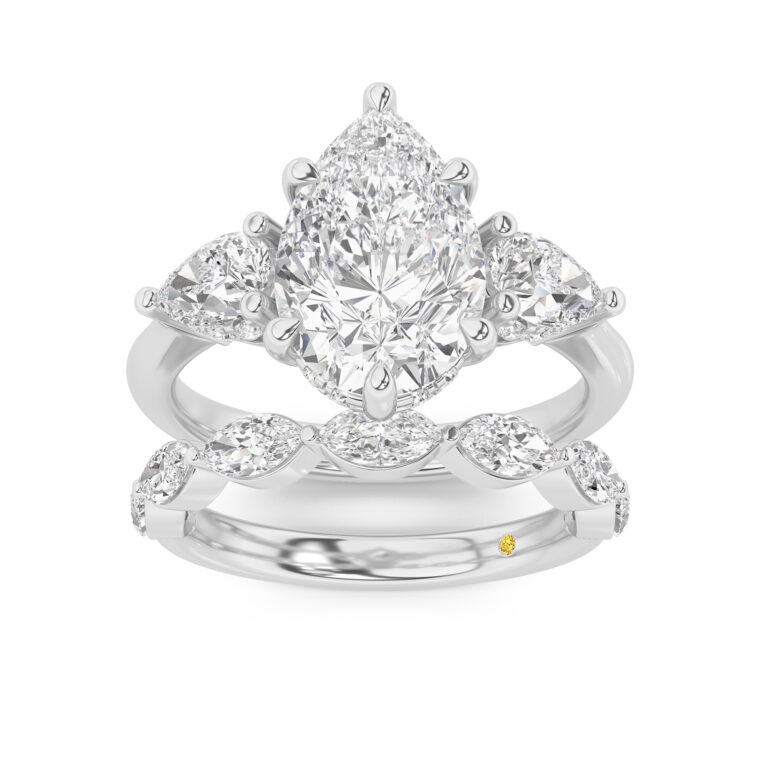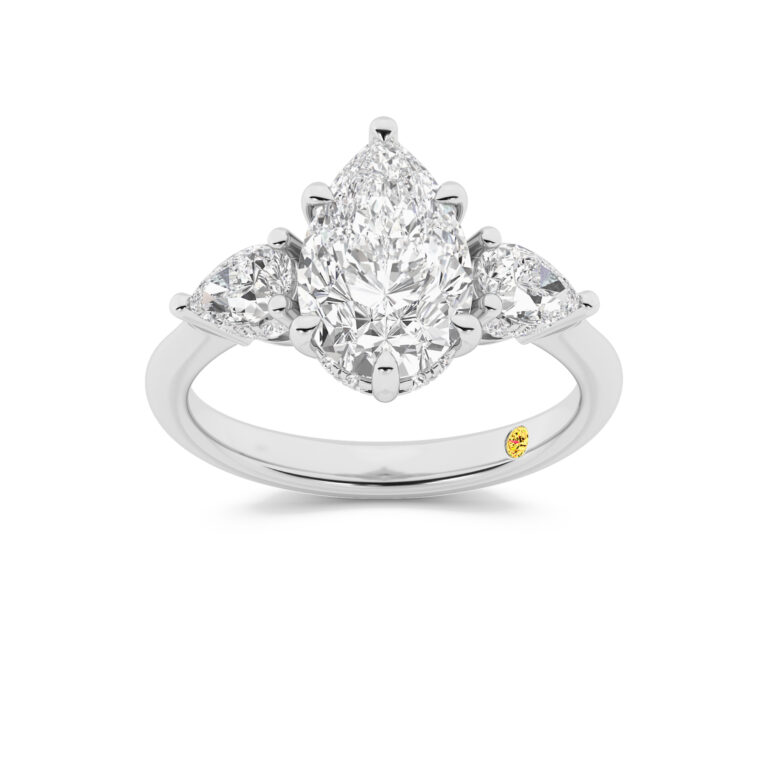
Selecting a three-stone engagement ring is a choice that speaks to timeless elegance, symbolizing your past, present, and future. However, many find that the practical challenge comes after the proposal: finding a wedding band for your three stone engagement ring that truly fits.
Over my 30 years in manufacturing and design, I have seen clients grow frustrated when a traditional, straight wedding band creates an unsightly gap or, worse, physically damages the main ring. The complex architecture of a three-stone engagement ring design—with side stones that often extend outward—demands a solution that accounts for more than just finger size.
Let’s explore how the unique structure of your ring dictates the perfect pairing.

How Does the Setting Profile Affect Your Wedding Band Choice?
The overall height and shape of an engagement ring’s setting directly dictate whether a wedding band can sit flush or will be blocked by the ring’s structural baskets.
If your three-stone ring features stones that are set very low in their baskets close to the finger, a straight band will physically bump into the structure holding the diamonds. Elevated settings, such as those built with a high cathedral bridge, often leave space for a band to slide completely underneath.
Understanding this physical engineering requirement is the essential first step to choosing a match that looks purposeful and premium. Because of this, choosing the ideal setting for your three-stone ring right from the start can save you a lot of headaches later.
But what if you already have a stunning low-set design? Let’s look at your best options.
Why Do Low-Set Rings Need a Contoured or Chevron Wedding Band?
Low-set three-stone rings require a contoured or chevron wedding band because the side stone baskets physically obstruct straight metal shanks from sitting flush against the rin. A precise, flush fit is critical because any metal-on-metal rubbing will degrade the gold settings over decades.
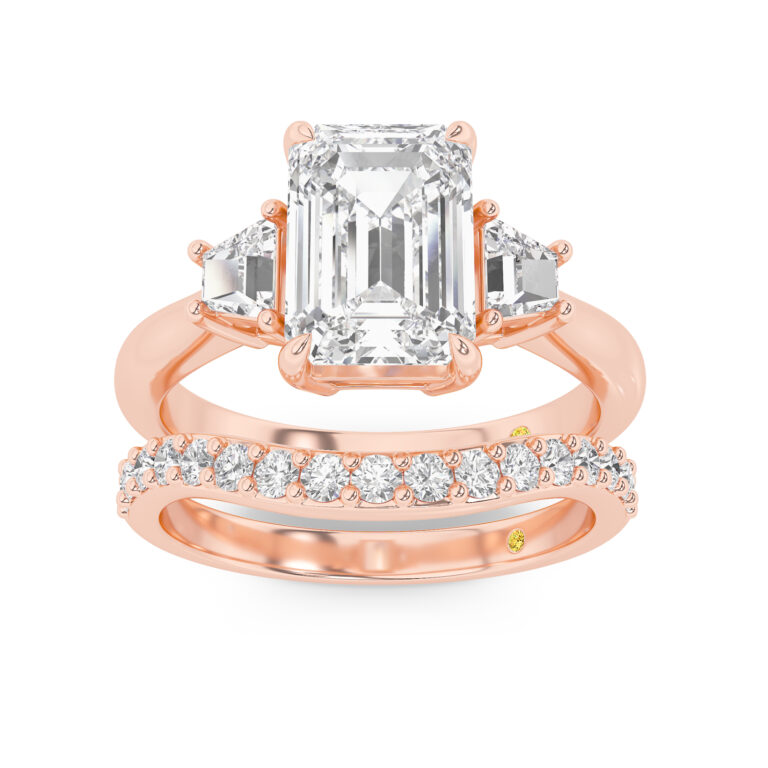
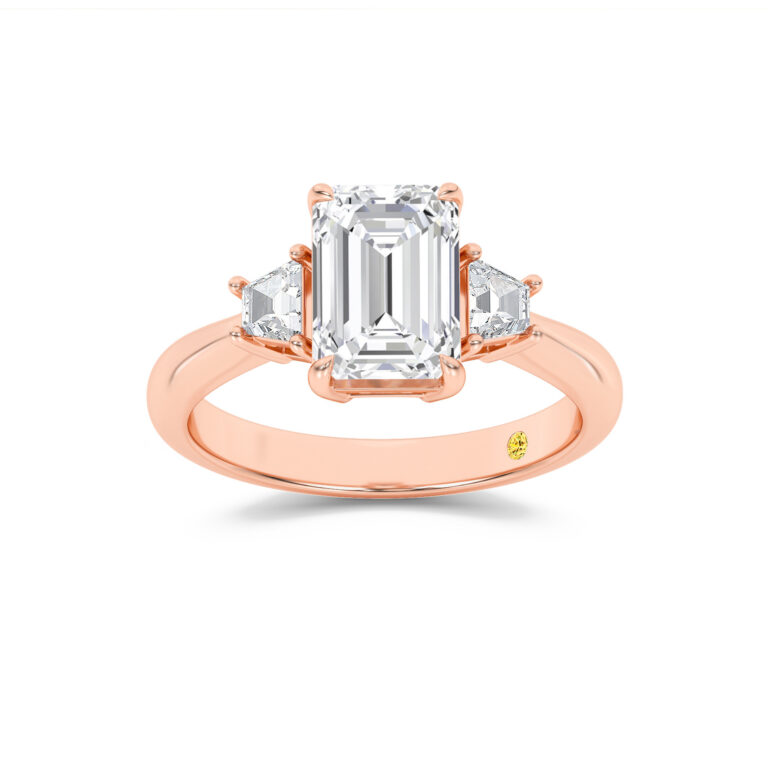
When I design these contoured pieces, it requires highly precise measurement work at my office design table. My engineers must match the curve of the contoured band exactly to clear the outer prongs and the precise base angle of your specific side diamonds. If you have sharp-cornered baguettes or a three stone emerald cut engagement ring, this calculation is even more sensitive.
Ultimately, a well-engineered curved band preserves the integrity of your engagement ring while creating a sleek, single-ring aesthetic.
To see how seamlessly this can work, you can browse our expertly engineered diamond wedding band collections designed specifically to hug the unique profile of your three-stone ring.
On the other hand, if your ring sits higher on the finger, your choices open up significantly.

What Options Work Best with a High-Set Cathedral Ring?
High-set cathedral rings are compatible with almost any straight wedding band style because the lifted “shoulders” of the setting provide enough clearance for a band to sit flush. The stones and baskets are lifted on structural supports called “cathedral shoulders,” creating a distinct “tunnel” below the main setting where the wedding band can slide in comfortably.
My office clients with high-set rings often prefer a brilliant, lab-grown diamond eternity band in 14k or 18k yellow or white gold. I always guide them to select an eternity band with lab-grown diamonds that exactly match the clarity and color grades of the stones in their engagement ring for a truly cohesive look. These modern, sophisticated stones allow you to maximize carat weight for a stunning, unified look on your finger.
For those seeking a more dramatic transformation, a diamond bridal set can be created using a ring enhancer or “jacket.” This option frames your three-stone ring on both sides, essentially turning a trilogy design into a five- or seven-stone look. It’s an ideal choice if you want to maximize the “wow” factor and ensure your rings are perfectly aligned.
While a high setting makes pairing easier, achieving that perfect flush fit is vital no matter your ring’s height.
Can Gaps Between the Rings Cause Damage Over Time?
A structural gap between your wedding band and engagement ring allows the metal surfaces to friction-grind whenever you move your hand. This microscopic but constant metal-on-metal wear will physically thin the prongs and the main band structure over many years, significantly weakening the settings.
Beyond the aesthetic aspect—which I find many premium clients prefer to avoid—the long-term integrity of the heirloom is at stake. When sorting lab-grown diamonds for our custom settings, I prioritize securing the stones for maximum longevity, and a perfectly paired band is a critical component of that protection. If your chosen combination has a significant gap, a small, subtle spacer ring can often provide the necessary physical separation.
Alternatively, to avoid guesswork right from the beginning, many couples opt for beautifully pre-matched diamond engagement rings and wedding bands.
To help you visualize the best combinations at a glance, I’ve put together a quick reference chart below.
Wedding Band for Three Stone Ring Technical Fit Guide
| Three-Stone Setting Profile | Band Type Compatibility | Technical Consideration | Ideal Metal (Match Main Ring) |
|---|---|---|---|
| Low Basket (Flush to Finger) | Curved, Contoured, Chevron | Band must clear prongs and side diamond corners. | 14k or 18k Gold (White, Yellow, Rose) |
| High Cathedral (Elevated) | Straight, Eternity, Pave | The band must fit completely under the main setting bridge. | 14k or 18k Gold (White, Yellow, Rose) |
| Unique Shapes (Emerald/Baguette) | Custom Contour Recommended | Critical fit required around sharp geometric corners. | 14k or 18k Gold (White, Yellow, Rose) |
How Does the Era of a Ring Influence the Matching Process?
Matching the aesthetic era of a three-stone ring requires aligning the decorative details, such as milgrain or metal finish, between the engagement ring and the wedding band.
If you have one of our vintage inspired engagement rings, look for a band with matching wheat engraving. Conversely, a three stone round engagement ring with a modern bezel setting pairs best with a clean, high-polish band to maintain a sleek silhouette.
How Does Jewelry Craftsmanship Protect Lab-Grown Diamond Settings?
Professional jewelry craftsmanship ensures that lab-grown diamond settings are engineered for maximum durability through precise metal-on-metal alignment and hand-sorted stone consistency. My commitment in my office has always been to treat every wedding band for three stone engagement ring project as an engineering challenge. Whether we are hand-sorting modern lab-grown diamonds for an eternity band or precisely engineering a 14k gold chevron curve, our work focuses on enduring value. As a third-generation jeweler, I understand that this paired structure will hold your family’s future history.