Finding an engagement ring that feels truly unique and personal is a real challenge. You are likely drawn to the romance and detail of vintage styles, such as Victorian-style engagement rings, which feel one-of-a-kind, not like something everyone else has. But buying a true antique, a ring that is over 100 years old, can be a minefield of fragile settings, worn-down stones, and unknown histories. I am here to solve this problem for you.
In my 30+ years of manufacturing and supplying jewelry, I’ve learned that you don’t need an old ring to get a timeless look. We are going to explore the beautiful history of Victorian engagement rings. Then, I will show you how to capture that stunning, romantic spirit perfectly. The secret is using the brilliance and incredible value of modern lab-grown diamonds set in beautiful, durable gold.

What is a Victorian-style engagement ring? (1837-1901)
This style is not just one “look.” It spans over 60 years, from 1837 to 1901, tracking the life and love of its namesake – Queen Victoria. In my experience, no other period of jewelry was so personal. The jewelry from this era was a kind of code. It was full of sentiment, symbolism, and secret messages. Queen Victoria herself set the trends. Her own engagement ring from Prince Albert was not a diamond. It was a serpent (a snake) with an emerald-set head.
This might sound strange today! But to a Victorian, the serpent symbolized eternal love. This is the key to understanding Victorian engagement rings. They were less about the size of the stone and more about the meaning of the piece.
The Three Eras of Victorian Jewelry
To really grasp the style, I break the era down into three distinct parts
1. The Early Victorian (Romantic) Period (1837-1860)
This was the “honeymoon” phase. Young Queen Victoria was deeply in love. The jewelry from this time is delicate, natural, and symbolic. Think motifs of flowers, hearts, birds, and, of course, serpents.
2. The Mid-Victorian (Grand) Period (1861-1880)
This era began with a tragedy. Victoria’s beloved husband, Prince Albert, died in 1861. She went into lifelong mourning. Consequently, jewelry became heavier, darker, and more somber. This is when “mourning jewelry” became popular. The designs were still ornate, but they were bolder and more dramatic.
3. The Late Victorian (Aesthetic) Period (1881-1901)
As the era ended, things lightened up. Jewelers became more playful. They used more diamonds and lighter, more delicate settings. We see the beginnings of the classic solitaire here. This period was about beauty for its own sake. The Sentimental “Language” of Victorian Jewelry. The most charming part of this era was “acrostic” jewelry. A ring might be set with a series of different gemstones. The first letter of each stone’s name would spell out a secret word. For example, a “REGARD” ring would be set with a:
- Ruby
- Emerald
- Garnet
- Amethyst
- Ruby
- Diamond
This is the kind of romantic, hidden detail that defines the Victorian spirit.
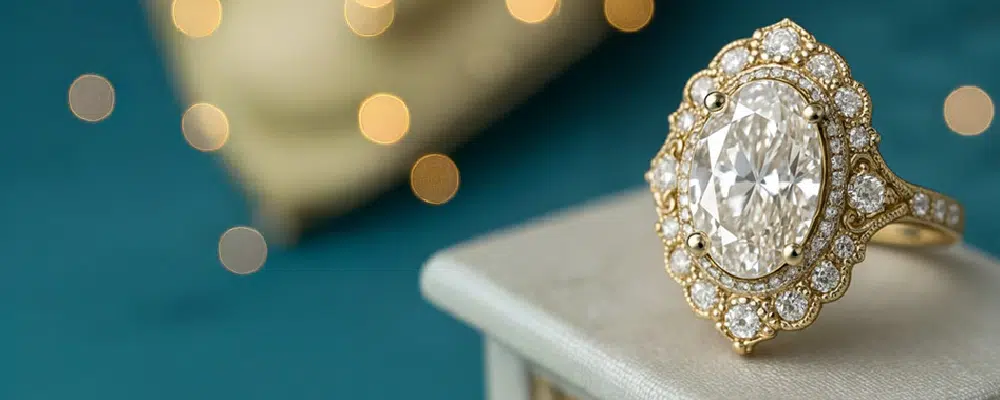
Antique Ring vs. Modern Inspired-Design – Which is Better?
As a jeweler with decades of experience, I have handled many true antiques. They are beautiful artifacts. But I would rarely recommend one for an engagement ring. Here is my practical, professional advice.
The Antique Problem – Why Old Rings Aren’t Practical
A ring you wear every day needs to be durable. Antique rings are, by definition, old.
- Prongs are worn – The little metal claws holding the stone can be thin and brittle after 100+ years.
- Stones are fragile – Old-cut diamonds can have chips or internal flaws that make them prone to breaking.
- Metal is soft – Gold alloys from the 1800s are often not as strong as modern, scientifically precise alloys.
Buying an antique is buying a piece of history. It belongs in a collection. It was not designed to handle modern life—typing, washing hands, going to the gym. For a ring you’ll wear daily, one of our modern vintage-style engagement rings is a far more practical and beautiful choice.
The Modern Solution – Lab-Grown Diamonds
This is where technology gives us the best of both worlds. Here’s why: A lab-grown diamond is chemically and optically identical to a mined diamond. It is not a “fake.” It is a real diamond, just created in a modern lab instead of pulled from the earth. Because they are so much more affordable (often 50-70% less), you can get a bigger, higher-quality, and more brilliant diamond for your budget. This is a huge advantage.
It frees up your budget to pay for the real star of a Victorian ring: the intricate setting. You can afford the hand-engraving, the delicate “milgrain” (tiny bead details), and the halo of small stones because you made the smart choice on the center stone. This is the key advantage of our broader collection of lab-grown diamond engagement rings.
The Perfect Metal – Why Gold Works Best
For a Victorian look, gold is the only way to go. Its warmth and character are essential to the style.
- Yellow Gold – This is the most authentic choice. The rich, buttery color of 14k or 18k yellow gold is a perfect backdrop for a sparkling lab-grown diamond. It has an undeniable vintage warmth.
- Rose Gold – This metal was extremely popular during the Victorian era. Its coppery, romantic hue adds a layer of softness and romance that is perfect for these designs.
- White Gold – If you love the Victorian style but prefer a modern look, white gold is an excellent choice. It provides a bright, neutral backdrop that makes your lab-grown diamonds look even whiter and more brilliant.
In my professional opinion, a modern, custom-made ring in gold with a lab-grown center stone is the perfect solution. You get the exact historical style you love, but with modern durability and unmatched value.

Key Victorian Ring Styles (And How to Get the Look)
You don’t have to copy an antique exactly. The idea is to borrow these romantic elements to create your own perfect ring.
Style 1 -The Romantic Cluster & Halo
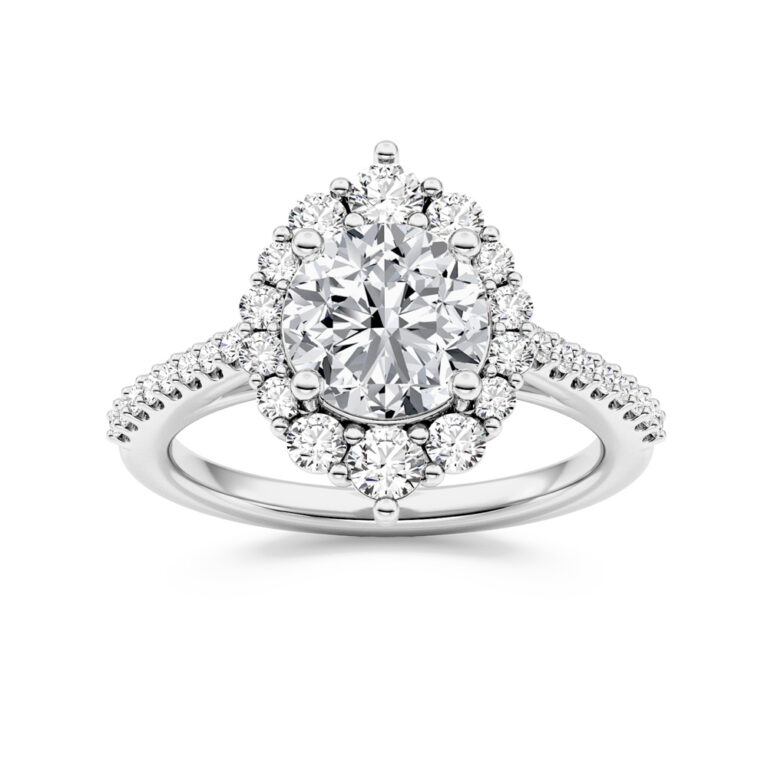
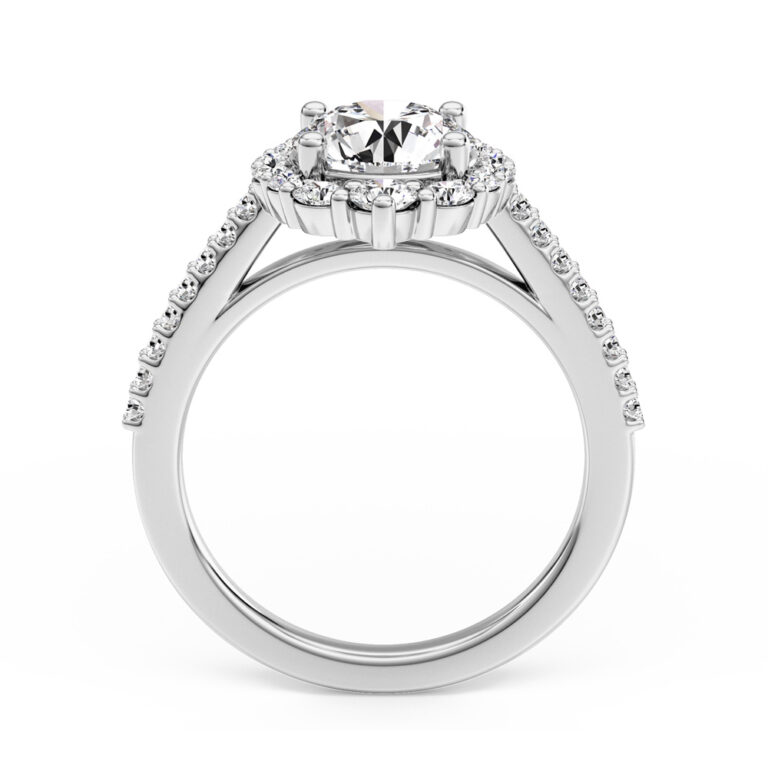
Victorians loved to cluster smaller stones together to create a large, impressive look. This is the forerunner to the modern halo setting.
- The Look – A central stone (a lab-grown diamond, sapphire, or ruby) surrounded by a “halo” or “cluster” of smaller lab-grown diamonds.
- How to Modernize It – Use a modern round brilliant or cushion-cut lab-grown diamond as the center. Surround it with a delicate halo of tiny, pavé-set diamonds. This gives you that “big sparkle” look the Victorians loved, but with far more precision and fire.
Style 2 – Symbolic Motifs (Snakes, Hearts, and Flowers)
This is the true heart of the Victorian style. These rings tell a story.
- The Look – Rings that are literally shaped like symbols. A snake biting its tail (eternity). Two hands clasping a heart (a “fede gimmel” ring). A flower with gemstone “petals.”
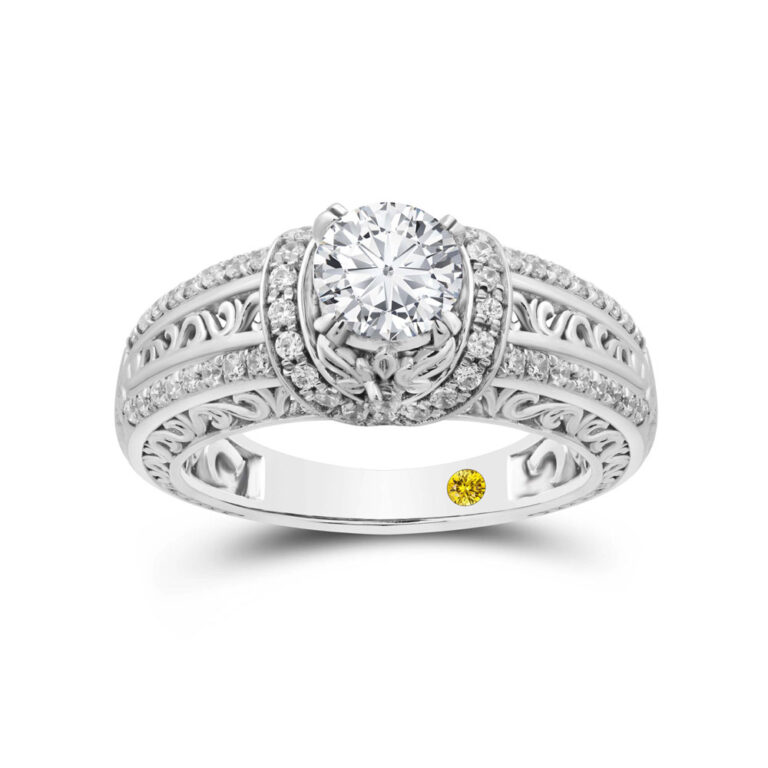
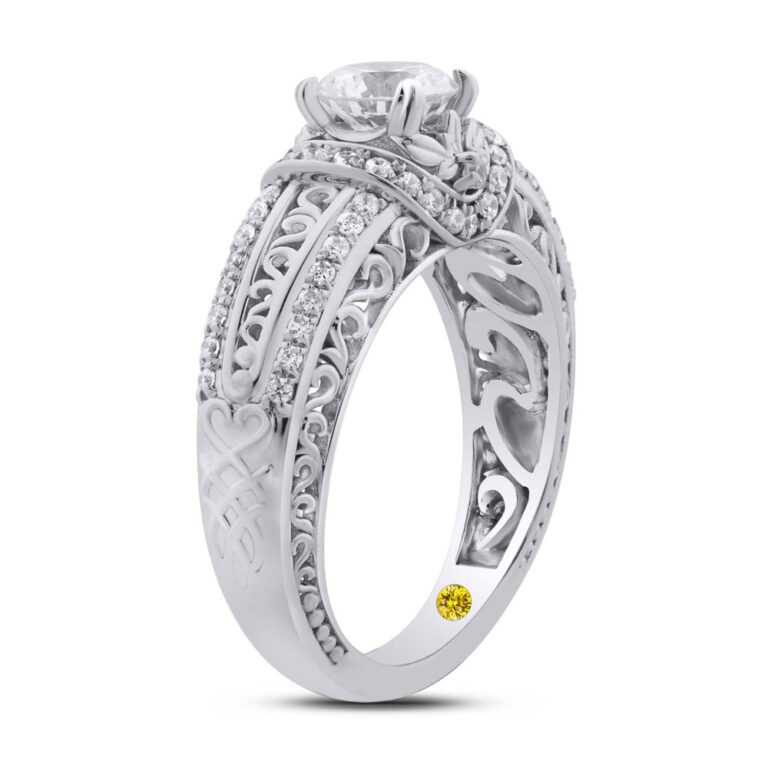
- How to Modernize It – This is where custom design shines. A subtle, engraved floral pattern on the band. A “hidden” detail, like a tiny heart carved into the setting’s gallery (the part under the diamond). You can capture the symbolism in a way that is more personal and less costumey.
Style 3 – Ornate Engraving and Filigree
The Victorians were maximalists. They believed “more is more.” Their rings were covered in tiny, intricate details.
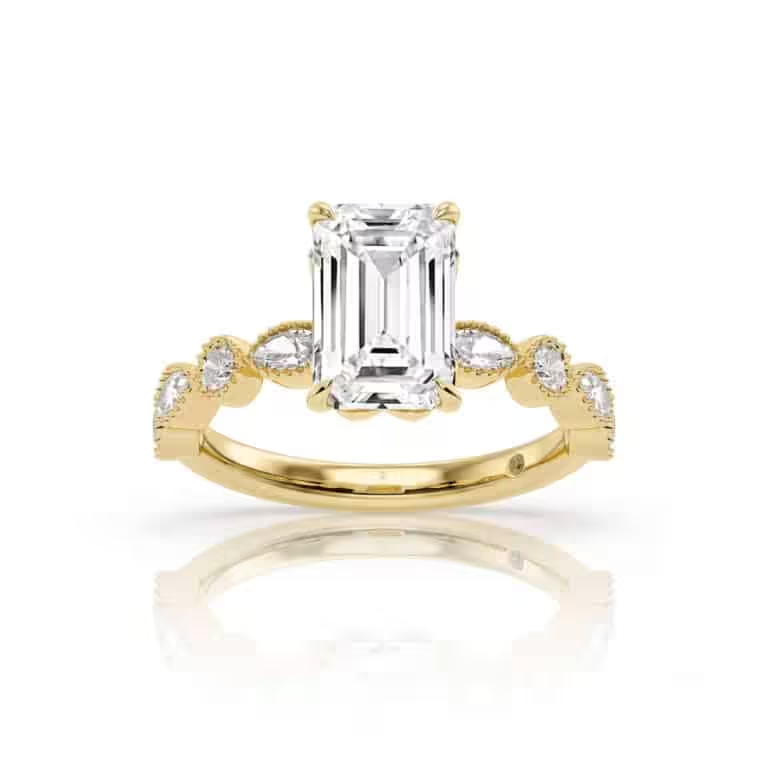
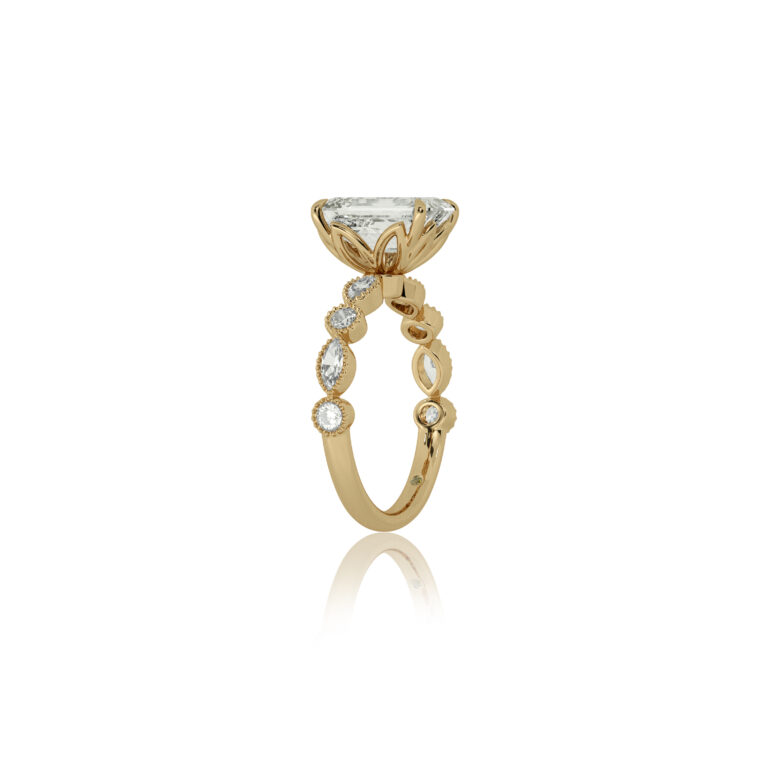
- The Look: Filigree – Delicate, lace-like patterns made from tiny threads of gold. Milgrain – Tiny beads of gold used to edge the setting, giving it a soft, antique texture. Hand-Engraving – Swirls, floral patterns, or wheat sheaves (symbolizing prosperity) carved directly into the band.
- How to Modernize It – This is easy to do today. We use these exact techniques to give a new ring an instant heirloom quality. Adding a simple line of milgrain or an engraved pattern to the band of a simple solitaire instantly transforms it into a Victorian-inspired piece.
Style 4: The Introduction of “Solitaires”
Toward the end of the era, the classic solitaire (a single stone on a band) began to get popular. The “Tiffany” setting, which lifts the diamond up high, was invented in 1886. This is just one of many engagement ring setting styles jewelers still use today.
- The Look – A single, prominent stone. However, Victorian solitaires still had detailed bands, often with ornate “shoulders” (the part of the band next to the stone).
- How to Modernize It – This is the easiest style to adopt. You can start by exploring classic solitaire engagement ring designs in yellow or rose gold. Then, add a Victorian touch with some engraving on the band or a subtle filigree basket holding your lab-grown diamond.

How to Choose the Best Center Stone for a Victorian-Style Engagement Ring
The stone you choose has a huge impact on the ring’s final look.
Why Modern Cuts Outshine Old Cuts
You will hear about “Old Mine” cuts or “Rose” cuts. These were the diamond cuts of the Victorian era. In my honest opinion, they are a poor choice for a modern ring. Here’s the simple truth: They were cut by hand, in candlelight. They were designed to glimmer in low light. They lack the mathematical precision of modern cuts. A modern Round Brilliant, Cushion Cut, or Oval Cut lab-grown diamond is designed for maximum brilliance.
It will catch light from every angle and sparkle intensely. My advice: Get a gift for engagement, but place it in a Victorian-style setting. This is the ultimate win. You get the best of history (the romantic setting) and the best of modern technology (a brighter, more beautiful, and more valuable stone).
Colorful Lab-Grown Gemstones – A True Victorian Touch
Remember, Queen Victoria’s ring was an emerald. The Victorians loved color. This is a fantastic way to make your ring stand out. Instead of a diamond, consider a lab-grown sapphire, ruby, or emerald.
- They are physically identical to their mined counterparts.
- They are flawless, with deeper, more consistent color than most mined stones.
- They are incredibly affordable.
A deep blue lab-grown sapphire in a lacy yellow gold halo setting is, to me, one of the most beautiful and authentic Victorian engagement rings you can design today for a romantic jewelry gift.
Expert Tips for Designing a Victorian-Style Ring
As someone who has made thousands of custom rings, here are my final thoughts.
- Find the Right Jeweler – You need a jeweler who understands custom design, not just someone who sells from a case. You want an expert who can translate your ideas—like “romantic” or “ornate”—into a practical, wearable design.
- Balance Detail with Durability – It’s easy to get carried away with filigree and engraving. Remember, you have to wear this ring. I always advise my clients to keep the inside of the band smooth and comfortable. We can put all the detail on the top and sides, but the ring itself must be sturdy and smooth against your finger.
- Start with the Stone – Always choose your center lab-grown stone first. The ring must be built to protect and flatter that specific stone. Its size and shape will dictate the whole design.
The Bottom Line – Is the Victorian Style Engagement Ring Right for You?
Getting a ring in the style of the Victorian engagement rings does not mean you need an old, fragile piece of jewelry. It means you are embracing a style that is built on romance, deep symbolism, and beautiful, ornate detail. By choosing a modern gift for your fiancée or holiday engagement rings and setting it in a custom-designed gold ring, you get the absolute best of both worlds. You get all the timeless character of a 19th-century heirloom with the brilliance, value, and durability that only 21st-century technology can provide.