[lajoya_yith_wishlist_counter]
0
Rated “Excellent” by Shopper Approved®
5.0
(47 reviews)
Free Shipping!
Pear-Shaped Diamond Carat Size Guide

About the Author: This expert insight was authored by Nishit Mehta, a third-generation diamond veteran and global market disruptor with over 30 years of experience scaling 9-figure diamond operations. As the founder of La Joya Jewelry and architect of the Ethical Heirloom Framework, Nishit has overseen 112 US retail stores and directed the integration of storied Italian luxury brands. A recognized visionary in lab-grown innovation, Nishit specializes in solving the “luxury compromise,” eliminating unethical sourcing chaos, and disrupting traditional price-bloat to deliver uncompromising, investment-grade jewelry.

Last Updated On :
  • The “Sweet Spot”: For most hands, the 1.50 to 2.00-carat range offers the best balance of finger coverage and daily comfort.
  • Ratio Matters: A higher length-to-width ratio makes a pear diamond look larger than it is; carat weight isn’t the only factor for visual size.
  • The Smart Choice: Lab-Grown diamonds allow you to maximize carat size and stone cut quality without compromising your budget.

Table Of Contents

Choosing the right size for a fancy shape is difficult because buyers often struggle to visualize how specific weights will actually look on their hands. I have seen countless clients hesitate because they fear a stone will look too small or overwhelmingly large. In this guide, I will solve this uncertainty by breaking down the visual impact of different weights and helping you find tthe best carat size for your pear shaped engagement ring.

How Carat Size Affects the Appearance of Pear-Shaped Diamonds

Carat size fundamentally alters the visual balance, finger coverage, and light performance of a pear-shaped diamond. In my 30 years of manufacturing jewelry, I have learned that pear shapes are unique because they carry their weight differently than rounds. Because they stretch lengthwise, even smaller carat sizes can appear larger than you might expect.

In fact, due to this ‘geometry of value,’ a pear diamond will easily look 15 to 20 percent larger than a round brilliant of the exact same carat weight. You gain significant finger coverage without paying for hidden depth.

However, as the carat weight increases, the diamond covers more surface area, which means any cut or symmetry issues become glaringly obvious. My sourcing experience consistently shows a clear pattern: smaller pears rely on their proportions to make a mark. Mid-size pears strike a fantastic balance between elegance and impact.

Conversely, larger pears magnify brilliance, but they also act as a magnifying glass for flaws. Therefore, the carat selection must always be evaluated alongside cut quality’s impact on brilliance, never in isolation.
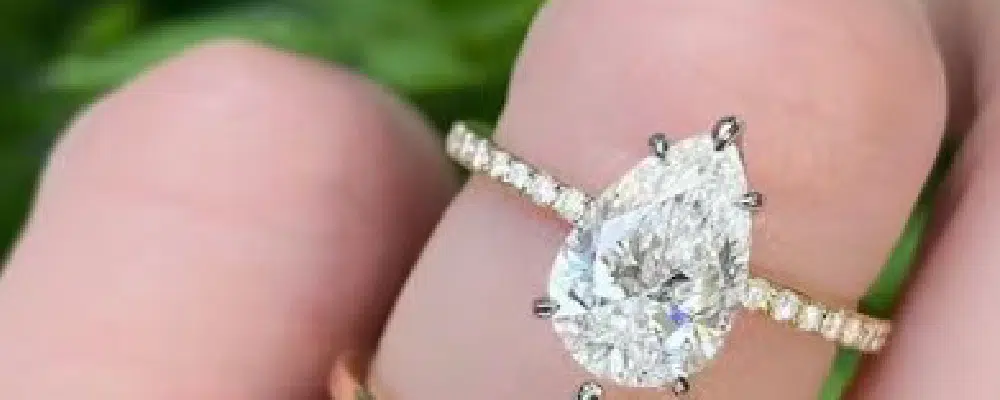
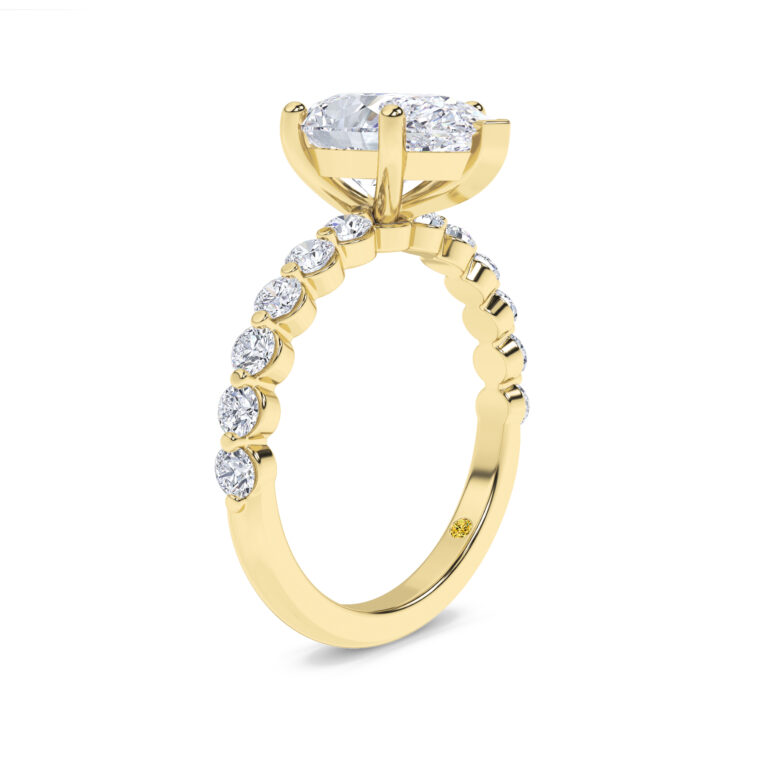
Large pear shaped diamond engagement ring with a hidden halo and pavé band to maximize carat appearance on the finger.

The Importance of Length-to-Width Ratio

The length-to-width ratio determines whether a pear-shaped diamond looks elongated and slimming or stout and wide. This is a detail many blogs miss, but in my workshop, it is critical. Two diamonds can both be 1.50 carats, but if one has a ratio of 1.30 (short/chubby) and the other is 1.60 (long/slender), the 1.60 will look significantly larger on the finger.

If you want to maximize the look of the carat size, I always recommend aiming for a ratio between 1.45 and 1.55. This ideal ratio ensures the stone retains the elegant teardrop silhouette that makes pear engagement rings so beneficial for slimming the finger.

Pros and Cons of Small Carat Pear Diamonds (Under 1.00 ct)

Small carat pear-shaped diamonds offer sophistication, affordability, and versatility, though they provide less immediate visual impact than larger stones. Diamonds under one carat are often the go-to for buyers who prioritize refinement and ease of daily wear. From a manufacturing perspective, these are easier to set securely.
Advantages of smaller carat sizes include:
  • Intense Brilliance: They sparkle fiercely when cut well.
  • Cost Efficiency: Significantly lower cost per stone.
  • Clean Optics: Reduced bow-tie visibility due to tighter proportions.
  • Comfort: They fit easily into simple, low-profile designs like pear solitaire engagement rings.

Potential drawbacks include:

  • Less Coverage: They offer minimal finger coverage.
  • Subtle Presence: They can get lost in heavy halo or statement settings.
Expert Tip: If you love a smaller center stone but want more impact, consider halo engagement rings, which can add significant visual spread to a sub-1.00ct diamond.

Pros and Cons of Medium Carat Pear Diamonds (1.00 ct – 2.00 ct)

Medium carat pear-shaped diamonds generally provide the optimal balance between size, brilliance, and wearability for the average hand. Most professional buyers, myself included, consider this range the safest choice for long-term satisfaction—it is the “Goldilocks” zone.
Advantages include:
  • Visual Presence: They stand out without overwhelming the finger.
  • Ideal Balance: They maintain a pleasing relationship between length and width.
  • Metal Compatibility: High compatibility with white, yellow, and rose gold engagement rings.
  • Symmetry: It is easier to control symmetry during the cutting process. Possible drawbacks include:

Possible drawbacks include:

  • Cost Jumps: The price is higher than that of small stones, though manageable with lab-grown options.
  • Scrutiny: There is an increased need for careful cut evaluation. Because of this, exploring lab-created engagement rings opens up massive opportunities in this carat range.
Because of this, exploring lab grown diamond engagement rings opens up massive opportunities in this carat range. Since lab-grown diamonds are more affordable, you can easily prioritize your size goals, like hitting that 2.00-carat mark, while ensuring the cut is perfect.

Pros and Cons of Large Carat Pear Diamonds (2.00 ct+)

Large carat pear-shaped diamonds create a dramatic impact but require exceptional cut precision to perform well. As the size increases, the diamond exposes proportion issues more easily, especially in the center “belly” of the stone. This is the range where we often see celebrity inspired pear shaped engagemenent ring styles shine.
Advantages include:
  • Maximum Coverage: Strong finger coverage that slims the hand.
  • Wow Factor: High visual impact that turns heads.
  • Statement Ready: They look incredible in pear-shaped halo engagement rings.

Challenges include:

  • Bow-Tie Visibility: Increased visibility of dark bow-tie effects.
  • Light Leakage: A higher risk of dull spots if cut poorly.
  • Protection Needs: Greater need for protective V-tip prongs.
Because pears tend to trap color near their pointed tip and large surfaces show inclusions easily, I highly recommend targeting the VVS or VS clarity range and sticking to high color grades like D, E, or F for stones over 2 carats.
Large pears reward careful sourcing. This is why I exclusively recommend lab-grown diamonds for this size category. You can secure a 3-carat look for the price of a 1- carat mined stone, ensuring you get the size you want without sacrificing quality.
For example, investing right around $2,700 in the lab-grown market can unlock a flawless-looking, 2.5-carat center stone. This guarantees an icy, massive look without the traditional mined diamond markup.

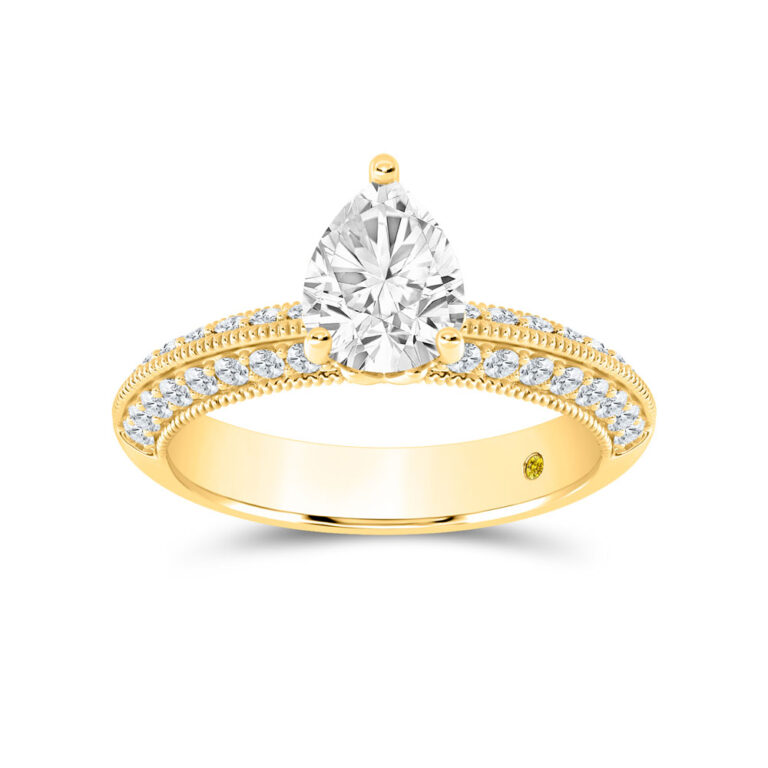
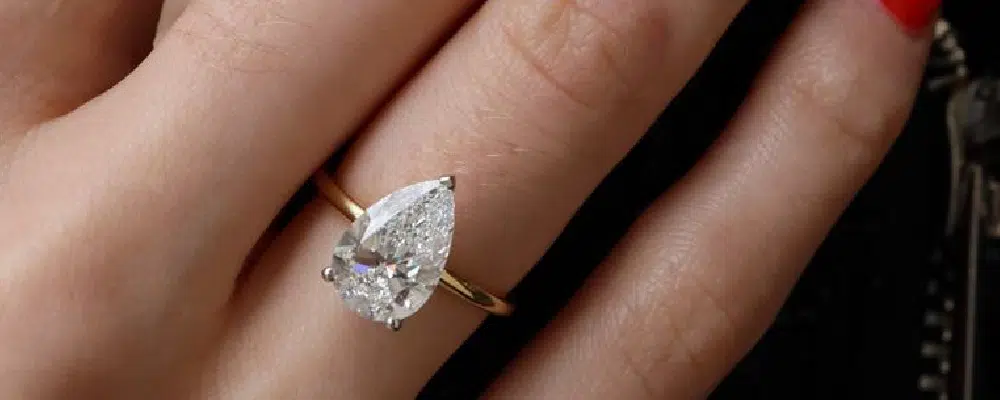
1.5 carat pear shaped diamond solitaire engagement ring on a gold band showing finger coverage and scale.

How Carat Size Influences the Bow-Tie Effect

Carat size directly correlates to how visible the “bow-tie” shadow appears across the center of a pear-shaped diamond. Occasionally, larger stones make this central light obstruction easier to see, especially under direct lighting. Smaller stones tend to mask minor bow-ties more effectively because the facets are tighter.
Experienced cutters minimize bow-ties by:
  • Balancing pavilion angles carefully.
  • Maintaining strict symmetry across both halves.
  • Avoiding excessive depth in the belly.
Consequently, buyers should always evaluate bow-tie visibility in person or through 360-degree videos before committing to larger carat sizes, as pear shaped diamonds cut quality is paramount.

Ideal Carat Sizes and Setting Styles

The interaction between carat size and setting style significantly changes the perceived size of the ring. When you are learning how to choose the perfect setting, consider how the metalwork will interact with the stone’s weight.
Design interactions commonly include:
  • Halo Settings: These increase perceived size at all carat levels, often adding 0.50ct of visual spread.
  • Solitaire Settings: These emphasize the diamond’s true dimensions and rely on the stone’s quality.
  • Bezel Settings: These reduce visual size slightly but increase durability and modern appeal.
After that, I advise selecting your carat size first, then choosing a setting (in 14k or 18k gold) that supports its proportions.

Data Breakdown: Carat Size vs. Hand Size Guide

This table outlines the general guidance I use during professional consultations to help clients match carat size to their hand structure.
Carat Weight Average Size (L x W) Best Length-to-Width Ratio Finger Coverage (Size 6) Hand Size / Type Visual Look
1.00 ct 8.5 x 5.5 mm 1.45 – 1.50 Moderate Petite / Short Fingers Elongates the finger without overwhelming it.
1.50 ct 9.8 x 6.2 mm 1.50 – 1.60 Noticeable Average Hand Size The ideal balance provides noticeable finger coverage.
2.00 ct 10.5 x 7.0 mm 1.60 – 1.70 Significant Long / Slender Fingers Fills the length of the finger elegantly; dramatic impact.
2.50 ct 11.5 x 7.5 mm 1.40 – 1.50 Maximum Wide Fingers A slightly wider pear provides better horizontal coverage.
3.00 ct 12.5 x 8.0 mm 1.45 – 1.55 Edge-to-Edge Larger Hands / Statement Seekers A bold, show-stopping presence that dominates the finger with ultimate luxury.
Because of this, these ranges reflect real-world performance rather than marketing-driven benchmarks.

How to Choose the Right Carat Size With Confidence

To determine the best carat size for pear shaped engagement ring styles, buyers should select based on visual balance and emotional reaction, not numerical weight alone.
Practical evaluation steps include:
  • Symmetry Check: Review top-down symmetry to ensure the “shoulders” of the pear are even.
  • Brightness: Confirm even brightness across the stone (no dark tips).
  • Real-World Check: Assess finger coverage in real-world photos, not just white- background stock images.
  • Lifestyle Match: Match size to your daily wear expectations; larger stones snag more easily.
If you have a specific vision that standard carat sizes or settings don’t meet, you might consider our custom engagement ring design process to build a ring that fits your exact specifications.

Final Thoughts on Carat Size

The carat size shapes the personality of a pear-shaped engagement ring, but it does not define its beauty on its own. Therefore, buyers achieve the best results when they balance carat weight with cut precision, correct ratios, and the modern advantages of lab-grown diamonds.

If you are ready to find the perfect stone, explore La Joya’s pear engagement ring collection to see these sizes in action.
Shop the Products

10% OFF
Hidden Halo/ Most Popular
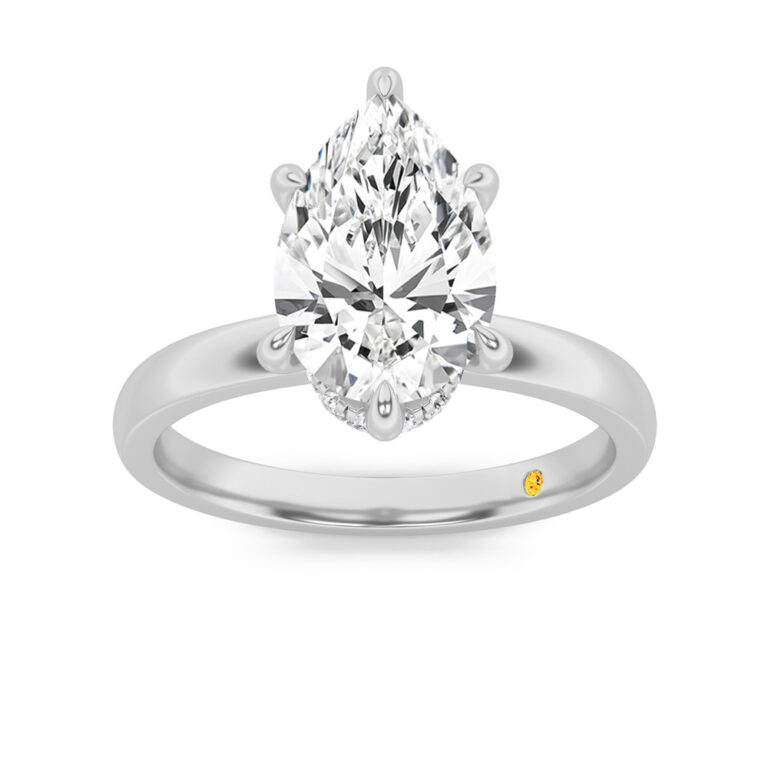
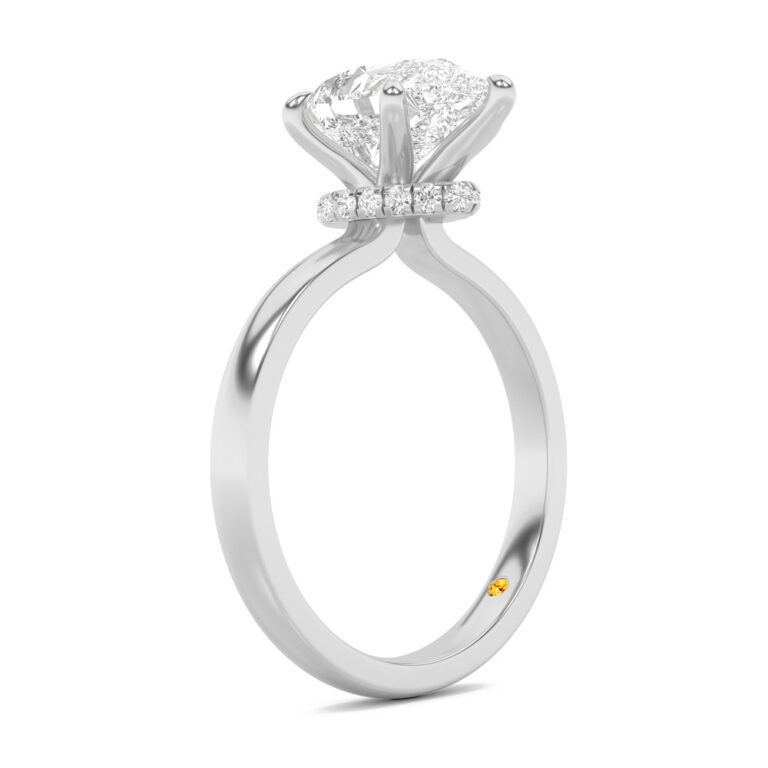
Laura Lab Grown Secret Halo Diamond Engagement RingLaura Lab Grown Secret Halo Diamond Engagement Ring

Frequently Asked Questions

What is the best carat size for a pear shaped diamond engagement ring?

+

For most hand sizes, the 1.50 to 2.00-carat range is considered ideal as it offers substantial finger coverage without becoming uncomfortable for daily wear. This size balances visual impact with practical durability.

Should the point of a pear diamond face up or down?

+

The point of a pear diamond should ideally face down toward your fingertips. Wearing it this way creates the most classic, flattering look and gives the illusion of longer, more slender fingers

Do pear shaped diamonds look bigger than other shapes?

+

Yes, pear-shaped diamonds typically look larger than round diamonds of the same carat weight because they have a larger top surface area and an elongated shape. This makes them an excellent value for buyers seeking maximum visual impact.</p>

Is a 1 carat pear diamond too small?

+

No, a 1-carat pear diamond is not too small; due to its elongated shape, it often appears larger than a 1-carat round or princess cut. When paired with a delicate gold band or a halo setting, it can look quite significant and elegant.

Does a bigger carat size mean a worse bow-tie effect?

+

Generally, yes, the bow-tie effect (a dark shadow in the center) is often more noticeable in larger carat sizes because the facets are larger and light obstruction is easier to see. However, choosing a high-quality lab-grown diamond with excellent cutting precision can minimize this effect regardless of size.</span>

Nishit Mehta
Three generations of diamond mastery. One mission: Uncompromising Luxury. Nishit Mehta has spent 30 years refining the art of the diamond, from the high-stakes boardrooms of Hong Kong to the integration of storied Italian luxury brands. As the founder of La Joya Jewelry, Nishit uses his "diamond veteran" intuition to curate lab-grown designs that are indistinguishable from mined stones in beauty, yet superior in ethics. His swift rise as a market leader isn't an accident—it's the result of a lifelong obsession with quality. Nishit doesn’t just provide jewelry; he provides the new gold standard for the modern heirloom.

Nishit regularly shares eCommerce strategy & insights LinkedIn.