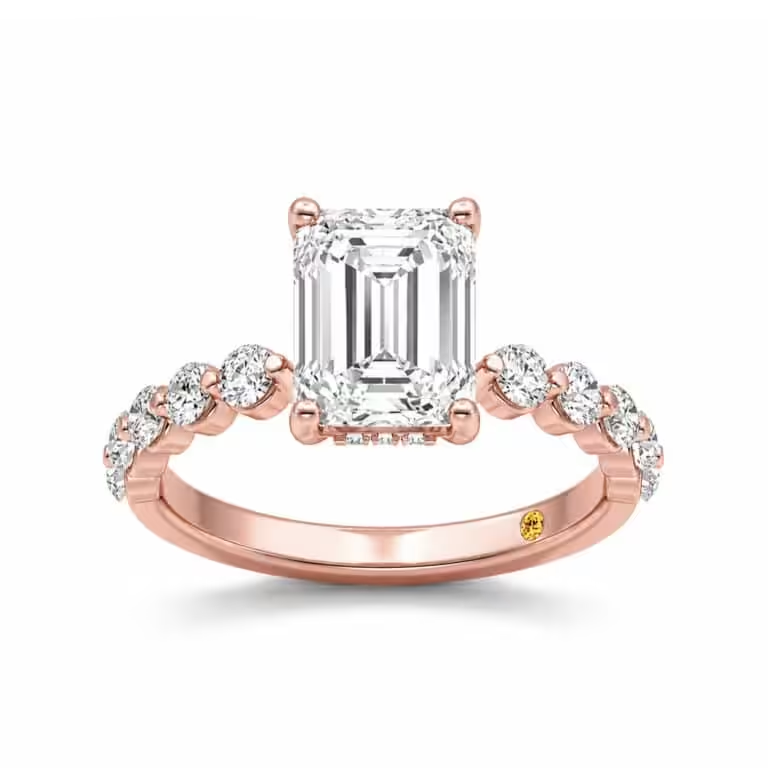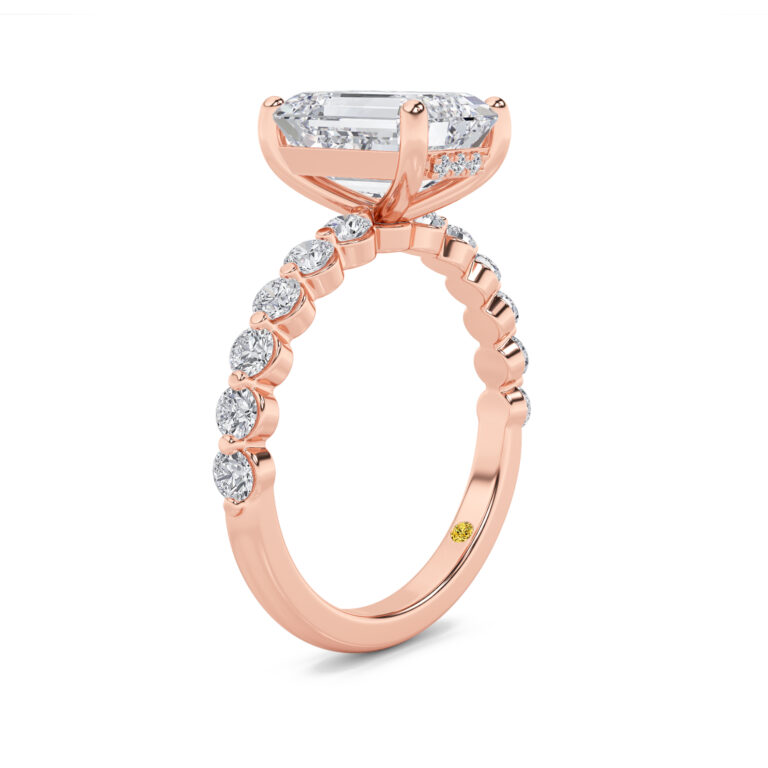
Picking a ring feels overwhelming when you want a piece that will last a lifetime. Finding the best emerald cut engagement ring setting takes more than just looking at photos; step-cut stones have flat tops and long lines that require exact care.
At La Joya Jewelry, our master jewelers have spent decades perfecting how we build rings. We have seen firsthand why certain mounts fail and others endure. Today, we will look at how different styles protect your diamond and bend light, helping you navigate our collection of lab-grown diamond engagement rings.

Understanding the Anatomy and Vulnerabilities of Emerald Cut Diamonds
The primary weak spots of an emerald cut diamond are its cropped corners and open top table. These long, elegant facets showcase clarity perfectly, but they leave the stone open to hard impacts. According to the Gemological Institute of America (GIA), step-cut diamonds require precise mounting to prevent damage to these exposed edges.
When repairing fine jewelry, jewelers always check the corners first. Whether mined or lab-created, emerald cut engagement rings share the exact same physical traits and vulnerabilities. Weak prongs allow the glass-like corners to chip if you bump your hand against a hard surface.
Investing in quality 14k or 18k gold settings is vital to keep the stone safe during daily wear. Because lab-grown diamonds offer significant savings on the center stone, you gain the financial flexibility to invest in a heavier, more complex, and highly protective gold setting.
How a Solitaire Setting Protects Emerald Cut Diamonds
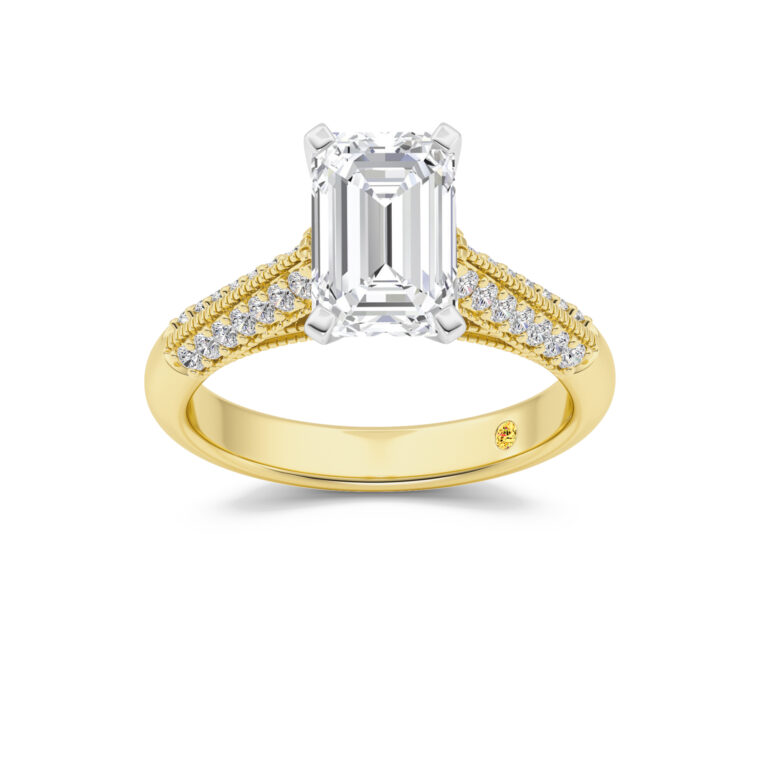
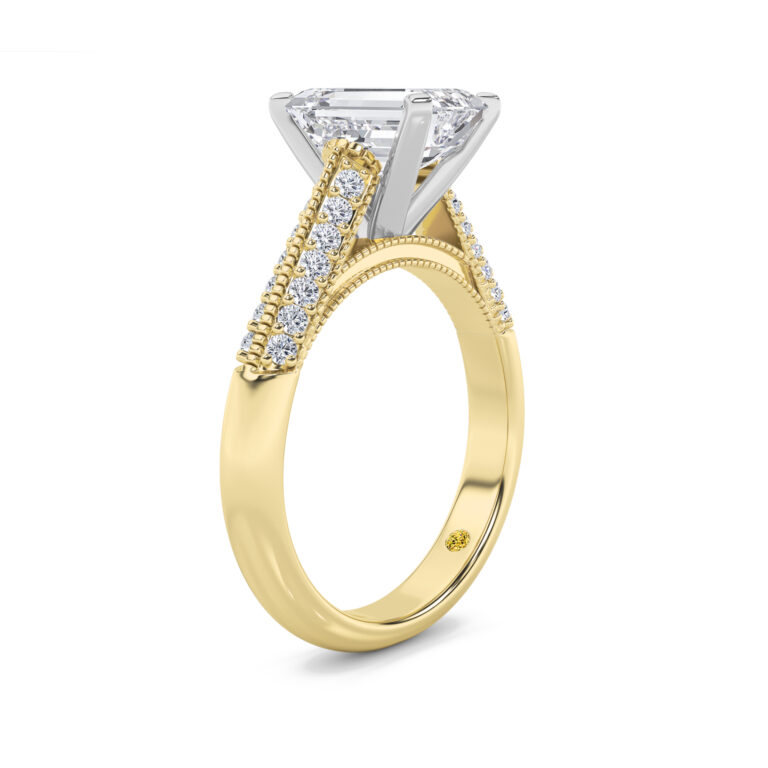
A solitaire setting uses four strong prongs to hold the diamond firmly while letting maximum light reach the center. This classic design keeps the visual focus entirely on the main stone. For many, choosing a foundation starts with La Joya’s emerald cut solitaire engagement rings.
Double-claw prongs are superior for stones larger than two carats. They wrap around those cropped edges tightly to distribute the pressure. Decades of working with gold have proven that standard mounts can bend over time; extra metal gives a secure grip without blocking the step-cut flashes.
For a deeper dive into this classic style, read our Expert Insights – The Ultimate Guide to Emerald Cut Solitaire Engagement Rings.
The Structural Benefits of Three-Stone Emerald Cut Settings
A three-stone layout adds side gems that guard the center diamond’s open sides while catching light from extra angles. Tapered baguettes or step-cut trapezoids are the traditional choices to place next to the main gem, stepping down smoothly into the ring band.
These side stones act as a physical shield for the exposed long edges of the center diamond, a core feature of high-quality three-stone emerald cut diamond engagement rings. Ensuring the prongs line up perfectly is a skill our artisans have passed down for generations.
The extra facets create more overall sparkle to balance the bold, mirrored flashes of the main cut. If you are curious about combining different diamond shapes, explore the best side stones for an emerald cut ring.
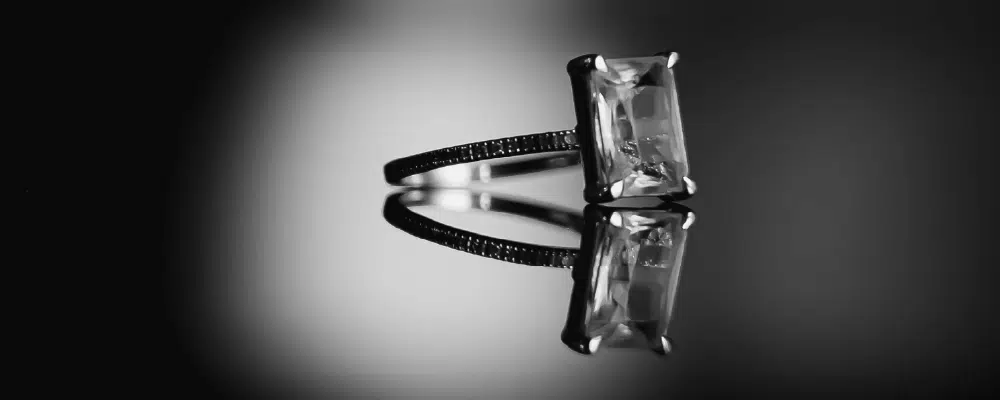
Bezel Settings: Maximum Security for Active Lifestyles
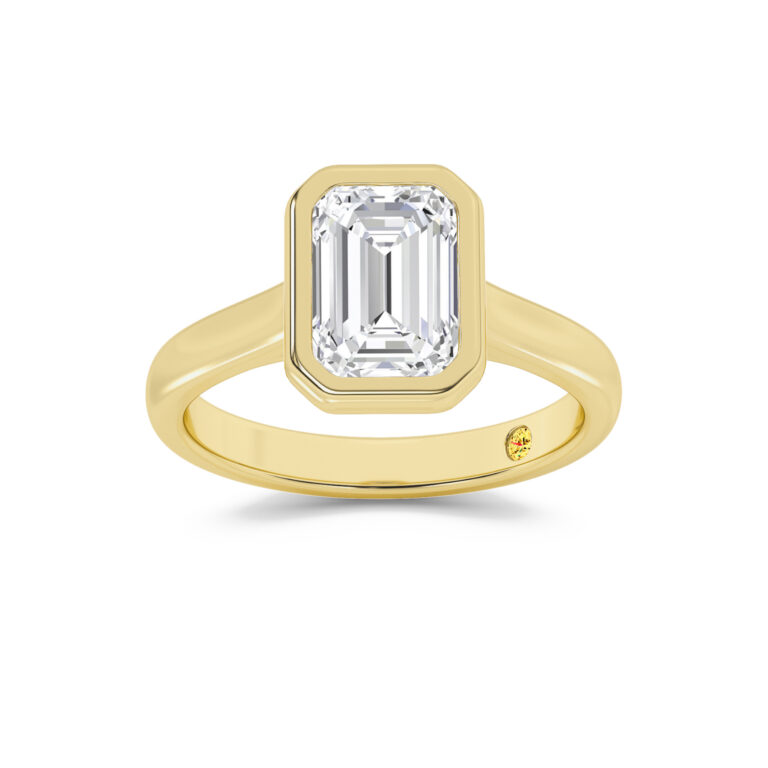
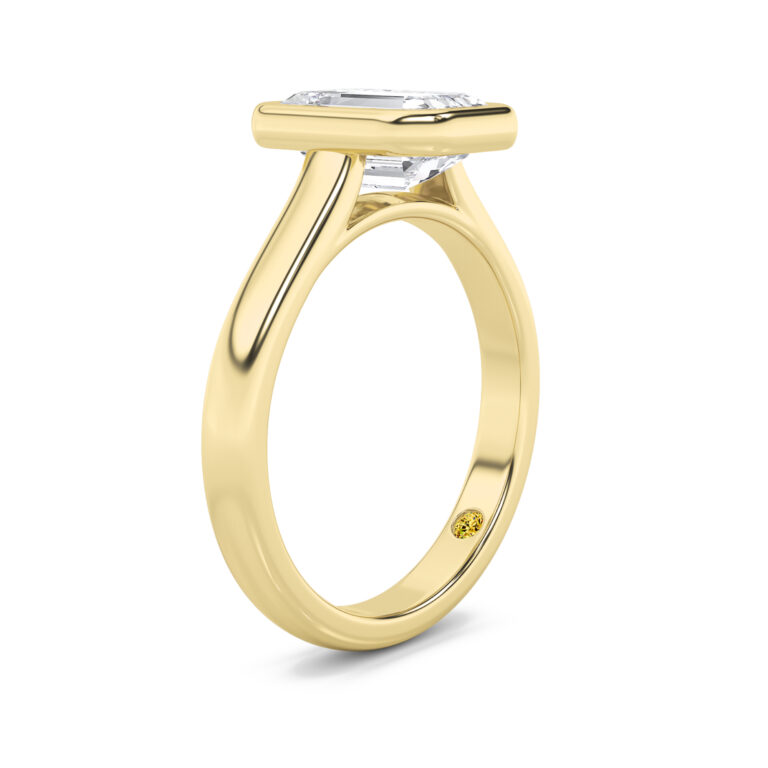
A bezel setting (sometimes called a rubover setting) completely wraps the outside edge of the diamond in a solid rim of gold, offering maximum protection. Because the metal surrounds the entire stone, leaving zero exposed corners, active wearers find this to be the most secure option.
Light only enters through the top, which changes how the diamond shines, resulting in a sleek and highly modern aesthetic. When clients bring in old heirlooms to trade, we melt down the metal entirely and cast a brand-new, structurally sound bezel instead of reusing weak prongs.
To see why this durable style is gaining popularity, read about The Rise of the Bezel: Why Bezel Set Emerald Cut Engagement Rings Are Trending.
Pairing Halo Settings with Step-Cut Diamonds for Enhanced Sparkle
A halo setting surrounds the main diamond with a ring of smaller stones to boost overall perceived size and add brilliant sparkle. Because tiny round diamonds catch light much differently than a step-cut center, mixing brilliant cuts with an emerald cut brings intense, varied fire to emerald cut halo engagement rings.
Outer frames absorb the heavy force of daily bumps, creating a solid barrier for the delicate edges inside. Precision casting ensures every tiny prong holds tight. Alternatively, if you want the protection and side-profile sparkle without a visible top border, emerald cut engagement rings with hidden halo designs are an excellent modern compromise.
Modern Variations: The East-West Setting
If you love the crisp lines of a step cut but want an edgy, contemporary twist, you can mount the diamond horizontally. Turning the stone sideways across the finger creates a unique profile while maintaining all the geometric beauty of the cut. Discover more about this striking orientation in our guide to East-West Emerald Cut Engagement Rings: The Modern Twist.
Setting Style Comparison Matrix
| Setting Type | Protection Level | Light Manipulation | Best For |
|---|---|---|---|
| Solitaire | Medium (with double prongs) | High (maximum side light) | Classic elegance |
| Three-Stone | High (side shielding) | Very High (extra angles) | Maximum finger coverage |
| Bezel | Ultimate (full wrap) | Focused (top light only) | Active daily wear |
| Halo | Very High (outer bumper) | Intense (brilliant fire) | Boosting size and sparkle |
| East-West | Medium (depends on prongs) | High (horizontal flash) | Edgy / Contemporary twist |

Conclusion
Your ring should look stunning while standing the test of time. A wise choice balances physical safety with brilliant light performance. Whether you pick a sleek bezel, classic double prongs, or decide to design your own engagement ring, your lab-grown diamonds deserve perfect gold mounts crafted to honor your love for years to come.