Choosing an engagement ring setting is overwhelming. You hear terms like solitaire, regular halo, and hidden halo. But it’s hard to picture what they really look like and which is right for you. The decision often comes down to comparing the three most popular styles – solitaire vs. halo vs. hidden halo.
After more than 30 years in the jewelry business, I’ve helped thousands of couples navigate this choice. I promise to make this simple. This guide visually breaks down the key differences between hidden halo, regular halo, and solitaire settings. We will look at each ring from the top-down view (what you see) and the profile view (the side). This way, you can confidently choose the perfect setting for your beautiful lab-grown diamond engagement rings.

What defines a Solitaire engagement ring?
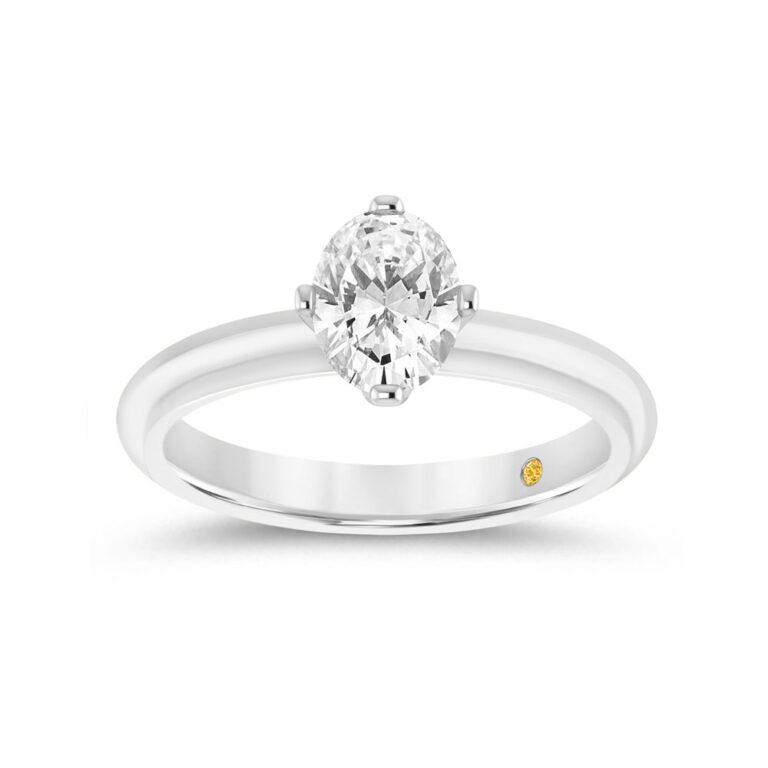
A solitaire engagement ring features a single, central diamond held by metal prongs or a bezel without any additional side stones or surrounding accents.
In my 30 years of manufacturing, I have found that this style remains the ultimate statement of confidence.
What defines a Solitaire engagement ring?
A solitaire engagement ring features a single, central diamond held by metal prongs or a bezel without any additional side stones or surrounding accents.
In my 30 years of manufacturing, I have found that this style remains the ultimate statement of confidence. It suggests that the center stone is so exquisite it requires no distractions or extra help to shine. This absolute focus on one stone is the hallmark of the classic solitaire engagement ring.
While it’s just one style within the broader world of lab-grown diamond engagement rings, its simplicity is its strength. There are no other diamonds on the ring itself—unless you choose to design your own engagement ring with a pavé or diamond-accented band, which is a beautiful choice. In my experience, the solitaire is a statement of confidence.
Solitaire Visuals (And How They Differ From Halos)
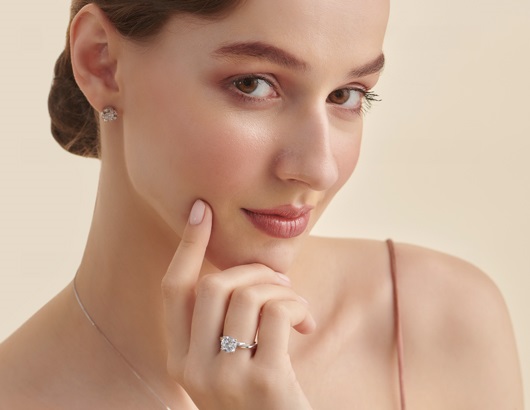
- Top-Down View – This is the most important view. All your attention goes directly to the lab-grown diamond. Whether you’ve chosen a timeless round solitaire diamond engagement ring or a more elongated oval solitaire engagement ring, this view is clean, uncluttered, and elegant. You see the stone, the prongs holding it, and the simple band.
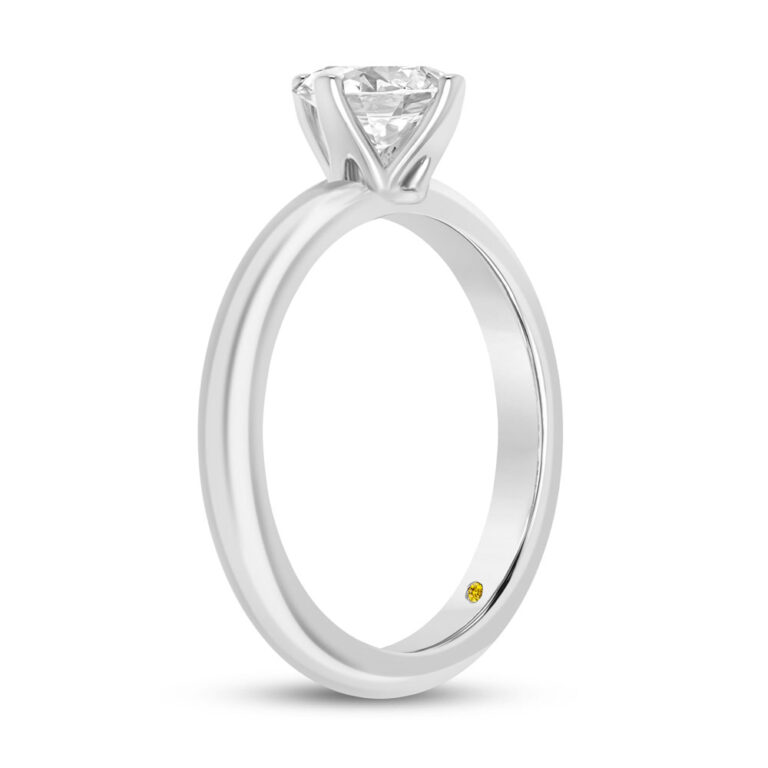
- Profile View (Side) – From the side, you see how high the diamond is set and the prongs that secure it. This view emphasizes the diamond’s “pavilion,” or the pointy bottom part. The quality of a diamond’s cut, including its pavilion depth and angle, is crucial for its sparkle and is a key factor in its certification.
What Are the Advantages of a Classic Solitaire Setting?
- It’s Truly Timeless – This style has been popular for generations. It will never look dated.
- Highlights Your Diamond – All focus is on the center stone. Its sparkle and quality are the main event. This is especially true for intricate shapes like a pear-shaped solitaire engagement ring or a modern princess-cut solitaire engagement ring, where the diamond’s form is the statement.
- Easy to Clean – With fewer nooks and crannies, a solitaire is the easiest setting to keep clean and sparkling.
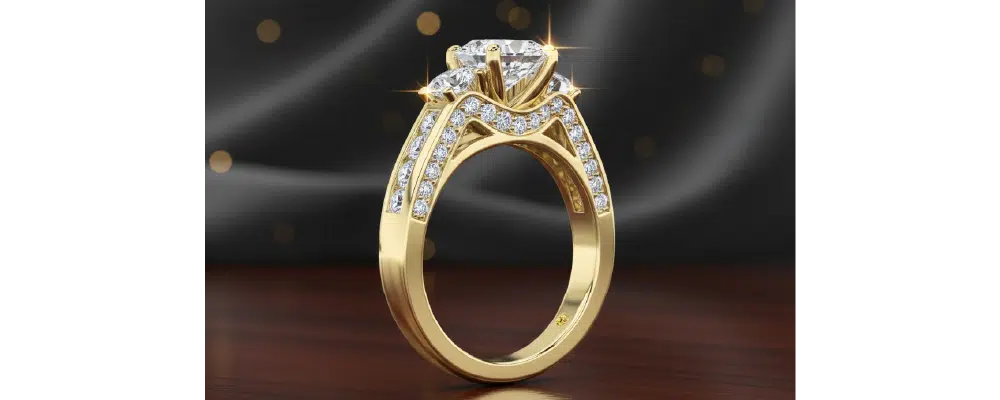
- Stacks Perfectly – It pairs beautifully with any wedding band. A yellow gold solitaire engagement ring looks stunning with a diamond band, just as a white gold solitaire ring pairs elegantly with a simple matching band. The warmth of a rose gold solitaire engagement ring also creates a beautiful, romantic look.
Key Considerations – Is a Solitaire Ring Right for You?
- No “Extra” Sparkle – The only sparkle comes from the one diamond. If you want more brilliance, you might explore halo or three-stone settings from La Joya’s full collection.
- True-to-Size – A solitaire does not make a diamond look larger. Its size is its size. A 1 carat solitaire engagement ring will look its true size, while a 3 carat diamond solitaire ring makes a bold statement all on its own. This honesty in design is what many people love. For those seeking a larger look, an emerald cut solitaire engagement ring or a marquise solitaire engagement ring can appear larger due to their elongated shapes.
How does a regular halo setting enhance a diamond’s appearance?
A regular halo setting encircles the center stone with a border of smaller pavé diamonds to create the illusion of a significantly larger center gem. This design is the “heavy hitter” of the jewelry world because it maximizes visual impact and surface-area sparkle.
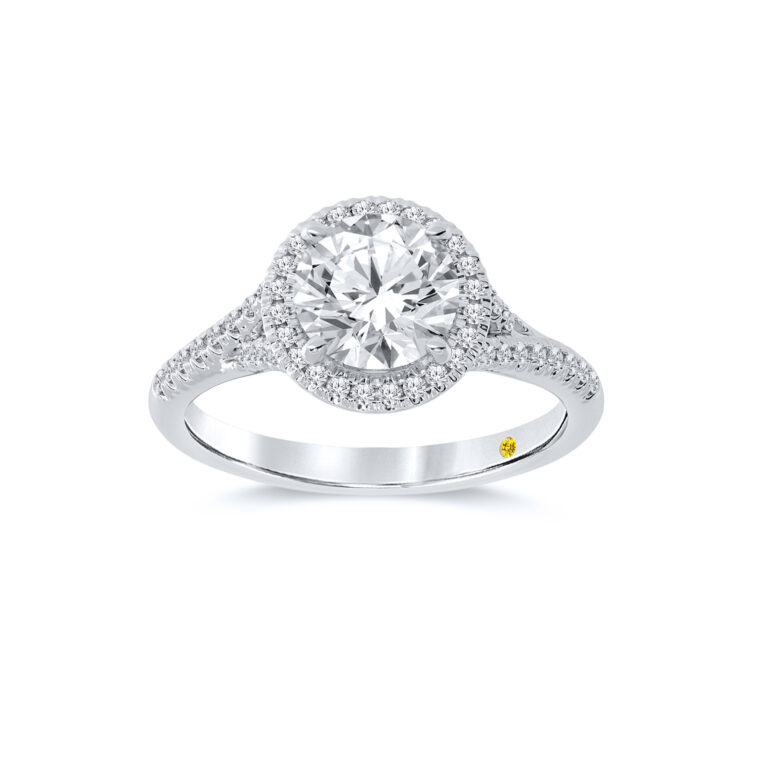
A regular halo setting is all about high impact. As I explained, this design, which defines many of our most popular halo-style engagement rings, features a “halo” of small pavé diamonds that perfectly encircle the center stone. Think of it as a brilliant frame for your main diamond. It’s an iconic look across our entire collection of lab-grown diamond engagement rings because, as clients love, it creates a “big diamond” look.
Halo Visuals (And The “Big Diamond” Illusion)
- Top-Down View – This is where the halo truly shines. From the top, you see one large, continuous surface of sparkle. The center stone and the small diamonds blend. This creates a powerful illusion, making the center stone look much, much larger. This effect works beautifully with any shape, from classic round-cut halo engagement rings to stunning oval halo engagement rings.
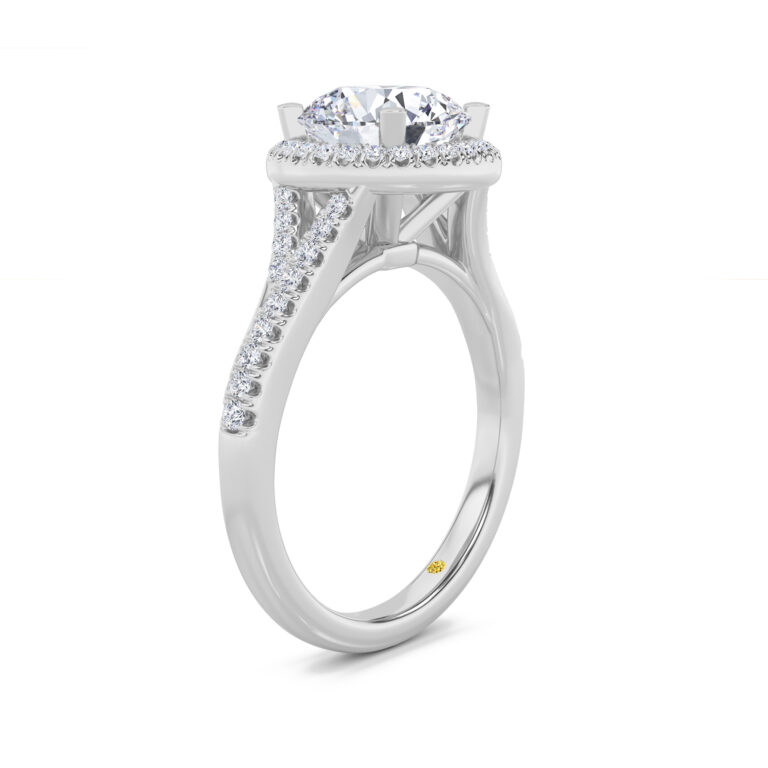
- Profile View (Side) – From the side, you can see the “basket” or structure that holds all the small diamonds. It is often a bit thicker to support the extra stones. This is distinct from more intricate designs, like double halo engagement rings, which feature two full tiers of diamonds.
Key Advantages of Choosing a Halo Setting
- The Size Illusion – This is the halo’s biggest benefit. In my opinion, a halo can make a center stone look up to a half-carat larger, sometimes more.
- Maximum Sparkle – You have sparkle from the center stone and from all the small surrounding stones. The ring lights up from every angle.
- It Protects the Stone – The halo of small diamonds acts as a buffer, offering some protection to the center stone’s girdle (its thinnest edge).
Potential Considerations and Drawbacks
- Can Overpower the Stone – If you have a very high-quality, beautiful diamond, some feel the halo can distract from its individual beauty. In these cases, a classic solitaire might be preferable. If you’re unsure, you can always explore custom design engagement ring options to get the balance just right.
- More Cleaning – All those tiny spaces between the halo stones can trap dirt and lotions. It requires more regular cleaning to keep it sparkling. (We recommend following these expert jewelry care tips to maintain its brilliance).

What makes a hidden halo setting unique from other styles?
The hidden halo places accent diamonds on the basket or gallery beneath the center stone, making them visible only from the side profile rather than the top.
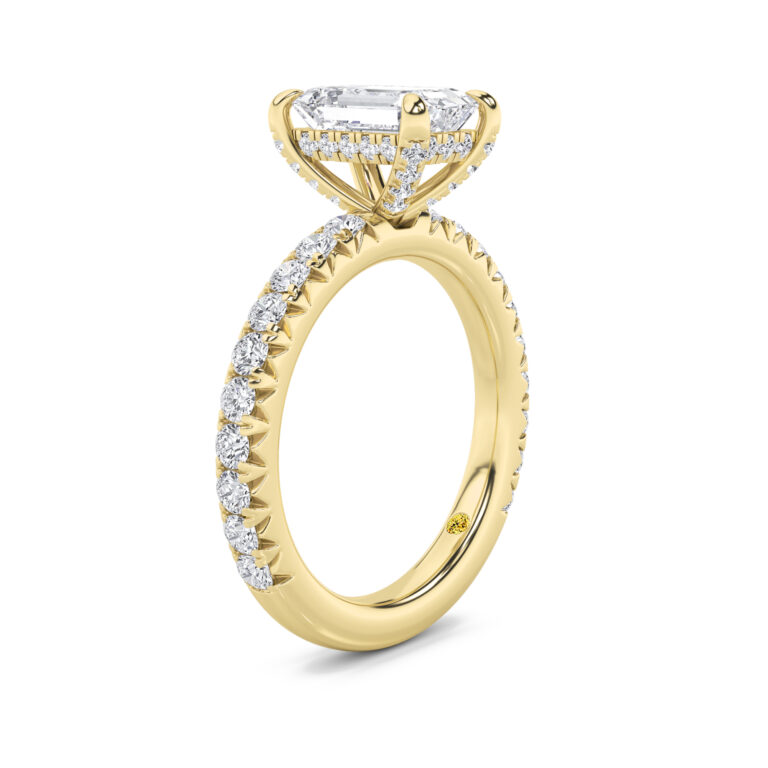
It’s my personal favorite of the modern designs, and our collection of hidden halo engagement rings exemplifies this trend perfectly. Like a regular halo, it uses small diamonds. However, these diamonds are not visible from the top. Instead, they are set on the structure underneath the center stone. You only see them when you look at the ring from the side.
Hidden Halo Visuals (Top-Down vs. Side Profile)
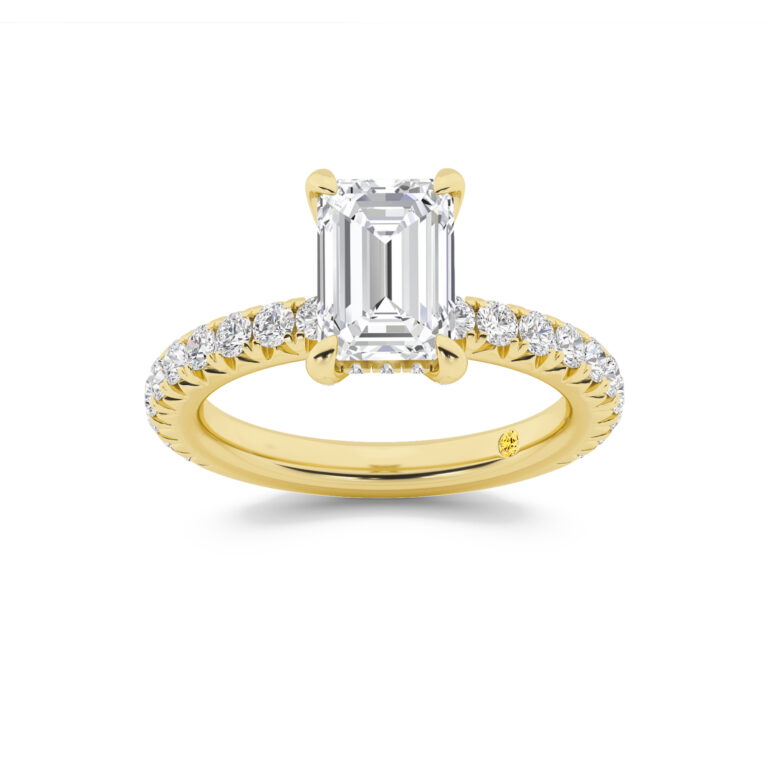
- Top-Down View – From the top, a hidden halo looks just like a solitaire. Clean, elegant, and focused on the center stone. This is its “secret.”
- Profile View (Side) – This is the “wow” moment. When you tilt the ring, you see a brilliant ring of sparkle supporting the diamond. It’s a personal detail that makes the ring feel special and unique, and it looks stunning with any diamond shape—from a classic hidden halo round ring to an elegant oval hidden halo ring or a striking emerald cut hidden halo. It also has a lovely effect of “lifting” the diamond.
Pros of Choosing a Hidden Halo
- Best of Both Worlds – You get the classic, clean look of a solitaire from the top. But you also get the extra, unique sparkle of a halo from the side.
- It Makes the Stone “Pop” – The light from the hidden halo reflects up into the main diamond, adding to its brilliance. It also makes the stone look like it’s floating.
- A Unique, Personal Touch – It feels like a secret detail just for the wearer. This is why hidden halo rings have become so popular.
What to Consider (The Considerations)
- Still Requires Cleaning – Just like a regular halo, the small stones need to be cleaned to keep their sparkle.
- A Subtle Look – If you want the “big diamond” illusion, this is not the setting for you. The effect is one of detail, not size.
How Do Lifestyle and Profession Affect Your Choice of Ring Setting?
Active professions require low-profile, simple settings like a solitaire to prevent snagging, while less hands-on lifestyles can comfortably accommodate the delicate, dirt-trapping prongs of intricate halo designs.
Daily routines must heavily influence your purchase. Healthcare workers or people who use their hands constantly usually prefer a streamlined piece. Intricate designs simply require far more regular upkeep. Tiny spaces between pavé stones easily trap lotion, soap, and everyday grime. Regular cleaning becomes an absolute necessity if you select a highly detailed band.
What Do Different Ring Settings Symbolize Emotionally?
A solitaire represents pure, undivided love through a singular stone, whereas a halo symbolizes a relationship securely surrounded by the support and strength of friends and family.
Jewelry carries immense emotional weight beyond its physical beauty. Romantics often view the unadorned center gem as a statement of unwavering focus. Meanwhile, a glowing circle of tiny diamonds acts as a beautiful metaphor for your broader community. Concealed accents beautifully blend these meanings. They deliver strong individual focus alongside an underlying layer of secret, steadfast support.
How Does Budget Influence the Solitaire vs Halo vs Hidden Halo Decision?
Solitaire settings cost less to manufacture but demand a flawless, expensive center stone, while halos allow buyers to save money by using a smaller main diamond visually amplified by cheaper accent stones.
Finding maximum value matters immensely when a typical order value often hovers around $2,700. Lab-grown diamonds represent the absolute smartest choice for stretching this budget. You secure an identical, real diamond without paying inflated mining premiums. A plain metal band leaves absolutely no room to hide a poorly cut gem. Wrapping a more modest stone in a glowing frame provides an incredible visual trick that can save you thousands of dollars.
Solitaire vs Halo vs Hidden Halo – The Ultimate Comparison
Let’s put all three side-by-side. The choice in the Hidden Halo vs. Regular Halo vs. Solitaire debate comes down to one question: What do you want to see?
| Feature | Solitaire | Regular Halo | Hidden Halo |
|---|---|---|---|
| Top-Down View | One diamond. Very clean. | One large sparkling surface. | Looks like a Solitaire. |
| Profile (Side) View | Simple. Shows the prongs. | Shows the side of the halo. | Surprise! A ring of sparkle. |
| Main Goal | Emphasize the center stone. | Make the stone look bigger. | Add a unique, hidden detail. |
| Sparkle Level | High (from one stone) | Highest (from many stones) | High (with a surprise) |
| Cleaning | Easiest | Hardest | Medium |
| My Nickname | The Classic | The Head-Turner | The Modern Secret |
Why are lab-grown diamonds the smartest choice for these settings?
Lab-grown diamonds are chemically, physically, and optically identical to mined diamonds, offering a sustainable and significantly more affordable way to achieve your dream ring.
For over 30 years, I’ve watched materials and trends change. The single biggest and best change has been the rise of lab-grown diamonds. Here is why this is so important for your choice of setting. Lab-grown diamonds are real diamonds. They are not fakes. They are chemically, physically, and visually identical to mined diamonds, as confirmed by top institutes like the GIA.
The only difference is their origin. One came from a lab, and one came from a mine. Because they are more efficient to create, our collection of lab-grown diamond engagement rings offers incredible value. You are not paying for the massive cost of industrial mining. This is the smart choice. You can get a significantly larger, higher-quality lab-grown diamond for the same budget. This means a stunning 2-carat hidden halo ring becomes an attainable luxury, not just a dream.
- Love the Regular Halo? You don’t have to compromise. You can get a beautiful lab-grown center stone and the intricate halo setting, all within your budget.
- Want a Hidden Halo? Go for it! The savings from your lab-grown diamond mean you can easily afford the extra craftsmanship of a hidden halo.
In my professional opinion, choosing a lab-grown diamond is the smartest financial decision you can make. It frees up your budget to get the exact ring you want.
A Note on Gold
Once you pick your setting, you need a metal. Forget platinum. The best choice for durability, value, and beauty is gold. The karat system (like 14k vs 18k) denotes its purity, but all are excellent choices.
- White Gold – This is the most popular choice. It’s modern and sleek. Its white color makes diamonds look bright and icy.
- Yellow Gold – This is the timeless classic. It provides a beautiful, warm contrast that makes the white diamond “pop.”
- Rose Gold – This is a modern, romantic choice. Its pinkish hue is unique and works beautifully with all skin tones.
The Bottom Line – Hidden Halo, Regular Halo or Solitaire – Which Engagement Ring is Best?
The debate between a Hidden Halo vs. Regular Halo vs. Solitaire is all about personal style. The solitaire is the timeless classic. The regular halo is the bold show-stopper. The hidden halo ring setting is the modern, secret surprise. Regardless of the setting you choose, pairing it with a lab-grown diamond is the intelligent, modern decision. It allows you to get the exact style and size you want without compromising.
For a complete overview, check out our Guide to Hidden Halo Engagement Rings and our Ultimate Guide to Solitaire Engagement Rings