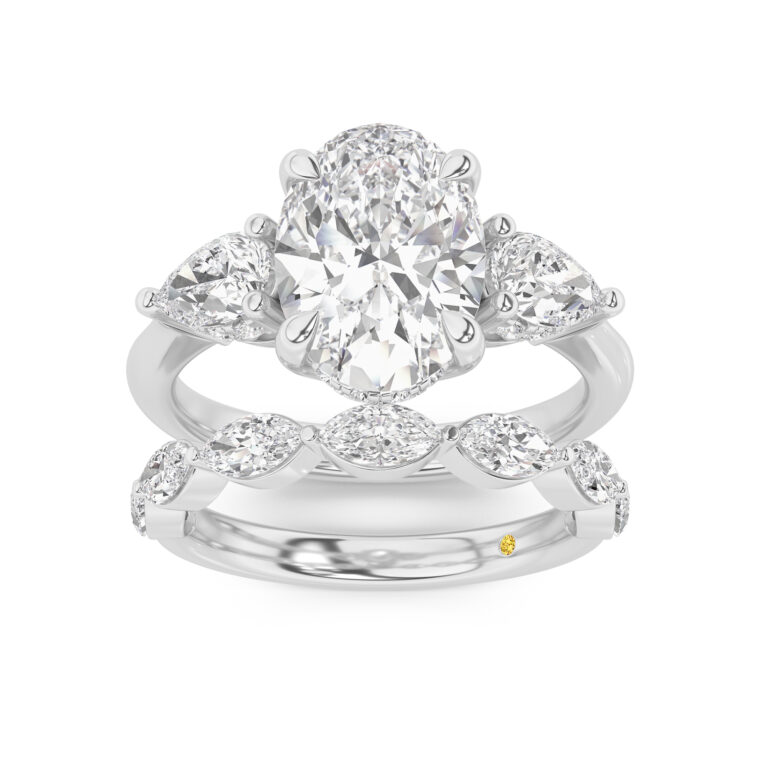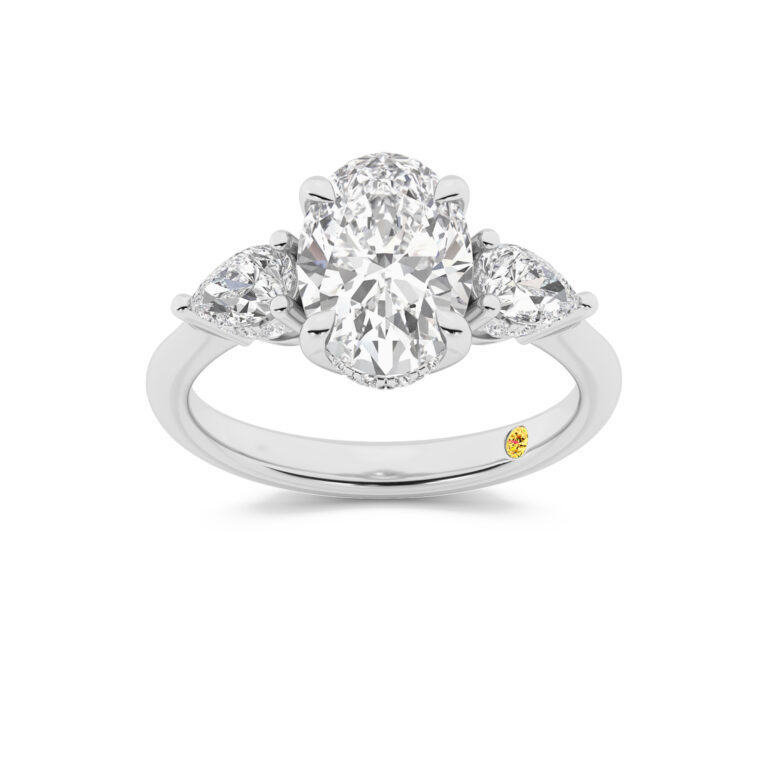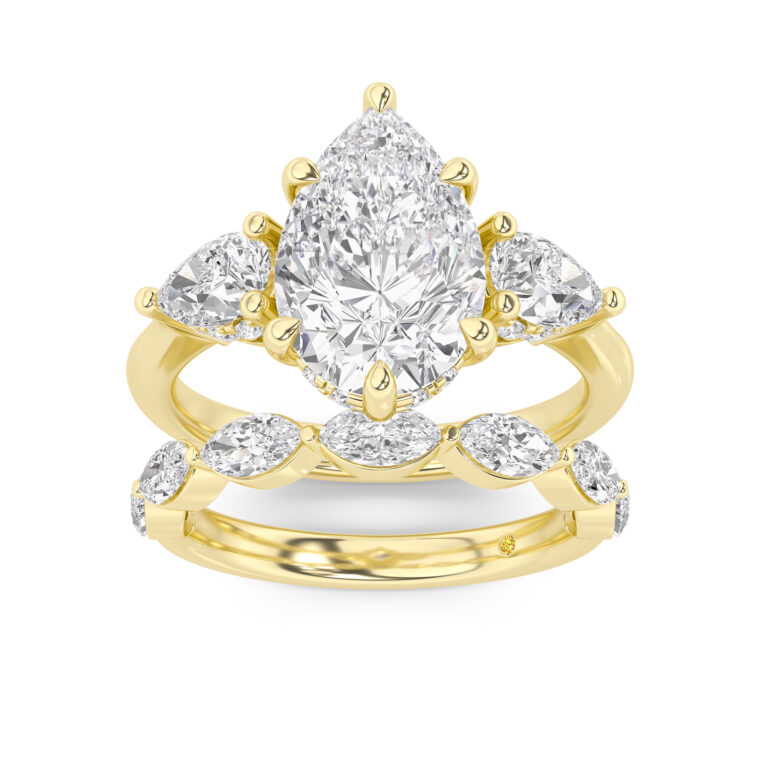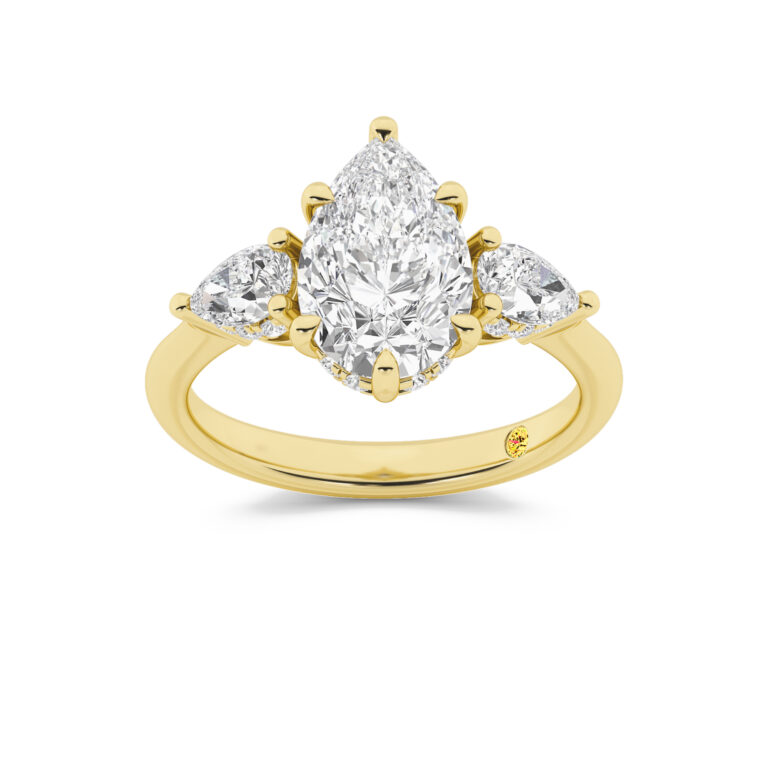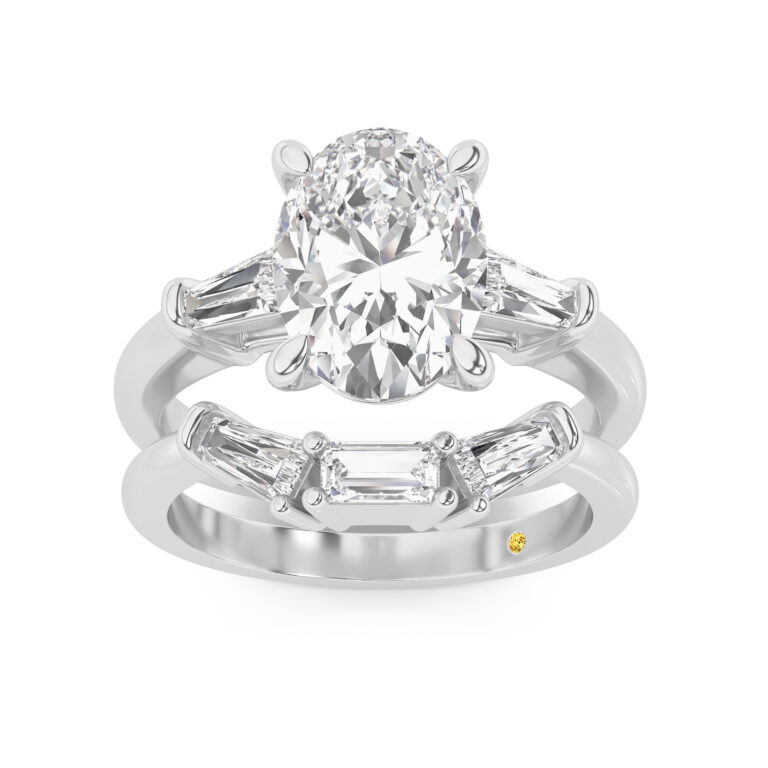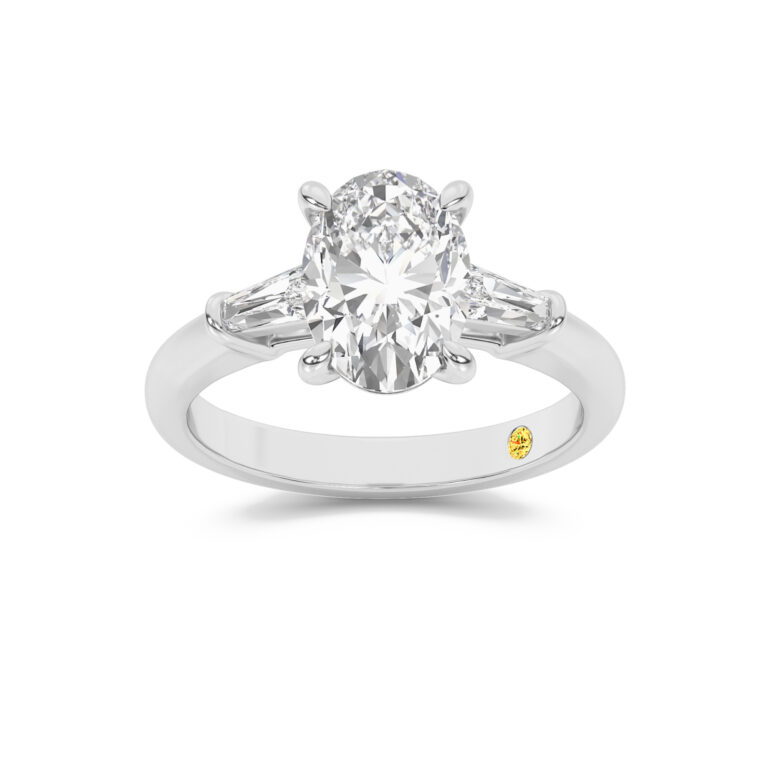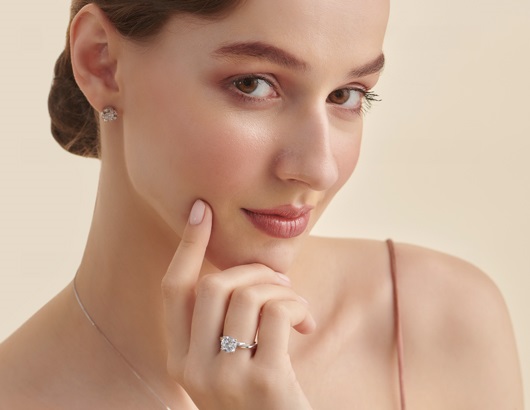
Creating a beautiful pear engagement ring stack is often a frustrating task for brides. A standard straight wedding band hits the wide bottom of a teardrop-shaped diamond, causing a collision that leaves an awkward, clunky gap. Many big-box stores ignore this obvious problem entirely.
Over three decades in the diamond trade, I have seen too many couples upset by poorly fitted rings. Our methodology is fundamentally different. We view bridal jewelry as an intelligent, cohesive system. Finding rings that match perfectly brings joy to wearing them daily—especially when styling a stunning pear shaped engagement ring.
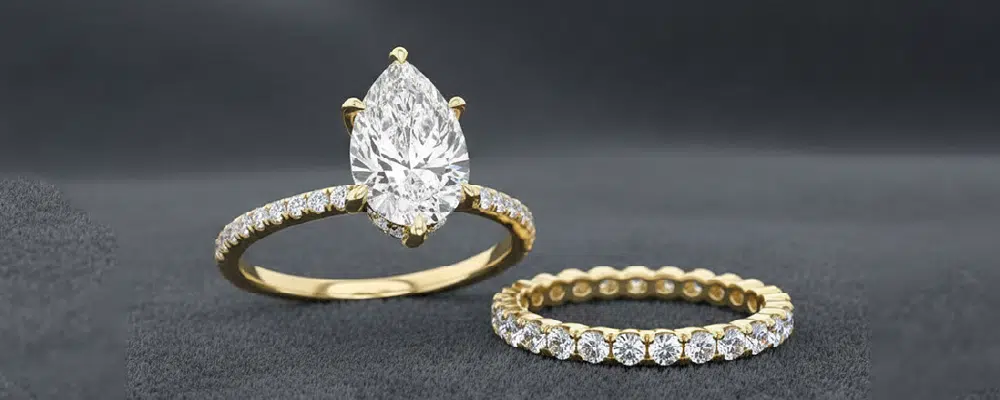
Why Standard Wedding Bands Cause Gaps with Pear Cut Diamonds
A straight wedding ring hits the elongated shape of a pear gem, forcing an empty space between the two bands.
Inside my office, clients frequently bring in pieces they bought elsewhere, upset by this exact issue. Standard straight bands simply fail to work with fancy shapes because the geometry is completely wrong. You need a band engineered exactly to hug those unique curves.
Let’s explore the three best architectural solutions to fix this gap.
The Chevron Wedding Band: Best for Point-Down Pear Settings
A Chevron wedding band features a sharp V-shape built to perfectly cradle the pointed tip of your diamond.
During my 30 years making fine jewelry, I have found this style works wonders. The sharp angle beautifully meets the dramatic point of the stone. Because pointed diamonds can catch on clothing without proper support, custom shapes prevent this from happening while creating a bold, modern aesthetic.
Wearing a properly fitted set feels completely secure, which is why we always cast these pieces in fresh 14k or 18k gold for maximum durability. If you are debating between yellow, white, or rose gold to complement this design, choosing the right metal for your pear engagement ring can dramatically impact the final look of your stack.
Curved Contour Bands: The Ideal Flush Fit for a Pear Ring Base
A curved contour band dips down softly in the middle to closely hug the rounded base of a center stone.
This lower profile stops the diamond from catching on sharp edges, while smooth lines create an elegant, continuous flow on your hand. If your center stone sits low on your finger, this choice often looks best.
Crafting that perfect curve requires exact skill, as the band must be engineered to match the unique sweep of your specific diamond. Trying to bend or alter an existing ring to fit a new stone often compromises the metal and leaves a poor fit.
For this reason, if you are looking to match older jewelry to a new contour band, we prefer to melt down the old items entirely. By casting brand-new, structurally sound settings tailored exactly to your engagement ring’s profile, we ensure your custom stack sits flawlessly and lasts a lifetime.
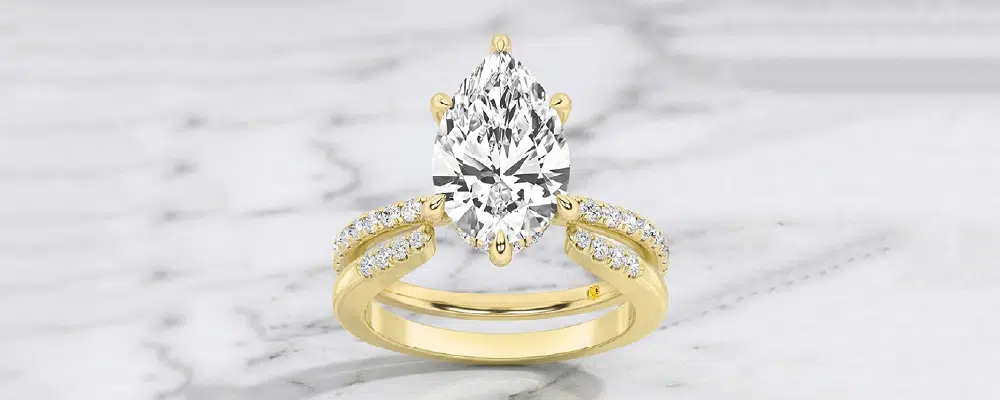
Open Gap Wedding Bands: Framing Large Pear Cut Diamonds
An open gap band leaves a small space at the top center, allowing the diamond to sit directly inside that negative space.
Clean gaps highlight the full carat size of your main diamond, whereas heavy metal borders can sometimes hide the true shape of your gem. This smart design provides a flush fit without rubbing against the thin metal prongs.
Protecting your main stone is critical. Every pear cut has a distinct vulnerability at its tip and a wide base. Metal rubbing against metal can easily break down the ring over the years. This is why reading our guide to the best pear shaped settings is crucial for long-term wearability. Simple, secure styles keep the focus exactly where it belongs.
Why Lab-Grown Diamonds Are Ideal for Your Bridal Ring Set
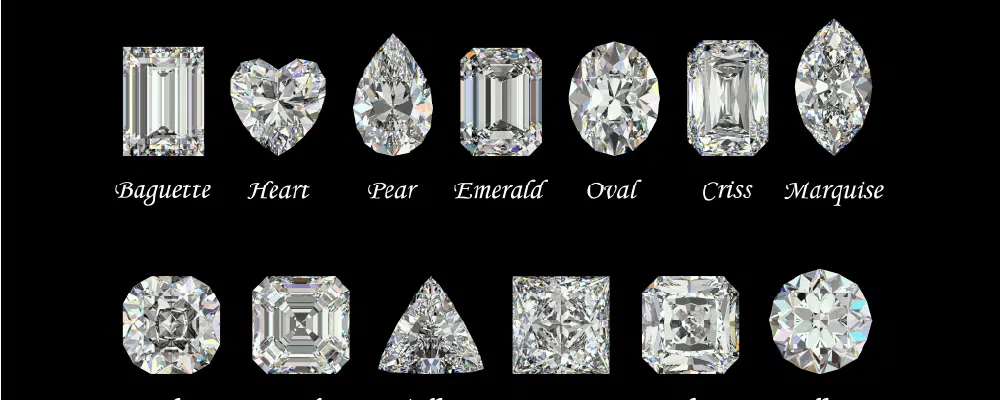
Lab-grown diamonds share the exact physical, chemical, and optical properties as mined gems, making them the premier choice for modern couples. High prices do not always equate to better rings; rather, smart choices build greater value. Sorting thousands of stones over the years teaches you the true value of exceptional clarity.
Choosing La Joya’s lab created diamond engagement rings gives buyers access to flawless beauty without unfair markups, meaning you get a significantly larger, higher-quality stone for your budget. Furthermore, avoiding the dark “bow-tie” shadow is vital, as this dark spot often ruins poorly cut pears.
Our experts reject stones with heavy shadows long before they reach you. To understand why this matters, you can learn more about how cut quality determines a diamond’s brilliance.
Comparing the Best Band Styles for Your Pear Engagement Ring Stack
The chart below analyzes the three main wedding band styles for pear shapes based on fit, aesthetics, and optimal use cases. Reviewing these architectural facts helps you make an educated choice. My office relies on these clear rules every single day.
| Band Style | Geometric Fit | Best Use Case |
| Chevron Band | Sharp V-shape cradles the pointed tip | Point-down ring setups |
| Curved Contour | Soft dip hugs the round diamond base | Low-set, round-base setups |
| Open Gap Band | Open center frames the main setting | Flush fits with large stones |
Conclusion
Pairing a wedding band with a pear-shaped diamond doesn’t have to be a frustrating game of trial and error. Whether you choose the sharp geometry of a chevron band, the soft sweep of a curved contour, or the framing effect of an open gap, the secret lies in honoring the unique proportions of your center stone.
With over three decades of family expertise in the diamond trade, we know that true structural skill is what turns a mismatched pairing into a seamless, lifelong fit. A beautifully engineered bridal stack not only protects your diamond but showcases its brilliance exactly as intended. If you are ready to eliminate the guesswork, we would love to help you design your own custom ring perfectly tailored to your unique diamond.