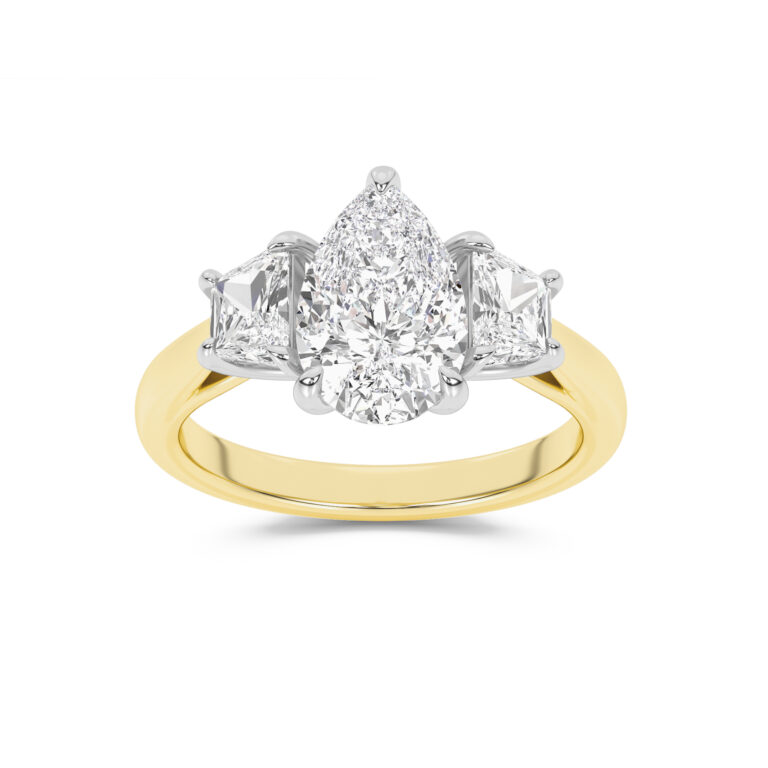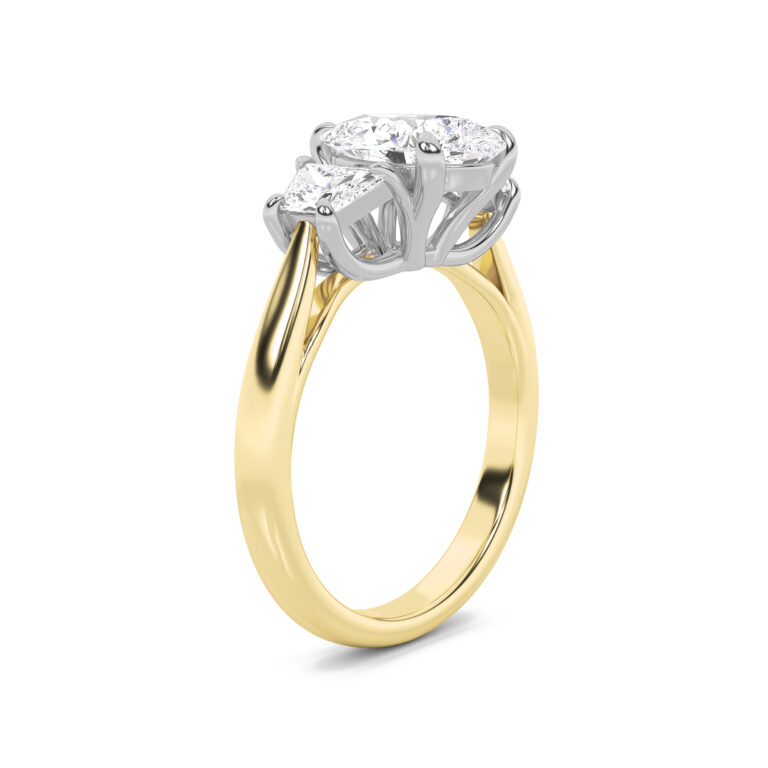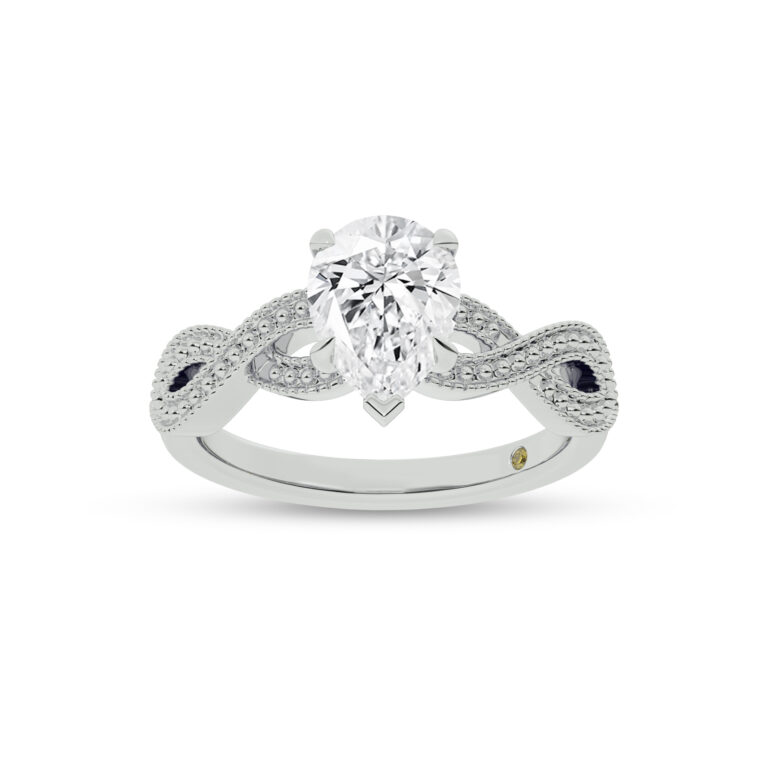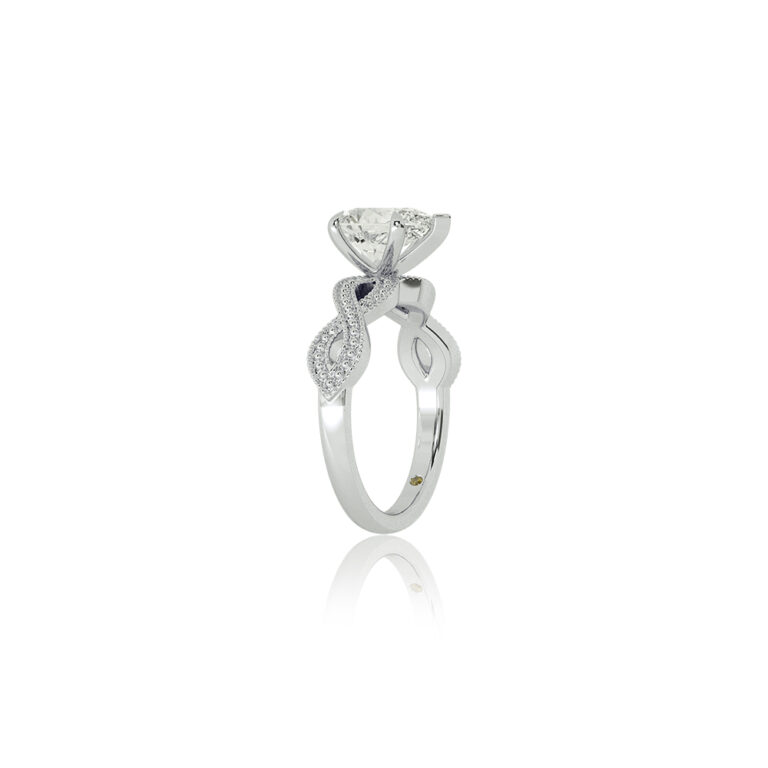
Finding an engagement ring that balances size, sparkle, and budget is arguably the most stressful part of the proposal process. However, this pear shaped halo engagement ring guide will show you why this specific cut and setting combination is the perfect “hack” for getting a luxurious look without breaking the bank.
In this guide, I will share my 30 years of manufacturing experience to help you navigate the nuances of lab grown diamond engagement rings, choose the right gold color, and avoid technical pitfalls like the “bow-tie” effect.

Why Choose a Pear Shaped Diamond Halo Engagement Ring?
A pear halo engagement ring is the ideal choice for buyers seeking a unique blend of brilliant fire and a finger-slenderizing silhouette.
In my three decades in the jewelry industry, I have seen trends come and go. However, the pear shape—often called the teardrop—remains a timeless favorite. It blends the best of two worlds: the brilliant fire of a round cut and the tapered elegance of a marquise cut.
This shape is incredibly flattering. Because of its elongated body, it creates a slimming effect on the finger, making the wearer’s hand look elegant and slender.
Historically, this cut dates back to the mid-1400s. It is not a fleeting trend; it is a staple of high jewelry. When you browse our collection of pear shaped halo engagement rings, you are looking at designs that have survived centuries of fashion changes.

How Does a Halo Setting Improve a Pear Diamond?
A halo setting improves a pear diamond by amplifying its visual surface area and providing crucial structural protection to its most fragile point. While solitaires are classic, halo style engagement rings feature a ring of smaller pavé-set diamonds that encircle the center stone, offering two distinct advantages
1. It Amplifies Size
A halo creates an optical illusion that makes the center diamond look up to half a carat larger than it actually is.
I often tell my clients that a halo is an optical illusion. It can make your center diamond look up to half a carat larger than it actually is. The small diamonds catch the light from angles the center stone might miss, creating a blinding wall of sparkle. For those seeking maximum brilliance, you might even consider double halo engagement rings, which add a second row of pave stones for an even larger footprint.
2. It Protects the Tip
The pear shape has one structural weakness and that is its pointed tip. This tip is prone to chipping if hit against a hard surface. A halo acts as a bumper, surrounding the delicate point with metal and smaller stones. This significantly lowers the risk of damage during daily wear compared to exposed prong settings.
A V-prong is a solid, folded piece of gold that caps the entire vulnerable tip of a teardrop diamond. Standard tiny round prongs just sit weakly next to the stone. They leave the sharp edge fully exposed to grave danger. Hitting your hand on a heavy car door can snap an open tip right off. The ideal layout uses five prongs: one heavy V-prong firmly guarding the top point, two lower prongs holding the rounded bottom secure, and two on the sides to prevent shifting
We wrap thick metal tightly over that exact sharp point. This golden shield completely stops catastrophic stone damage. Over thirty years, I have seen too many ruined gems. Bad settings cause endless bitter tears. Proper jewelry manufacturing absolutely requires a heavy V-prong here. No exceptions exist for this strict industry rule. It locks the precious gem down super tight. You can sleep well knowing it remains safe.
| Setting Feature | Protection Level | Visual Impact | Key Benefit |
| Plain Solitaire | Low | Classic | Focuses only on the center stone. |
| Solitaire with V-Prong | Medium | Clean | Protects the fragile tip from breaking. |
| Standard Halo | High | Large | Adds a big bright sparkle ring. |
| Halo with V-Prong | Maximum | Huge | Acts as a rigid bumper and shields the point. |
For a deeper understanding please read our halo engagement ring guide

Why Are Lab-Grown Diamonds the Smart Choice?
Lab-grown diamonds are the superior financial choice for pear shaped rings because they allow you to afford higher color and clarity grades for 60-80% less cost.
I must be very clear here. In today’s market, buying a mined diamond is often a financial mistake. Lab created diamond engagement rings are the superior choice for the modern buyer. Cutters working with lab-grown options do not have to nervously save weight like they do with mined rocks. They can freely cut away raw material until the symmetry and shape are flawless.
Identical Quality: Lab-grown diamonds are chemically, physically, and optically identical to mined diamonds. According to the Gemological Institute of America (GIA), they possess the same chemical composition and crystal structure. I have examined thousands of stones under a loupe, and even seasoned gemologists cannot tell them apart without specialized equipment.
Unbeatable Value: Generally, a lab-grown diamond costs 50% to 70% less than a mined diamond of the same quality. For $2,000, you can get a stone that is larger, cleaner, and has a better color than a $6,000 mined equivalent.

What Is the Ideal Ratio for a Pear Shaped Diamond?
The ideal length-to-width ratio for a pear shaped diamond falls between 1.45 and 1.55.
Why it matters: Pear diamonds vary wildly in shape. A ratio below 1.45 looks “stubby” or wide, while a ratio above 1.60 looks “skinny” and may not sparkle as well.
The Sweet Spot: Staying in the 1.45–1.55 range ensures the traditional teardrop silhouette that looks most flattering on the hand.
Why Is Symmetry Critical for Pear Cuts?
Symmetry is the most important visual factor for a pear cut because any lopsidedness is immediately obvious to the naked eye.
Check the Shoulders: The rounded curves near the top (shoulders) must be perfectly identical.
Check the Wings: The sides tapering down to the point (wings) must have the exact same curve. If one side is flat and the other is curved, the diamond will look crooked in the setting forever.
What Is The Best Color Grade For A Pear Halo Ring?
The best color grade for a teardrop stone is G or H because the sharp point traps color easily. Round gems hide yellow tints very well naturally. Teardrop shapes act like tiny clear glass funnels. They push any slight yellow tint right into the sharp tip. Buying an icy white lab-grown gem solves this issue fast. You do not need to overpay for a rare D color grade. A solid G grade looks perfectly white to the human eye. Setting it in bright yellow gold masks even more unwanted tint. We match the tiny halo stones to the main gem perfectly. Everything must blend together flawlessly.
Quick Specs: Pear Shape Buying Cheat Sheet
| Spec | Recommended Range | Why? |
| Ratio | 1.45 – 1.55 | Prevents the stone from looking stubby or overly skinny. |
| Symmetry | Excellent / Very Good | Ensures the shoulders and wings match perfectly. |
| Bow-Tie | Minimal / Faint | Avoids a large dark shadow across the center. |
| Prongs | V-Tip Prong | Protects the sharp point from chipping or breaking. |
| Color | G or better | The pointed tip concentrates color, so higher grades appear whiter. |

What Is the Diamond “Bow-Tie” Effect?
The “bow-tie” effect is a dark shadow resembling a man’s bow tie that runs across the center width of elongated diamond shapes like pears and oval halo engagement rings.
Diamond shapes such as pear, ovals, and marquise cuts, can suffer from a phenomenon called the “bow-tie” effect. This is a dark shadow that runs across the center of the stone, resembling a man’s bow tie.
It is caused by light leaking out of the bottom of the diamond rather than reflecting back to your eye. A severe bow tie ruins the sparkle. However, a very faint bow tie is normal and can actually add depth. When you shop, look for “minimal bow-tie” and always view the diamond in motion.

Which Metal Is Best for a Pear Shaped Halo Engagement Ring?
I recommend 14k or 18k Gold over Platinum for pear halo rings because gold offers better long-term shine and durability for a lower price. Many jewelers push platinum, but it develops a dull gray patina quickly.
14k vs. 18k Gold
14k Gold: This is 58.3% pure gold mixed with durable alloys. It is highly resistant to scratching and bending, making it my top recommendation for anyone with an active lifestyle.
18k Gold: This is 75% pure gold. It has a richer, warmer color but is slightly softer. It is excellent for fine jewelry that is treated with care.
Trending Colors
White Gold: Offers the same sleek, silvery look as platinum but is lighter and easier to maintain.
Yellow Gold: Provides a beautiful contrast where the yellow metal makes the white diamonds pop.
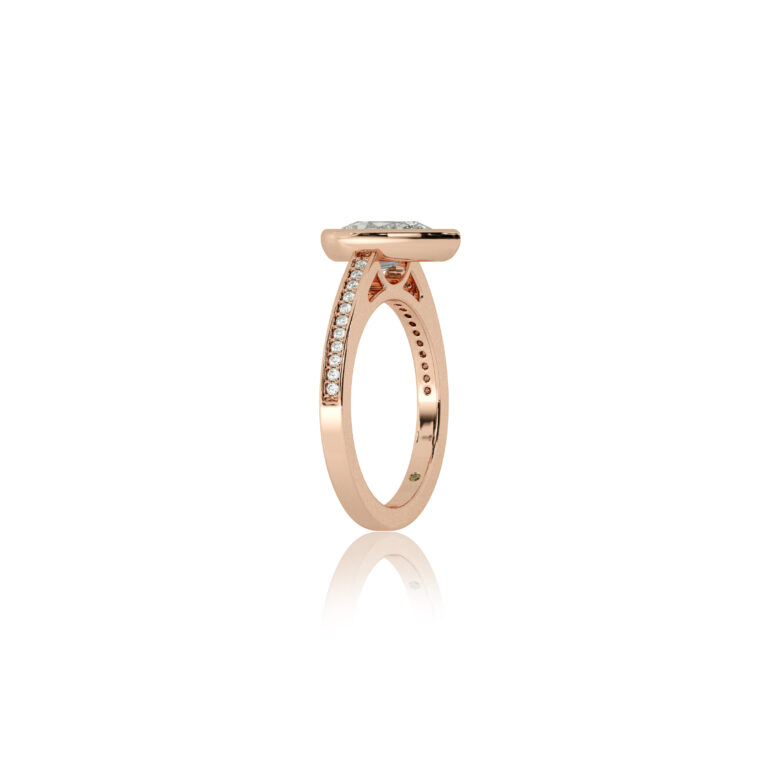
Rose Gold: For a romantic, vintage aesthetic, rose gold halo engagement rings are incredibly trendy. They blend well with many skin tones and offer a softer look than yellow gold.

How Should You Wear a Pear Shaped Halo Ring?
The most traditional way to wear a pear shaped ring is with the pointed tip facing toward the fingernails.
Tip Up: The most traditional way, pointing toward the fingernails. This orientation elongates the finger, creating the slimming effect the cut is famous for.
East-West: A modern trend where the stone is set horizontally. If you are interested in a unique orientation like this, you may want to explore custom engagement rings to ensure the setting is secure and balanced.
The Bottom Line
To conclude this pear shaped halo engagement ring guide , remember that this style is a stunning choice that offers vintage charm and modern brilliance.
By choosing a lab-grown diamond and setting it in high-quality gold, you maximize both beauty and value. Whether you prefer the teardrop shape of the pear, or the symmetry of round halo engagement rings, the halo setting remains a brilliant choice for maximizing impact.