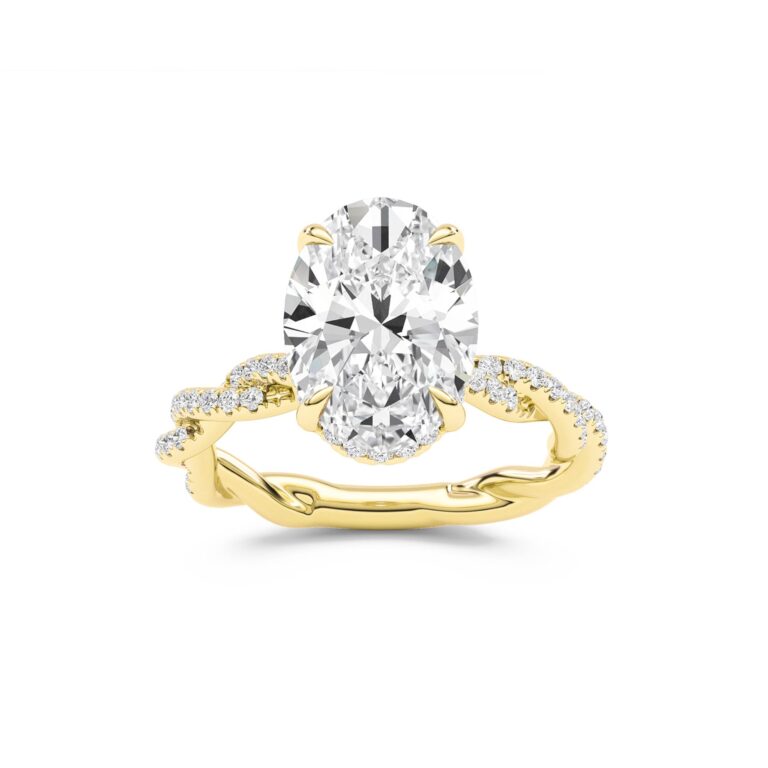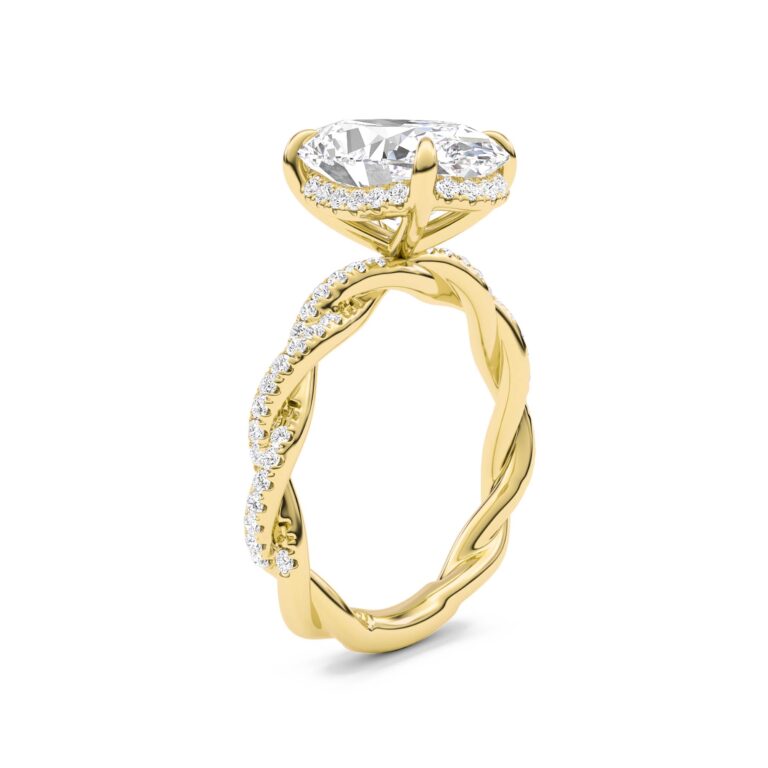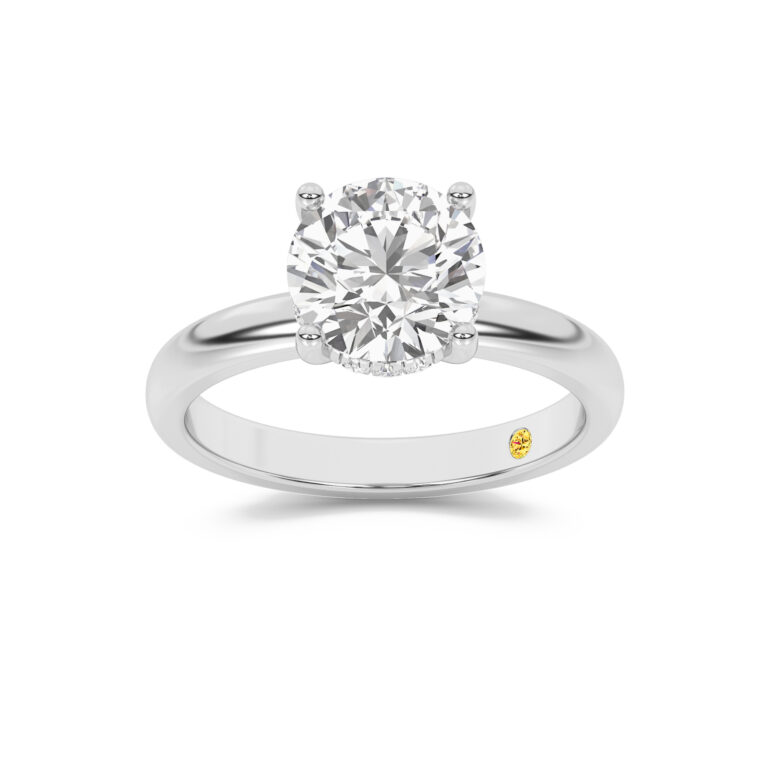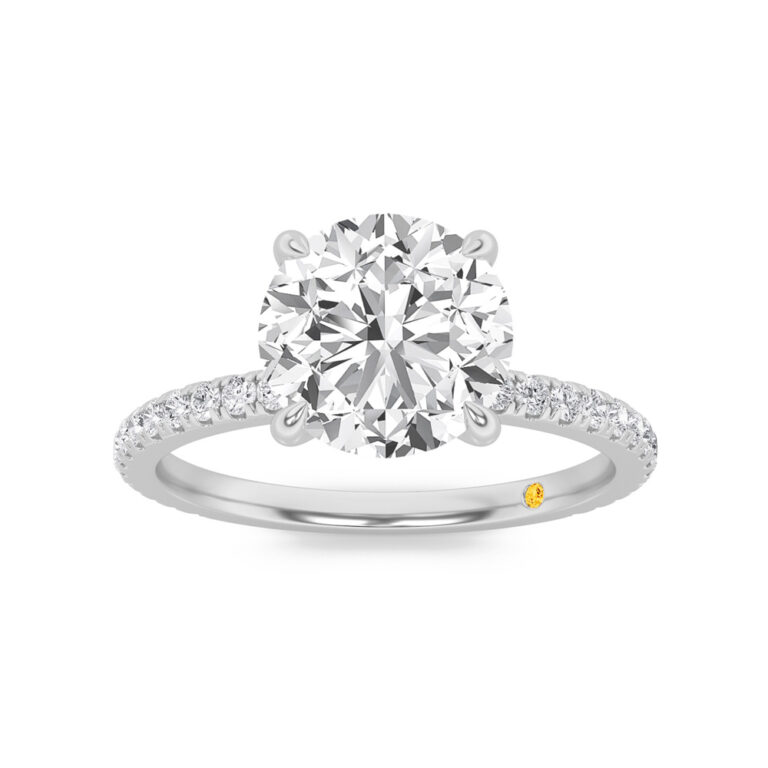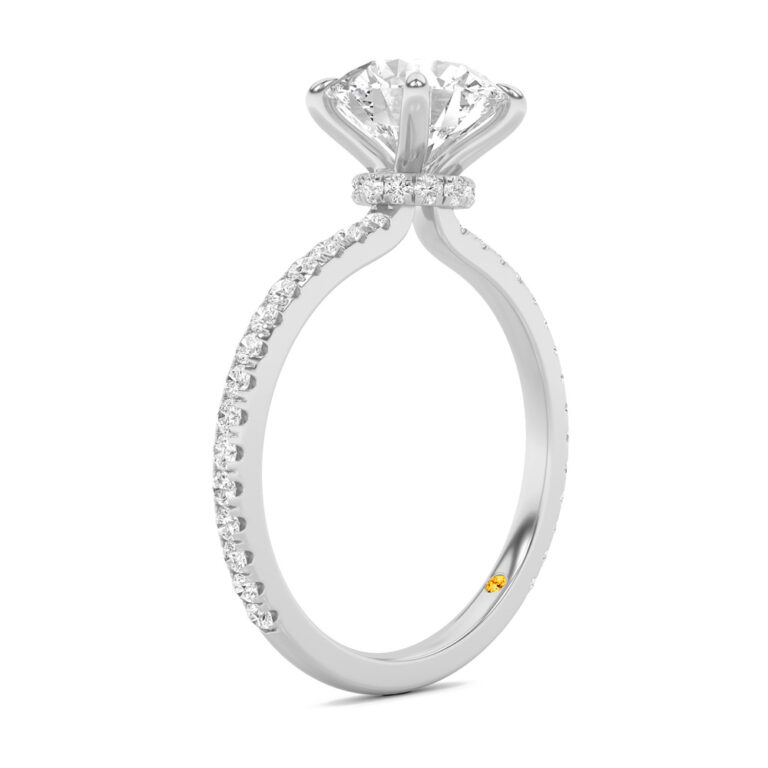
When couples start exploring their options, the first thing they usually want to know are the pros and cons of hidden halo pear engagement rings. The main benefit of a hidden halo pear engagement ring is its stunningly clean top view combined with breathtaking side sparkle. On the flip side, the primary drawback is simply that it requires a bit of extra care to gently clean dust from under the stone.
Evaluating these pros and cons compared to other popular pear shaped engagement ring settings is a conversation I have with clients daily. Modern buyers expect a flawless piece, and frankly, large lab-grown diamonds shouldn’t be hidden away. While older designs often relied on bulky borders to make tiny stones look bigger, today’s buyers want the center stone to speak for itself. A hidden detail adds that touch of magic without stealing the show, requiring incredibly steady hands to ensure every single diamond sits perfectly flush against the gold base.
Hidden Halo vs. Traditional Halo: Which is Best for a Pear Shaped Diamond?
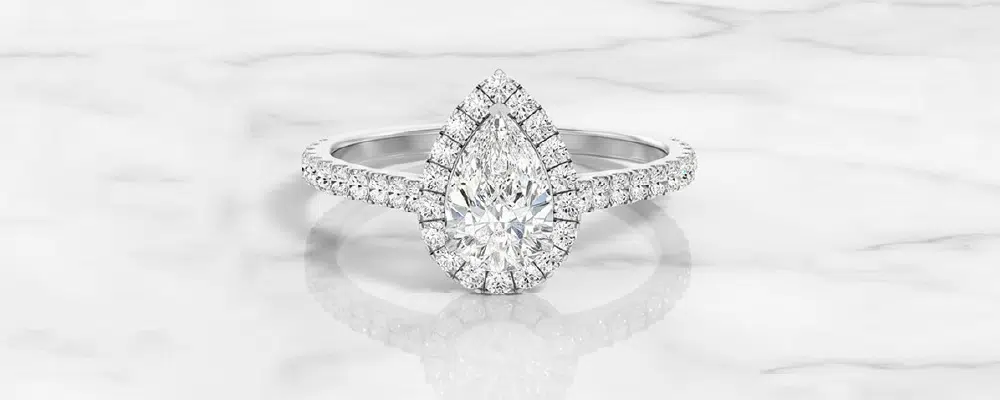
Traditional halos add thick borders that turn a sharp teardrop shape into a round, bulky blob.
To understand the value of a hidden halo, it helps to compare it to the classic alternative. Traditional halos add thick borders that can unfortunately turn a sharp, elegant teardrop shape into a round, bulky blob. For years, big retailers pushed these standard halos simply to make small, overpriced mined diamonds appear larger, sacrificing the crisp edges of the teardrop cut in the process.
When you weigh the options, it becomes clear why stand-alone stones in a hidden halo setting often win out over traditional pear halo engagement ring designs. Our high-quality lab-grown center stones are brilliant enough to stand alone. They provide a sleek, top-down look that honors the true cut—showcasing a sharp point and a smooth, rounded bottom. True luxury means letting the main diamond take center stage; nothing should ever steal focus from a perfectly cut gem.
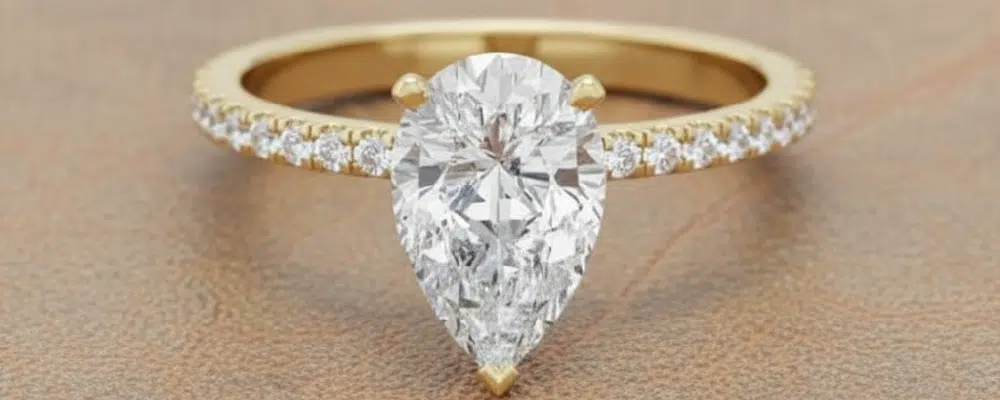
The Visual Appeal of the Hidden Halo Side Profile in Pear Engagement Rings
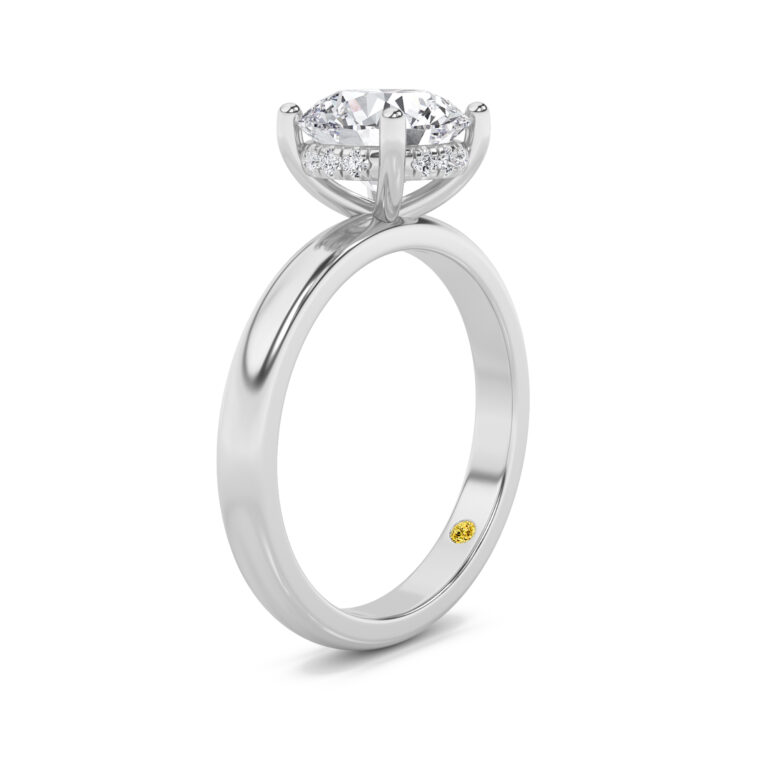
Beyond the top-down view, the true magic of this setting lies in its profile. The side view reveals a hidden ring of diamonds delicately wrapping around the base of the center stone. While most people obsess over how a ring looks from the top, wearers actually view their rings from the side throughout the day—whether they are holding a steering wheel, typing at a desk, or reaching for a coffee cup.
This secret collar of diamonds feels custom and highly considered. Getting this detail right takes true craftsmanship, but the payoff is immense. Friends will notice that flash of light when you move your hand, serving as a secret reward for the person wearing it daily. For those aiming to maximize this overall brilliance, La Joya’s collection of pear shapes offers expertly crafted side profiles designed to catch the light from every angle.
Structural Integrity: How a Hidden Halo Setting Protects a Pear Cut Diamond
A hidden halo adds a solid metal and diamond gallery rail that provides strong structural support to the base of the gem.
Aesthetics aside, a hidden halo also plays a crucial role in the ring’s durability. The setting adds a solid metal and diamond gallery rail that provides strong structural support to the base of the gem. Pear shapes inherently need careful mounting; the pointed tip is prone to chipping if left exposed. While we always use a strong V-prong at the tip in our 14k or 18k gold settings, adding a hidden collar gives another vital layer of safety.
Because durability is so important, clients sometimes ask about bringing in old rings to upgrade. We strictly melt down trade-in jewelry to cast brand-new, structurally sound settings so you always get a fresh, secure ring. Metal fatigue can ruin a beautiful piece over time, so using fresh gold ensures the prongs hold your diamond tight. After all, your peace of mind matters just as much as the ring’s beauty.
Diamond Anatomy: Do Pear Cut Diamonds Suffer from the Bow-Tie Effect?
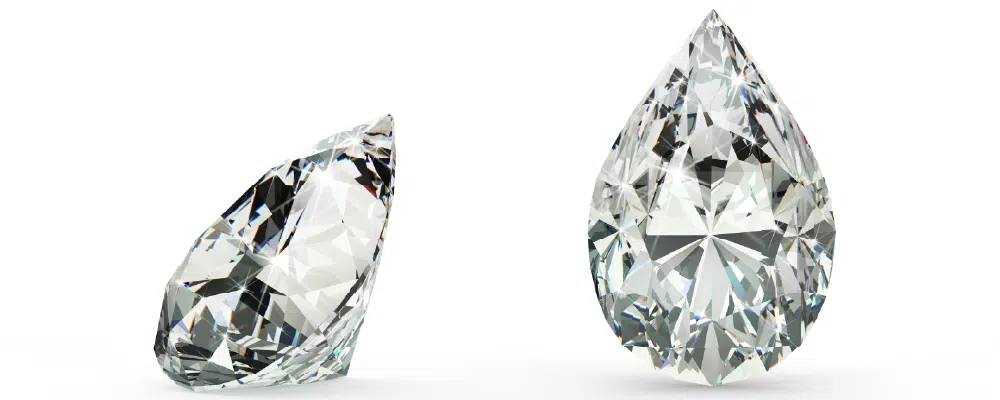
Yes, pear diamonds can show a dark, bow-tie-shaped shadow in the middle due to how their elongated facets block light. Even with the perfect setting, the diamond itself must be cut properly. Yes, pear diamonds can show a dark, bow-tie-shaped shadow in the middle due to how their elongated facets block light. Cutting a teardrop shape is a complex art, and poor cuts make that dark shadow very harsh—a visual phenomenon extensively documented by gemological authorities like the Gemological Institute of America (GIA).
To combat this, I personally sort through hundreds of lab-grown diamonds in my office to reject bad cuts. You deserve a stone that shines bright from every angle. Excellent light return hides the shadow naturally, which perfectly illustrates how diamond cut quality determines brilliance. Skilled cutters know exactly how to angle the bottom facets, meaning when you invest in premium stones, you avoid those ugly dark spots.
Summary Comparison
| Feature | Hidden Halo | Traditional Halo |
| Top View | Clean, sharp teardrop outline | Rounded, bulky border |
| Side View | Secret glittering diamond collar | Plain metal basket usually |
| Center Stone | Showcases a large lab-grown gem | Masks a small mined stone |
| Vibe | Modern, premium, custom | Traditional, older style |
Conclusion
Understanding the pros and cons of hidden halo pear engagement rings makes navigating your options so much easier. Ultimately, you want a ring that lasts a lifetime. Our team at La Joya Jewelry creates pure art with rich gold and bright lab-grown gems, ensuring your diamond stays safe and beautiful. Quality craftsmanship speaks louder than fancy marketing terms.
Once you’ve found the perfect setting, explore our diamond bridal sets to find the matching band that completes your look.