Buying an engagement ring is a big step. It can feel scary. You do not want to make a mistake. Through this solitaire engagement ring buying guide I want to make this process easy for you.
I have made fine jewelry for over 30 years. Clients visit my offices all the time. They ask me how to pick the best single stone ring. I always give them direct facts. I will do the same for you through this guide. Let us build your perfect ring.

What is a Solitaire Engagement Ring?
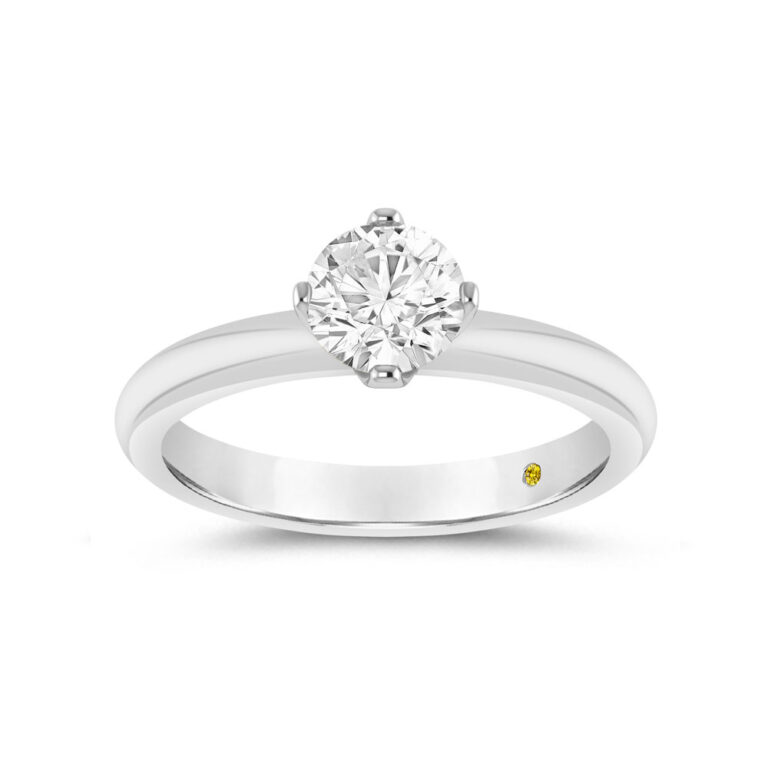
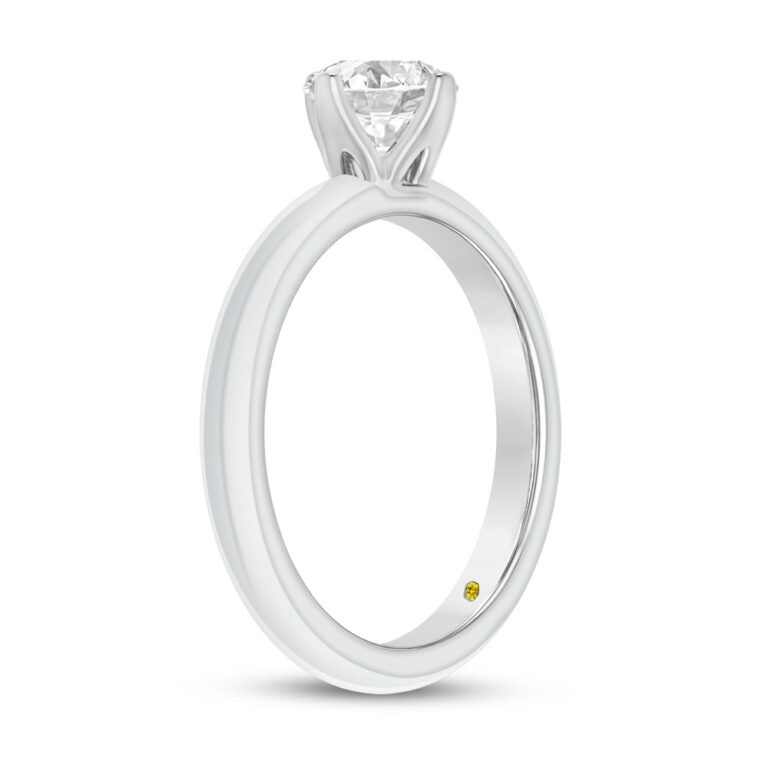
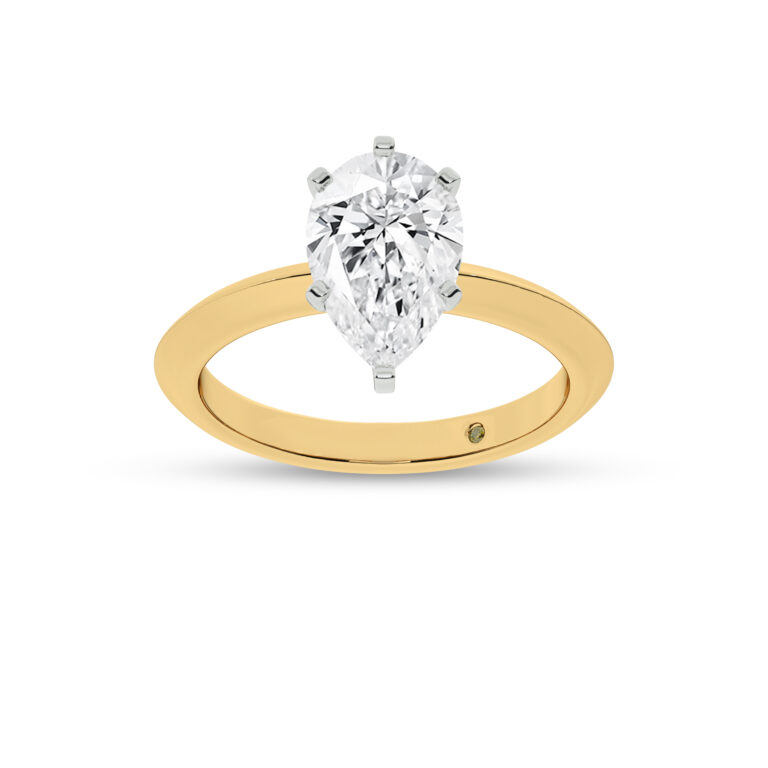
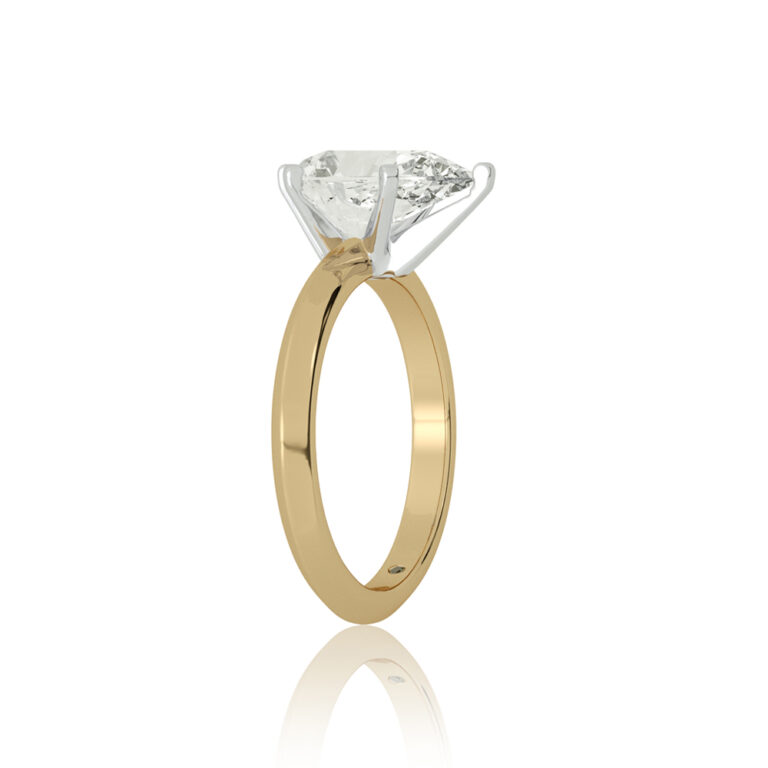
A solitaire engagement ring is a jewelry piece that holds one single diamond in the center with no side stones.
This style is a true classic. The main stone sits alone. It catches the eye right away. In my 30 years, this is the top request from those browsing our collection of single diamond engagement rings. Clients love the clean look. But there is a catch. The center stone has nowhere to hide. It must be a good stone. You cannot use side stones to distract the eye. The metal band must also be perfect. It supports the whole design.
Why are Lab-Grown Diamonds the Smart Pick?
Lab-grown diamonds are real diamonds that cost much less and let you buy a bigger and brighter center stone.
I always guide my clients to lab grown diamond engagement rings. They are the smart choice today.
Lab grown diamonds are 100 percent real diamonds – just made in a lab. They shine just as bright and wear just as hard. But the price is so much better. You save a lot of money. You can use that money for a much bigger stone.
I see this trend growing fast in my offices, as many discover the top benefits of choosing a lab grown solitaire engagement ring. The value is just too good to ignore.

How Do Lab-Grown Diamonds Save You Money?
Lab-grown diamonds save you money because they do not require costly mining operations to pull them from the earth.
Mining is hard work. It takes massive machines and a lot of time driving up costs. Lab stones skip all of that. They grow in a clean lab. The process is fast and smart. I pass those savings right to my clients. Why pay more for the exact same rock? A smart buyer always looks for true value.
Which Gold Metal is Best for Solitaires?
The best metals for solitaire rings are 14k and 18k solid gold in white, yellow, or rose colors.
I only work with gold. It is the absolute best metal for rings. It is strong, beautiful and lasts a lifetime. In my offices, we cast a lot of gold. It shapes well around a diamond, is easy to polish and easy to resize later if needed. Gold is the top choice for any smart buyer.
Why is 14k Gold Great for Daily Wear?
14k gold is great for daily wear because it mixes pure gold with hard alloys to resist deep scratches.
Pure gold is very soft. You cannot wear pure gold on your hand every day. It will bend. 14k gold has a smart mix. It is about 58 percent pure gold. The rest is strong metal alloys. This makes the ring tough. It can take a hit. For a single stone ring, you need a tough band.
When Should You Pick 18k Gold?
You should pick 18k gold when you want a richer yellow color and do not mind a slightly softer metal.
18k gold has more pure gold in it. It is 75 percent pure gold. This gives it a very deep, rich color. Many clients love that warm look. But it is a bit softer than 14k gold. You must be slightly more careful with it. I often suggest 18k for thick bands.
How Does White Gold Compare to Yellow Gold?
White gold provides a bright icy look while yellow gold offers a classic warm tone for your ring band.
Both choices are great. It just depends on what you like. White gold blends in with the diamond. It makes the stone look huge. Yellow gold creates a stark contrast. It makes the diamond pop out.
Rose gold adds a soft pink touch, and you can learn more about comparing rose gold and yellow gold in my dedicated guide. I show all options in my offices. Clients love trying them on. They all wear well over the years.

How Do You Rank the 4Cs for a Solitaire?
You must prioritize diamond cut first, then carat weight, color, and finally clarity when buying a single stone ring.
Many buyers get this wrong. They want a flawless stone. That is a mistake.
In my 30 years, I have learned a better way, heavily aligned with the GIA’s official 4Cs grading system. A solitaire ring needs a specific balance. You want the most shine, a good size and most importantly you do not want to pay for things you cannot see. Let us break down the 4Cs my way to keep this solitaire engagement ring buying guide as practical as possible.
Why is Diamond Cut the Top Priority?
Diamond cut is the top priority because it controls how light bounces inside the stone and creates bright sparkle.
Cut is everything. A bad cut ruins a good stone. It will look dull and flat. I always tell clients to buy an Excellent or Ideal cut. The facets must line up perfectly. They act like tiny mirrors sending light right back to your eyes.
Never save money on the cut. It is the heart of the ring.
How Big Should the Carat Weight Be?
The carat weight should be as large as your budget allows after you have picked a top tier cut grade.
Everyone loves a big stone. A big lab-grown stone is easy to get. Since they cost less, you can aim high. A solitaire ring is all about that one stone so you should try to make it a good size.
I often see clients get a two-carat lab stone. It looks stunning. If you are torn, checking my visual size comparison of a 1 carat versus 2 carat stone can help. Just make sure the cut is perfect first.
How Does the Setting Change Diamond Color?
The color of your gold band reflects into the diamond and can make a slightly yellow stone look very white.
This is a massive secret in the trade. If you use a yellow gold band, the diamond absorbs that color. You can buy a J-color stone. It will look bright white in a yellow band. You save a ton of money.
If you pick white gold, you need a higher color. Aim for an H-color or better. The metal plays a big role.
What Clarity Grade Do You Really Need?
You only need an eye-clean clarity grade like VS1 or VS2 to get a flawless look without the high cost.
Clarity tells you about tiny marks inside the stone. Flawless stones cost a fortune. But you cannot see the marks in a VS2 stone with your bare eyes.
You need a strong loop to see them. I look through loops all day in my offices. Trust me on this. Save your money here. An eye-clean stone is all you need for a perfect ring.

How Can You Keep the Solitaire Stone Secure?
You keep the center stone secure by choosing a setting with strong gold prongs that hold the diamond tight.
A lost diamond is a sad day. I have seen many clients cry over lost stones and want to save you from that pain. A solitaire stone sticks up high. It can hit doors and snag on clothes.
A key lesson in my solitaire engagement ring buying guide is that the setting must be very strong. The way the metal holds the stone is a big deal.
Why are Six Prongs Better Than Four?
Six prongs are better than four because they grab the stone in more spots and offer better protection from hits.
A four-prong ring looks very nice. It shows off more of the diamond. But it carries a big risk. If one prong bends, the stone can fall out. A six-prong ring is much safer. If one prong bends, five others still hold the rock.
I always push clients toward six prongs, a topic I cover deeply in my guide comparing 4-prong and 6-prong settings. It brings great peace of mind.
What is a V-Prong Setting?
A V-prong setting is a special metal tip shaped like a letter V used to protect the sharp corners of diamonds.
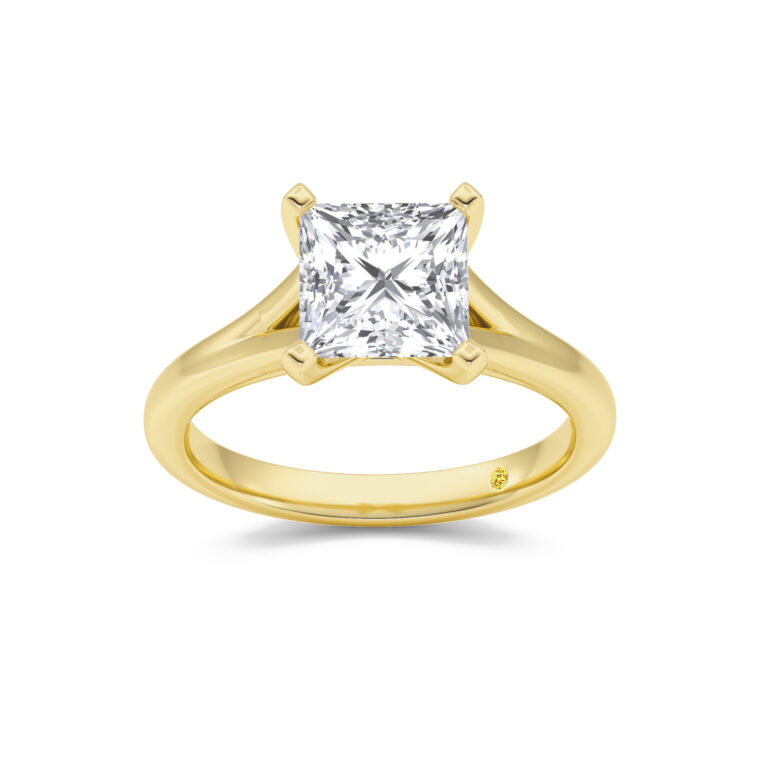
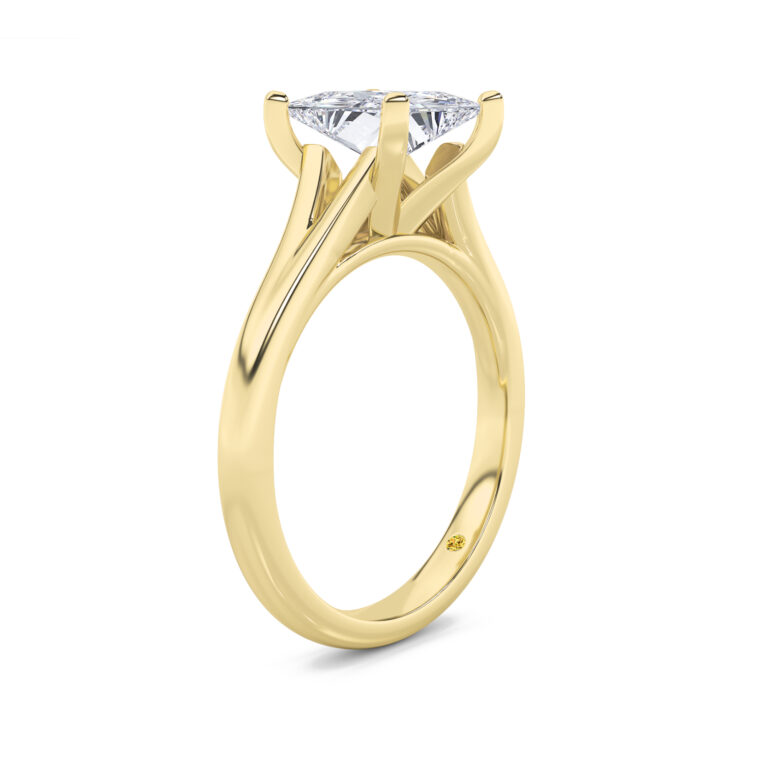
Some diamonds have sharp corners. Princess cut solitaire engagement rings and pear shaped solitaire designs have points. These points can chip easily. They need extra care. A V-prong wraps around the sharp point. It forms a shield of gold. If you bump the ring, the gold takes the hit. The diamond stays safe. I always use them on fancy shapes.

What is the Best Length to Width Ratio?
The best length to width ratio helps fancy shape diamonds look perfectly balanced instead of being too fat or skinny.
Round stones are perfectly round. They do not have a ratio. But oval and emerald shapes do. The ratio is the length divided by the width. It tells you the outline of the stone. A bad ratio makes the stone look odd. I check this number on every stone I buy.
What is the Ideal Ratio for Oval Diamonds?
The ideal length to width ratio for an oval diamond sits right between 1.35 and 1.45 for a classic look.
If an oval is below 1.35, it looks chubby. If it is over 1.45, it looks like a long pill. You want the sweet spot. A ratio of 1.40 is perfect. It looks graceful on the finger. It is elegant, which is exactly why the oval solitaire ring is a smart choice for many.
What is the Bow-Tie Effect in Oval Stones?
The bow-tie effect is a dark shadow across the middle of an oval diamond caused by poor facet light return.
This is a big issue with oval diamond solitaire engagement rings. If the cut is bad, a dark shadow forms inside. It looks like a man’s bow tie blocking the sparkle and shine. You do not want a dark stone. A good cut fixes this. A good length to width ratio helps too. I check every oval stone for this shadow before I sell it.
How Do You Pick the Right Band Width?
You pick the right band width by choosing a solid gold ring that is between 1.8 and 2.2 millimeters thick.
The band width matters a lot. It is not just about looks but also about the ring lasting a long time. The band holds the main stone. It must be strong enough to do the job. Many rings today are too thin. That is a bad trend.
Why are Very Thin Bands a Bad Idea?
Very thin bands are a bad idea because the gold can easily bend and warp during normal daily tasks.
I see ads for ultra-thin bands. Although they look very delicate, they bend very easily. I fix bent rings in my offices all the time.
When the band bends, the prongs shift. When the prongs shift, the stone falls out. I would always advise clients not to go below 1.8 millimeters.
A 2.0-millimeter band is the safest bet. It still looks thin but is very strong, a principle I highlight in my durability guide for thin and thick bands
How Do You Choose Between Setting Styles?
You choose a setting style by looking at how high the diamond sits and how the gold wraps around it.
A solitaire is not just a plain band. There are many subtle styles. The way the center head attaches is key. It changes the whole profile of the ring. I walk clients through these choices daily, which is why detailing them is a must for any complete solitaire engagement ring buying guide. Let us look at the top two styles.
What Makes a Cathedral Setting Different?
A cathedral setting features gold slopes that rise up from the band to meet the main diamond head.
This is a very strong style. The metal arches up. It looks like the roof of an old church. These arches add massive strength. They protect the sides of the diamond making the center stone look bigger. It draws the eye up.
This style is a top pick in my offices, and you can read my complete guide to cathedral designs for more details.
How Does a Peg Head Setting Work?
A peg head setting is a style where the diamond basket sits directly on top of a straight gold band.
This style is very clean. The band goes straight across and the diamond head drops right onto it. This style make the head look like it is floating.
However the peg head is a bit weak. The only point of contact is the bottom peg. If you hit it hard, it can snap off. I prefer cathedral styles for daily wear. They are much safer.
What Are My Top Manufacturing Secrets?
My top manufacturing secret is to cast the ring head and the ring band separately to ensure a perfect finish.
Many cheap rings are made in one piece. Gold is poured in all at once. While this is fast, it is sloppy as you cannot polish the tiny spots under the stone well. In my offices, we cast the band and the head separately and polish both pieces to perfection before soldering them together.
This makes a cleaner, better ring, especially when crafting custom made engagement rings. It is the proper way to make fine jewelry.
Why is Hand Polishing Important?
Hand polishing is important because it removes all tiny casting bumps and gives the gold a flawless bright mirror finish.
Machines can polish rings fast. But they miss spots. A human hand is much better.
My team hand polishes every ring. We check every curve inside the band. A smooth band feels much better on the finger. It takes more time. But the final result is always worth it.
Solitaire Ring Feature Breakdown
| Ring Feature | My Expert Advice | Why It Matters |
|---|---|---|
| Center Stone | Buy a Lab-Grown Diamond. | They cost much less and give you a bigger, real stone. |
| Metal Choice | Use 14k or 18k Gold. | Gold is very strong, lasting, and looks great for life. |
| Diamond Cut | Pick Excellent or Ideal. | Cut creates the sparkle. Never skip on the cut grade. |
| Carat Weight | Go big with lab stones. | Solitaires rely on one stone. Make it a very good size. |
| Color Grade | Pick J for yellow, H for white. | The gold band color changes how the stone looks. |
| Clarity Grade | Pick VS1 or VS2. | They look fully flawless to your eyes but cost much less. |
| Prong Style | Use six strong gold prongs. | Six prongs keep the stone safe from falling out. |
| Band Width | Stay above 1.8 millimeters. | Thin bands bend and drop stones. Thick bands stay safe. |
Conclusion
Buying a ring is a big choice. But it does not have to be scary. You have my solitaire engagement ring buying guide to help you.
Focus on lab-grown stones and strong gold bands. Put your money into a great diamond cut. Use six prongs for safety.
If you follow these rules, you will get a perfect ring. I have seen these rules work for 30 years. They will work for you too. When you are ready to start, explore La Joya’s solitaire collection to find your ideal match.