Planning a proposal is a beautiful journey. Selecting the ring is a pivotal moment. It is a tangible symbol of your commitment and a sparkling promise of a shared future.
I have spent three decades in the jewelry business. I’ve seen countless couples search for a ring that captures their unique journey. The solitaire engagement ring is timeless. But there is another style that speaks a deeper language of love: the three-stone engagement ring.
This design goes beyond a single moment. It tells a story. It represents a past you cherish, a present you celebrate, and a future you’ll build together. Join me in this ultimate three stone engagement ring buying guide to help you select the perfect ring for your proposal. While the three-stone ring is famous for its romantic ‘Past, Present, and Future’ symbolism, this guide is focused purely on how to build the perfect ring without overpaying.

How to Grade Diamonds for a Three-Stone Engagement Ring
Grading diamonds for a three-stone ring requires applying the Cut, Clarity, Color, and Carat standards to all three stones simultaneously to ensure uniform light return and visual consistency.
When grading diamonds for a three-stone ring, the most critical factor is ensuring that the side stones perfectly complement the center stone for uniform sparkle. A crucial part of any three stone engagement ring buying guide is applying the 4 Cs—Cut, Clarity, Color, and Carat—to all three stones together, not just the center one in isolation.
Why is a Uniform Diamond Cut Important for Three-Stone Rings?
Matching the cut style and insisting on Excellent or Ideal cut grades for all three diamonds prevents dull, dark gaps from appearing next to the brilliant center stone.
-
The Rule: Always insist on Excellent or Ideal cut grades for all three diamonds. If one side stone is cut poorly, it will look like a dull or dark gap right next to your brilliant center stone.
-
Matching Cut Styles: Pay attention to the faceting style. If you have a brilliant-cut center (like a Round or Oval), pair it with brilliant-cut side stones. If you choose a step-cut center (like an Emerald cut), pair it with step-cut side stones (like Baguettes or Trapezoids) to maintain a cohesive, “hall of mirrors” flash across the entire setting.
What is the Best Diamond Clarity for a Three-Stone Ring?
All three diamonds in a three-stone ring must be “eye-clean,” though a VVS2 center stone can be safely paired with VS1 or VS2 side stones without compromising the visual appearance.
-
The Rule: All three stones must be “eye-clean.” However, they do not need to have the exact same clarity grade on paper. You can safely pair a VVS2 center stone with VS1 or VS2 side stones, provided no inclusions are visible to the naked eye.
-
The Shape Exception: If you are opting for step-cut diamonds (like Emerald or Asscher), inclusions are much easier to spot. For these shapes, we strongly recommend keeping all three stones at a VVS2 clarity or higher. With lab-grown diamonds, upgrading to this premium clarity level is highly affordable and ensures a flawless appearance.
How to Match Diamond Color in a Three-Stone Ring
Side stones must be within one color grade of the center stone to prevent any of the diamonds from appearing distinctly yellow when set flush against each other.
-
The Rule: Your side stones must be within one color grade of your center stone. Never mix icy, colorless diamonds with warmer, near-colorless diamonds.
-
Colorless (D, E, F): If your center stone is D, E, or F, your side stones must also fall within the D-F range. If you place an H-color side stone next to an E-color center, the side stone will look distinctly yellow.
-
Near-Colorless (G, H, I): If your center stone is G, H, or I, your side stones should exactly match or be one grade higher (e.g., an H center stone with G or H side stones).
-
The Lab-Grown Advantage: Because lab created diamond engagement rings are significantly more accessible, finding a perfectly color-matched trio in the premium D-E-F range is simple and budget-friendly, ensuring a seamless wall of white brilliance.
Understanding Total Carat Weight (TCW) in Three-Stone Rings
Total Carat Weight (TCW) in a three-stone ring calculates the combined weight of the center stone and the two side stones, meaning a 3.00 TCW ring distributes its carat weight horizontally across the finger. One of the biggest advantages of a three-stone ring is the massive finger coverage it provides, but understanding how jewelers list the carat weight is crucial to getting the look you want.
-
The Rule: Pay attention to the “Total Carat Weight” (TCW). A ring listed as “3 Carats” might mean a 1.50-carat center stone with two 0.75-carat side stones.
-
The Visual Spread: Because the carat weight is spread horizontally across the finger, a 2.00 TCW three-stone ring will often look significantly larger and more impressive than a single 2.00-carat solitaire. (To find the exact size ratios for your specific style, refer to our Proportion Playbook below).

How to Determine the Right Ratio for Three-Stone Ring Side Stones
The visual impact of a three-stone ring is determined by the size ratio of the side stones relative to the center diamond. Whether you visit my office for a consultation or shop our collections online, these are the three exact ratios we use to craft the perfect silhouette:
1. The Classic Graduated Look (The 1/3 to 1/2 Rule)
This is the traditional “Past, Present, and Future” aesthetic. The side stones are noticeably smaller but still command attention.
-
The Ratio: Side stones should be approximately 30% to 50% of the center stone’s carat weight.
-
Example: A 2.00-carat center stone paired with two 0.75-carat side stones.
-
Best For: Round, Princess, and Emerald cuts.
2. The Maximum Spread (The Petite Side Stone)
If your goal is to make the center diamond look as massive as possible, the side stones should act as a supporting cast rather than co-stars.
-
The Ratio: Side stones should be 10% to 15% of the center stone’s weight.
-
Example: A 2.50-carat center stone paired with two 0.25-carat side stones.
-
Best For: Elongated shapes like Ovals, Marquise, and Pears where you want the center stone to be the undisputed focal point.
3. The Equal-Sized Trilogy (The Statement Band)
A bold, modern, and highly symmetrical look where all three diamonds are visually identical in size, creating a continuous band of brilliance.
-
The Ratio: All three stones are within 0.10 to 0.15 carats of each other.
-
Example: A 1.50-carat center stone with two 1.40-carat side stones.
-
Best For: Emerald and Radiant cuts, or buyers who want maximum finger coverage.

How to Customize the Components of a Three-Stone Ring
Customizing a three-stone ring requires selecting specific diamond shapes, a secure setting style, and a durable precious metal to dictate the final aesthetic and daily wearability. Beyond the 4 Cs, the ring’s components come together to create its final look. If you plan on customizing a three-stone ring, understanding these elements is essential to bringing your vision to life.Best Diamond Shapes for Three Stone Rings
The best diamond shapes for three stone rings are traditionally round or princess cuts for symmetry, though modern trends favor mixing shapes like an oval center with pear side stones. The stones you select play a huge role in the ring’s overall look. While a trio of the same shape is classic, mixing shapes is a popular modern trend. Here are some popular combinations:Round Center + Round Sides
This epitomizes the classic symmetry of three stone round engagement rings and maximizes brilliance for a dazzling, timeless appeal.
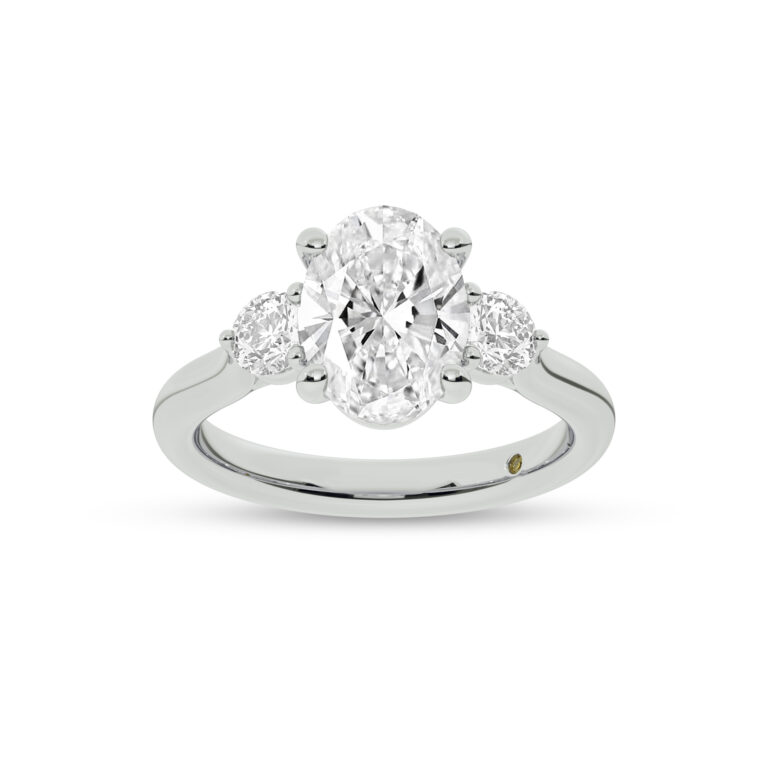
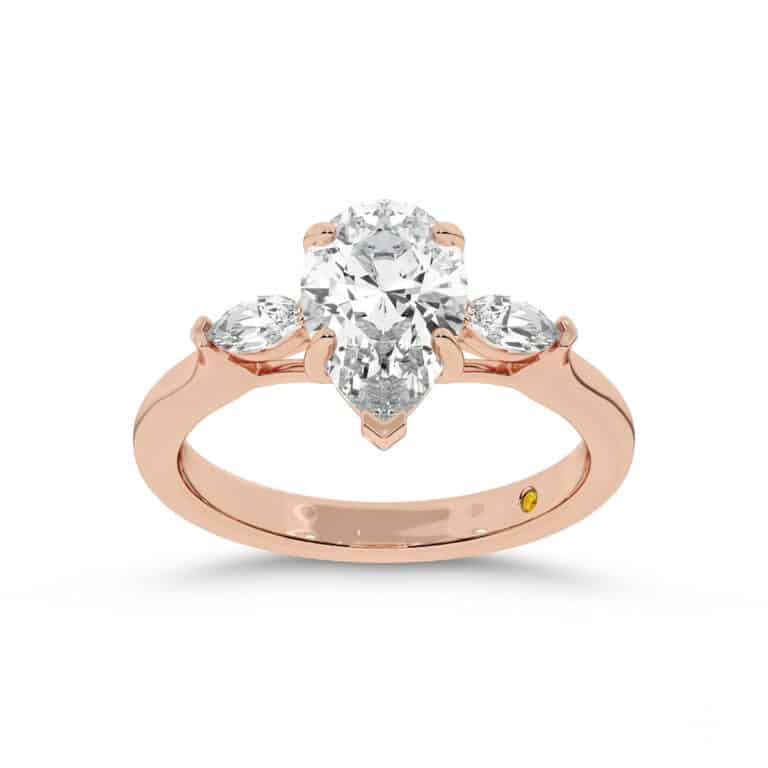
Oval Center + Pear Sides
The elongated oval three stone engagement ring, paired with the graceful taper of pear-shaped side stones, creates a very elegant and sophisticated look. If you love this elongated aesthetic, read our definitive three stone oval engagement ring guide
Emerald Cut Center + Tapered Baguette or Trapezoid Sides
This combination offers the distinctly modern, sophisticated feel of an emerald cut three stone engagement ring.
Choosing the best side stone for an emerald cut three stone ring is essential to maintaining the clean lines of this step-cut style.
Princess Cut Trio
A harmonious trio of square princess cuts creates the sleek, geometric appeal of three-stone princess cut rings. As part of this three stone engagement ring buying guide, we recommend exploring popular combinations to see which style resonates with you. When budgeting for this modern style, it is worth comparing a natural vs lab grown three stone princess cut engagement ring to see how much more sparkle you can get for your budget.
Shape Pairing Guide
| Center Stone | Best Side Stones | Style Vibe |
|---|---|---|
| Round Brilliant | Round or Tapered Baguette | Classic & Timeless |
| Oval Cut | Pear or Half-Moon | Elegant & Feminine |
| Emerald Cut | Trapezoid or Baguette | Art Deco / Modern |
| Princess Cut | Princess or Trillion | Geometric & Bold |
Best Settings for Three Stone Rings
The best settings for three stone rings are the classic prong setting for maximum light return or the bezel setting for a modern, secure profile. The setting secures the diamonds and defines the ring’s profile. There are many unique three stone engagement ring settings to choose from:Prong Setting – A timeless choice where prongs (typically 4 or 6) hold each stone. This allows maximum light to enter the diamonds, maximizing their sparkle.
Bezel Setting – For a modern, sleek look, the bezel setting encases each diamond in a thin metal rim. This provides excellent protection and a clean aesthetic.
Halo Setting – For those who crave maximum brilliance, our three stone halo engagement ring buying guide explains how adding a halo can make your center stones appear even larger.
Trellis or Cathedral Setting – These are elegant options where intertwining prongs (Trellis) or raised arches (Cathedral) elevate the diamonds, creating a more dramatic and visible profile.
If you are leaning towards a halo setting to maximize your budget, understanding the exact visual impact is key.How Much Bigger Does a Halo Make a Diamond Look?
A halo setting increases the perceived diameter of a center diamond by approximately 2mm to 3mm. This is because the human eye merges the sparkle of the small surrounding diamonds with the center stone, reading it as one massive object.
A common question I address in my three stone halo engagement ring buying guide is: “How much size does a halo actually add?”
To put this in perspective, consider the measurements of a Round Brilliant diamond:
-
1.00 Carat Diamond – ~6.5mm wide.
-
1.00 Carat Diamond + Halo – ~8.5mm to 9.0mm wide.
A 2.00-carat solitaire is roughly 8.2mm wide. Therefore, by adding a halo to a 1-carat stone, you achieve a visual look that exceeds a 2-carat diamond. When browsing three stone engagement rings with halo, you get the impact of a celebrity-sized ring without the exponential cost of a larger single stone.
How Does a Halo Protect Your Diamonds?
A halo setting acts as a physical bumper that stops hard impacts from chipping the edges of your center and side gems. Daily wear is incredibly tough on fine jewelry. Sharp corners on fancy shapes are prone to breaking if you bump your hand against a hard surface. Surrounding these vulnerable stones with a tight ring of solid gold and tiny diamonds absorbs that shock perfectly.
Benefits of a Hidden Halo Setting vs. Traditional Halo
A hidden halo maximizes light entry and adds side-profile sparkle without altering the ring’s top-down silhouette. While a traditional halo faces up, a hidden halo wraps around the basket (the metal holding the stone). If you decide to design your own engagement ring, this is a subtle detail that adds immense value.
Why choose a hidden halo?
Sleekness – It maintains the classic look of a solitaire when viewed from above.
Profile Detail – It ensures the ring sparkles when others view it from the side (which is how most people see your ring).
Brilliance – Because the top is open, more light enters the diamond, improving its fire.

Which Metal is Best for a Three-Stone Engagement Ring?
Platinum and white gold create a seamless, icy aesthetic that enhances colorless diamonds, while yellow or rose gold provides a vintage warmth and color contrast.White Gold – Sleek and modern, it enhances the sparkle of colorless diamonds.
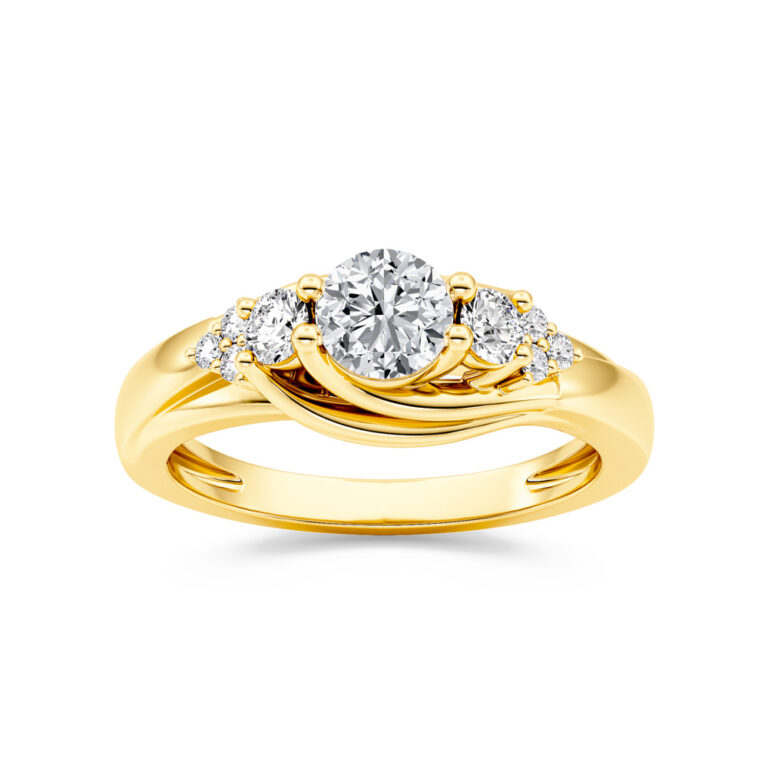
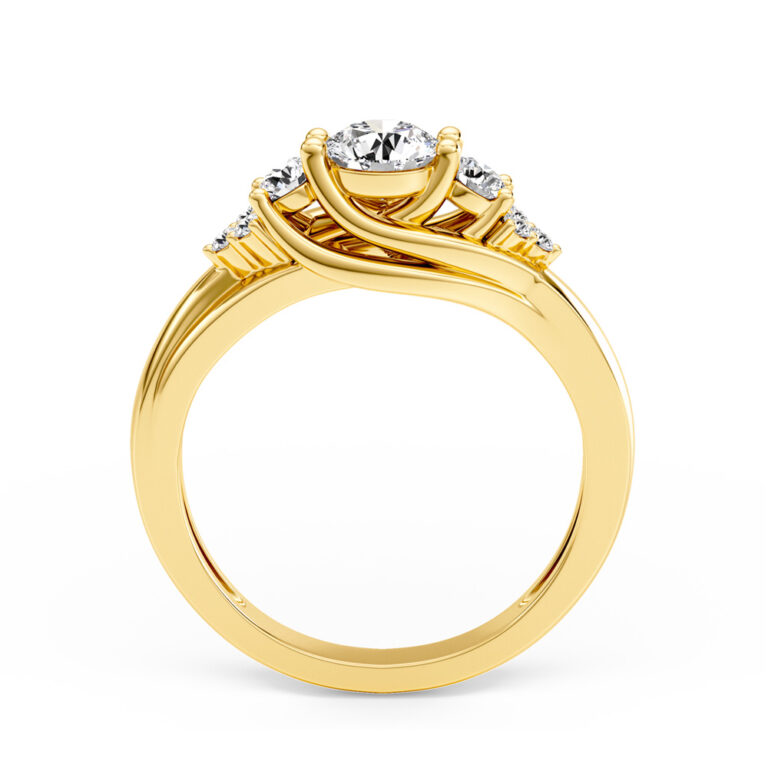
Yellow Gold – Warm and traditional, the warmth of a yellow gold three-stone engagement ring creates a beautiful contrast that makes the diamonds “pop.” You can dive deeper into this classic style in our yellow gold three stone engagement ring guide.
Rose Gold – Romantic and trendy, this metal offers a soft, feminine, and often vintage charm.
Platinum: While often marketed as a premium and hypoallergenic choice, platinum is actually a “sticky” metal. When it gets scratched, the metal is displaced rather than lost, quickly creating a dull, gray, matte finish known as a patina. To maintain a high-polish shine and superior scratch resistance, we highly recommend 14k or 18k gold instead
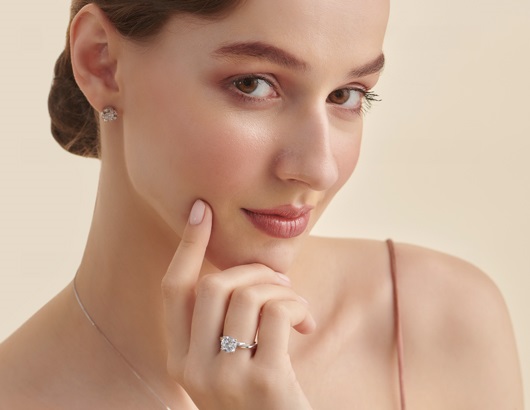
Consider her existing jewelry. Warmer skin tones often pair beautifully with yellow or rose gold, while cooler skin tones tend to complement white gold or platinum.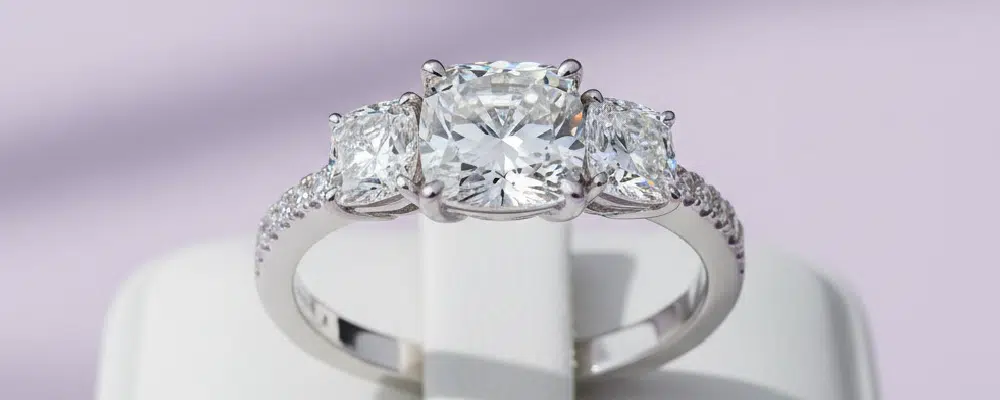
What Are the Top Trends for Three-Stone Engagement Rings?
The top trends for three stone rings focus on elongated center stones (like ovals or emeralds) and mixed shapes (pairing different cuts together). While the three-stone ring is a classic, modern couples are personalizing it in exciting ways.- Use Elongated Center Stones – We’re seeing a huge surge in popularity for elongated shapes like Oval, Marquise, and Emerald cuts. These shapes create a stunning visual illusion, making the finger appear longer and more slender.
- Mix Diamond Shapes – As mentioned above, gone are the days when all three stones had to be the same. A round center with pear sides or an emerald center with baguettes adds a unique, personal touch.
- Embrace Warm & Two-Tone Metals – While white gold remains popular, the warmth of yellow and rose gold is making a strong comeback. Two-toned rings—using one metal for the band and another for the diamond settings—also create a stunning, modern contrast.
Budgeting & Value: The Lab-Grown Diamond Advantage
A key budgeting strategy for three-stone rings is to allocate 50-60% of your budget to the center stone and use lab-grown diamonds to maximize the size of the side stones without increasing cost.
One of the most common concerns I hear when clients visit my office is the cost. With three stones, the traditional thinking is that the price will be prohibitive, especially if you are aiming for larger carats. This is where the true beauty of lab-grown diamonds completely changes the math.
The “Three for One” Value Hack
Lab-grown diamonds are chemically, physically, and optically identical to mined diamonds, a fact confirmed by leading gemological institutes like the GIA. The only difference is their origin. By opting for lab-grown, you can essentially purchase three high-quality, brilliant stones for the price of a single mined diamond. You get a ring with massive visual impact and total carat weight without having to compromise on Cut, Color, or Clarity.
Smart Budget Allocation
When budgeting for a three-stone ring, a great rule of thumb is to allocate 50% to 60% of your total diamond budget to the center stone. Because lab-grown diamonds offer such incredible value, that remaining 40% is more than enough to secure two stunning, perfectly matched side stones that would otherwise break the bank in the mined diamond market.
Affordable Luxury Without Compromise
Budgeting shouldn’t mean settling for less. Our transparent pricing lets you own a breathtaking three-stone engagement ring for a fraction of the cost at legacy retailers.
Whether you want an elegant piece under $1,000 or a high-carat showstopper, we have options to fit your finances. Every purchase is also a more sustainable and ethical choice.
To keep things simple, we offer convenient Buy Now, Pay Later plans. We also provide free shipping and hassle-free returns on every order. Your investment is safe with us. Every ring is backed by industry-leading care, including our unique loss replacement guarantee. This ensures your piece is protected for years to come.
Three Critical Manufacturing Quality Checks
Buyers must ensure the melee (small diamonds) color matches the center stone exactly to avoid a dirty appearance. When you are inspecting a ring, use this critical quality checklist:
Color Matching
If your center stone is an “E” color (colorless), your halo stones must also be “E” or “F”. If the halo stones are “H” or “I” (near colorless), they will look yellow and make the center stone look dull by contrast. Exact color matching takes a highly trained eye and strict lighting conditions.
We lay all three main stones and the tiny halo gems upside down on crisp white paper. Using a bright daylight lamp reveals even the slightest unwanted yellow tint. High-quality lab-grown diamonds make this strict sorting process much easier because they offer flawless, consistent chemistry every single time.
Prong Scale
The metal prongs holding the small halo stones should be barely visible. If the prongs are too thick, the halo looks like metal bumps rather than a diamond circle.
Low Profile Height
Three-stone rings cover a lot of surface area. Ensure the three stone engagement ring settings are built “low profile” so they sit close to the finger. This prevents the ring from snagging on clothing or getting knocked against surfaces.
Quick Comparison: The Smart Buyer’s Decision Matrix
| Feature | Recommended Choice | Expert Verdict / Data Insight | Why It Wins |
|---|---|---|---|
| Diamond Origin | Lab-Grown | ~85% Cheaper than Mined | Chemically identical to mined diamonds but allows for 3x the carat size for the same budget. |
| Metal Choice | 14k or 18k Gold | Higher Scratch Resistance | Retains high-polish shine longer than Platinum; does not develop a dull gray patina. |
| Setting Style | Halo / Hidden Halo | +2mm to 3mm Width | Visually doubles the center stone’s size (e.g., makes a 1ct look like a 2ct). |
| Visual Design | Elongated Shapes | Slimming Effect | Oval or Emerald cuts paired with tapered side stones elongate the finger more than round stones. |
| Color Match | Exact Match | Critical Quality Check | Side stones & halo melee must match the center stone’s color grade (e.g., E center + E halo) to avoid a “dirty” look. |
| Investment | Smart Luxury | Depreciation Proofing | Avoiding the initial retail markup of natural diamonds minimizes immediate asset depreciation. |