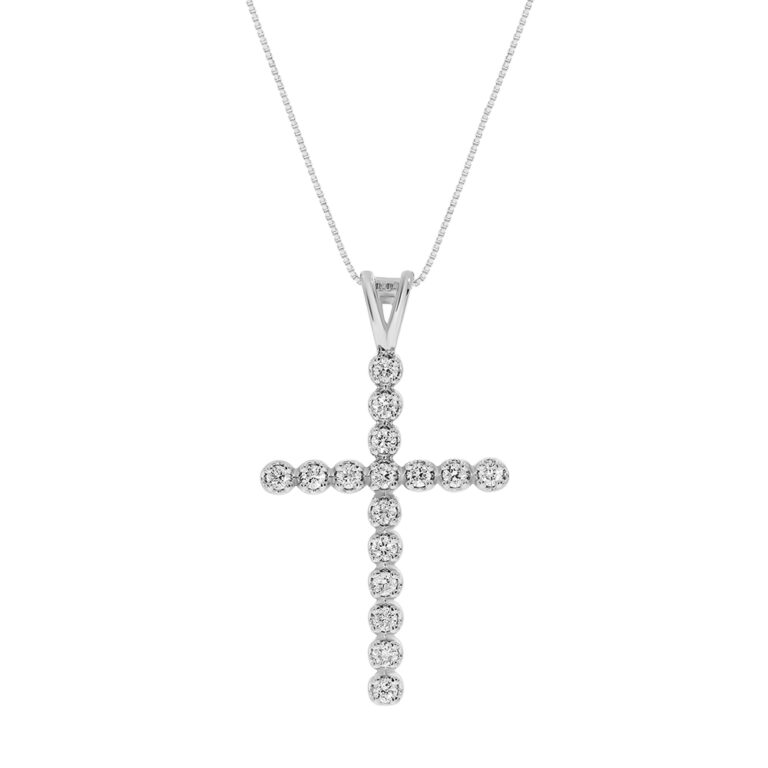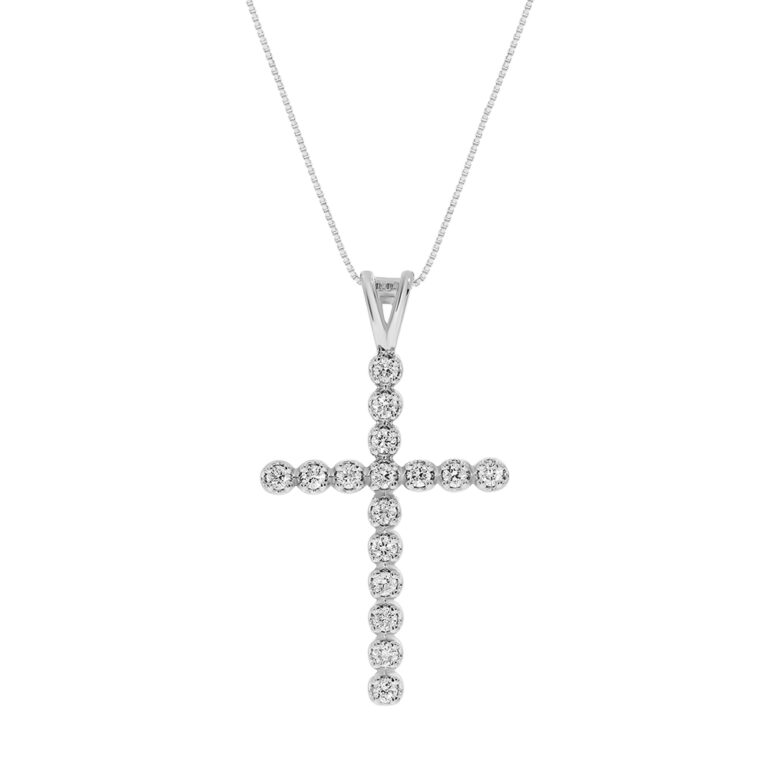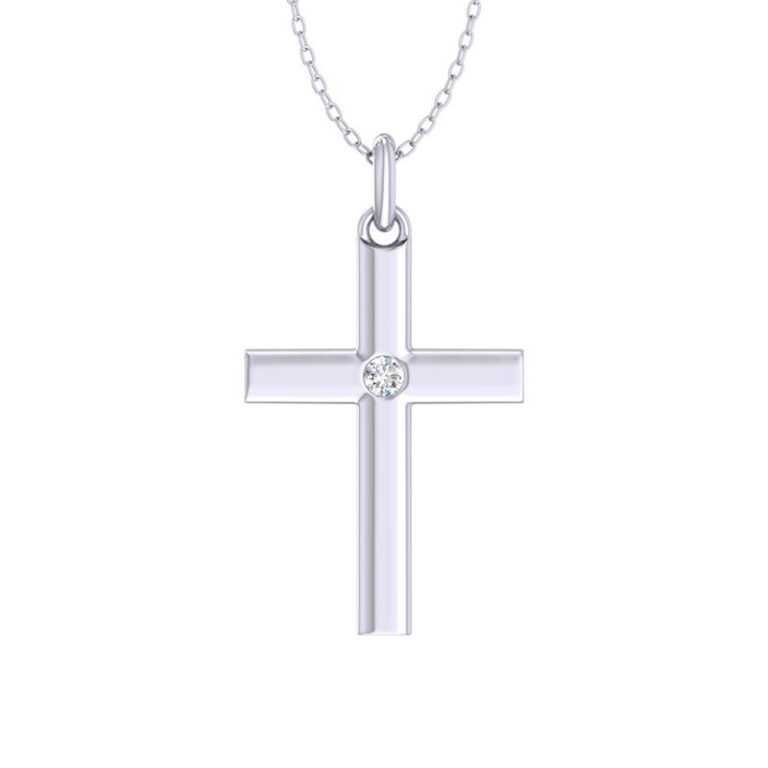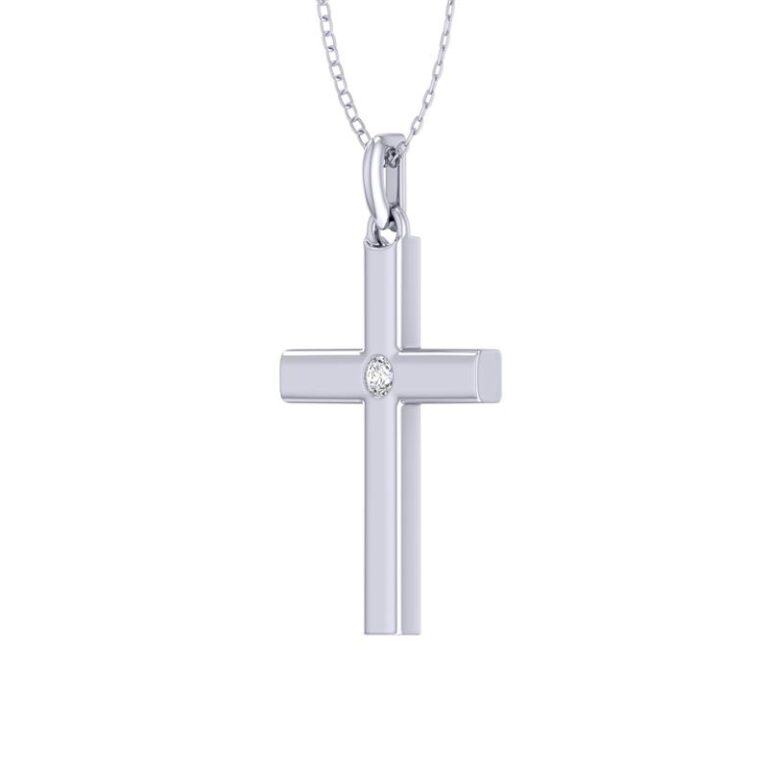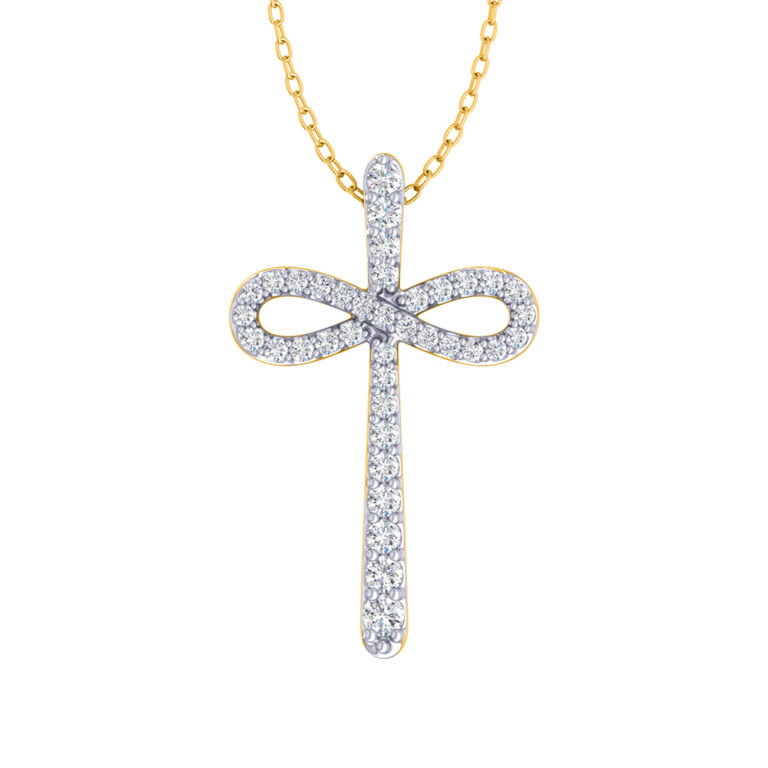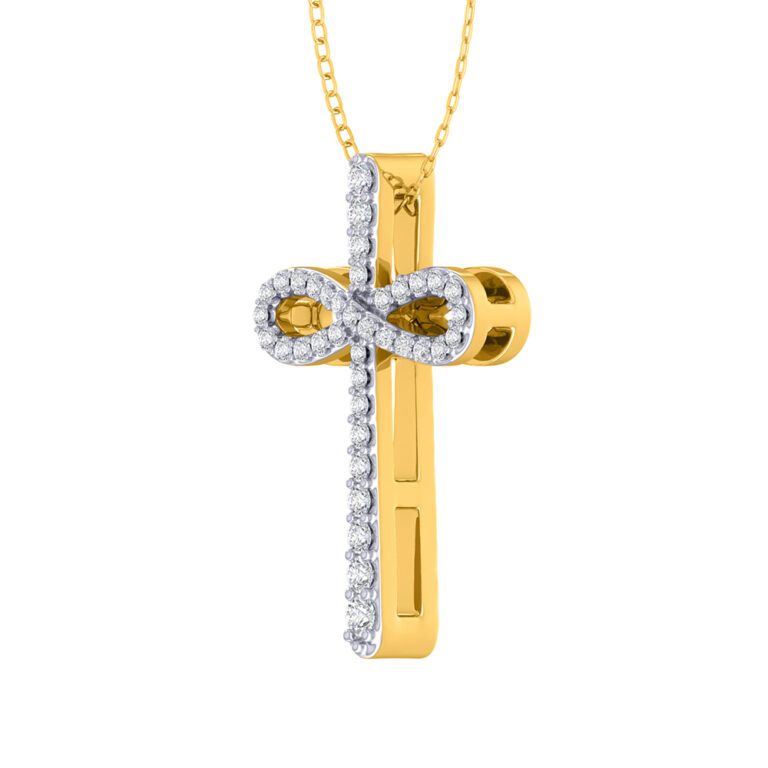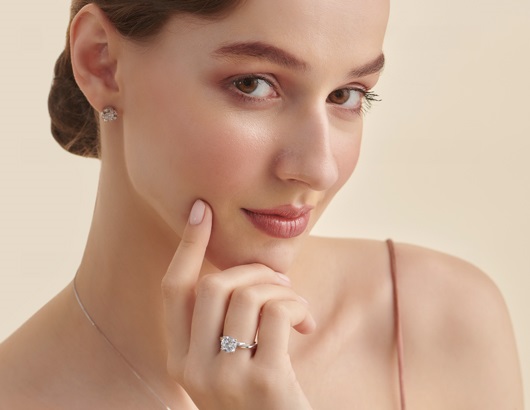
Quick Answer: The choice between yellow and white gold for a diamond cross necklace comes down to the diamond’s color grade. White gold creates an icy, bright setting that makes high-color, colorless diamonds flash even brighter. Yellow gold masks slight tints, letting you choose a lower color grade and put the savings toward a larger carat.
Buying fine jewelry is a big step. Because of this high cost, comparing yellow gold vs. white gold diamond cross necklaces can feel scary for first-time buyers. People want a piece that lasts a lifetime.
In my office, three generations of our family have helped clients make this exact choice. Over thirty-five years of working with premium metals has taught me that big brands often skip the real science of jewelry making. They just say yellow is warm and white is cool. We will dive deeper today. Let us look closely at how the metal changes the light of modern, lab-grown diamonds.

How Does a White Gold Diamond Cross Necklace Affect Diamond Light?
A white gold diamond cross necklace makes high-quality, colorless diamonds look even brighter and more icy. This happens because the bright metal acts like a mirror. When light hits the piece, the bright background reflects pure white tones into the stone.
However, this icy look requires a special step during making. Pure gold is naturally yellow. To get a white finish, we mix it with white metals and then dip the piece in liquid rhodium. Consequently, this rhodium plating gives the jewelry its bright, hard shell. Our lab-grown diamond cross pendants are already stunning. As a bonus, setting them in this crisp metal creates a blinding flash of light that catches every eye.

What Are the True Benefits of a Yellow Gold Diamond Cross Necklace?
A gold diamond cross necklace made of yellow alloys hides small bits of color in the stones. Yellow gold has a rich, warm tone by nature. Because of this natural tint, the metal actually absorbs some of the yellow light from the diamond. Therefore, you can safely buy a stone with a slightly lower color grade.
During my decades in the trade, I have seen how this trick saves money without hurting the final look. We craft pieces in 10k, 14k, or 18k gold to fit different needs. Choosing a 14k mix is often best for daily wear, which is an important styling factor when considering how to wear a diamond cross necklace. It balances pure gold with strong metals for lasting power. Ultimately, this classic color brings out a timeless beauty in lab-grown gems.

How Do You Budget for Metal Type Versus Carat Weight?
You should balance your funds by picking the right metal color to match your desired diamond traits. When you plan your total spend, the metal choice directly changes what stones you can buy.
For example, a white gold diamond cross necklace demands stones with very high color grades. If you pick this metal, you must spend more on the stone’s color to avoid a yellow tint showing against the bright setting. Conversely, a yellow gold base lets you drop the color grade a bit. As a result, you can use those saved funds to buy a much larger carat weight, helping you optimize your overall diamond cross necklace cost.
Using this method helps you maximize the impact of your premium La Joya diamond necklaces.
The Manufacturer’s Technical Comparison of Gold Alloys
| Alloy Type | Pure Gold Content | Key Visual Trait | Best Use Case | Maintenance Need |
| 14k Yellow Gold | 58.3% | Warm, rich, classic yellow | Daily wear, budget maximizing | Low (occasional polish) |
| 18k Yellow Gold | 75.0% | Deep, intense yellow hue | Premium investment pieces | Medium (softer metal) |
| 14k White Gold | 58.3% | Bright, icy white finish | Enhancing colorless stones | High (rhodium re-dipping) |
| 18k White Gold | 75.0% | Crisp white, high value | Luxury pieces, high-color gems | High (rhodium re-dipping) |

Which Gold Alloy Requires More Maintenance Over Time?
White gold needs more care over the years because its bright outer coating slowly rubs off. Rhodium plating is tough but not permanent. Everyday rubbing against skin or clothes wears down this thin layer. Eventually, the natural, slightly yellow tint of the raw white gold mix shows through.
To fix this, you must bring the piece back to my office for a fresh dip in liquid rhodium. Yellow gold does not have this plating issue. While it might get small scratches, a simple polish brings back its original shine. Understanding this long-term care helps you pick the right piece for your lifestyle.
Conclusion
Crafting the perfect piece is an art. Whether you choose the icy flash or the classic warmth, knowing the science helps you buy smart. Ultimately, deciding between yellow gold vs. white gold diamond cross necklaces comes down to matching the metal with your chosen lab-grown diamonds. Our deep family roots guarantee you get a premium item that lasts. Take your time, explore our collection, use these tips, and find a jewel you will cherish forever.
Frequently Asked Questions
Does 18k gold scratch more easily than 14k gold?
Yes, 18k gold scratches more easily because it contains more pure gold, which is naturally very soft. Higher gold content means richer color but a softer surface. Anyone who works with their hands daily is better off choosing a tougher 14k or 10k blend.
Can I clean a white gold diamond cross necklace at home?
Yes, using warm water and a little mild dish soap. Avoid harsh chemicals, since they strip the rhodium plating quickly. Use a soft brush and gentle suds, then dry with a clean cloth to keep both the metal and the diamonds sparkling bright.
Which gold needs more maintenance over time?
White gold needs more upkeep because its bright rhodium coating slowly wears off with everyday contact, eventually revealing a faint yellow tint underneath. Restoring it requires a fresh rhodium dip. Yellow gold has no plating to wear away, so a simple polish renews its shine.
Why does white gold make diamonds look brighter?
White gold acts like a mirror around the stone. Its bright, icy surface reflects pure white light into the diamond instead of adding warm tones. That clean reflection is what gives colorless, high-grade diamonds their crisp, blinding flash in a white gold setting. If you don’t like gold, you could always get the silver lab-made pendant.
How should I budget between metal type and carat weight?
Match the metal to your diamond’s color. White gold demands a high color grade to stay icy, so more of your budget goes to the stone. Yellow gold hides slight tints, freeing up funds to spend on a larger carat weight instead.