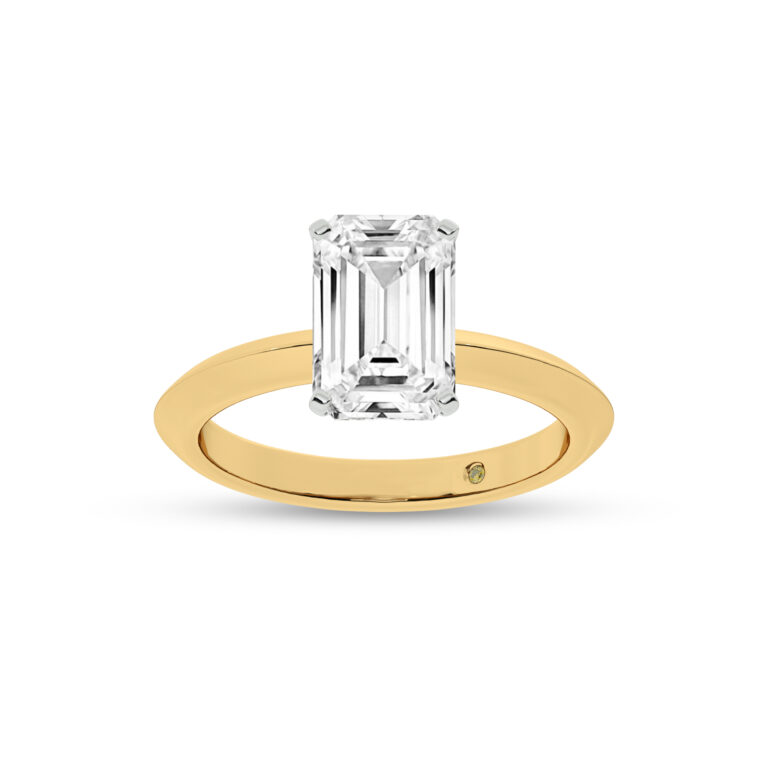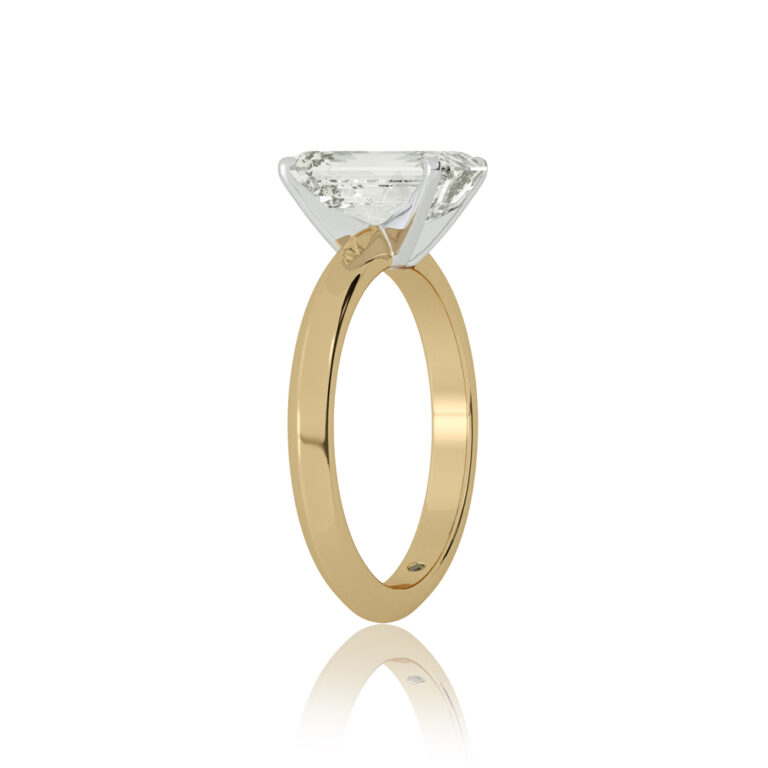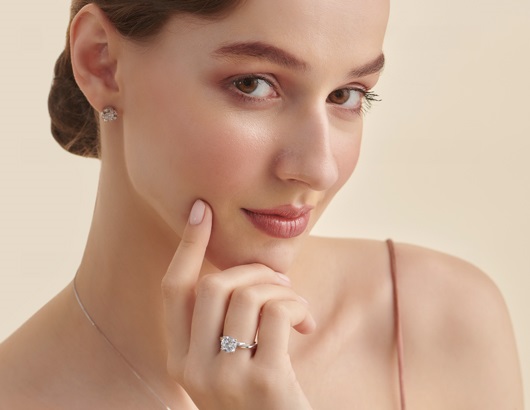
My experience in the jewelry business has taught me that the classic solitaire engagement ring is a timeless symbol of love. It is a statement of elegance and simplicity. But once that stunning ring is on your finger, a new question arises: which diamond wedding band for solitaire engagement ring will complete this beautiful story?
This is a question I’ve helped countless couples answer. It’s more than just matching a band to your solitaire ring; it’s about creating a perfect harmony—a set that you will cherish for a lifetime. In this article, I’ll walk you through my top choices for wedding bands that pair perfectly with a solitaire, offering insights from my career to help you make the right choice.
What Is the Symbolic Meaning of the Wedding Band?
The symbolic meaning of the wedding band centers on the circle’s representation of an eternal, unbroken bond that is sealed during the marriage ceremony. Unlike the engagement ring, which signifies a promise or intent, the band signifies the fulfillment of that vow.
Before we dive into the styles, let’s take a moment to appreciate the history we’re building upon. The tradition of wedding bands dates back thousands of years to ancient Egypt. During that time, the circle symbolized eternity and was worn on a specific finger to signify this bond.
The engagement ring, on the other hand, became popular much later. The first recorded diamond ring was given as an engagement token in 1477 by Archduke Maximilian of Austria to Mary of Burgundy. The solitaire, with its single, magnificent stone, came to prominence later. It was popularized by iconic brands and the famous “A Diamond is Forever” campaign.
The beauty of a diamond solitaire engagement ring is its simplicity and purity. It showcases the diamond’s brilliance without any distractions. My father used to say, “A solitaire is a star, and the wedding band is the perfect stage.” This relationship is a delicate balance. The band must complement the solitaire’s clean lines and shine without competing for attention. Therefore, a simple, thoughtful choice can make all the difference.
For a full exploration of the history and traditions behind this exchange, read our article on the Meaning of Wedding Bands.
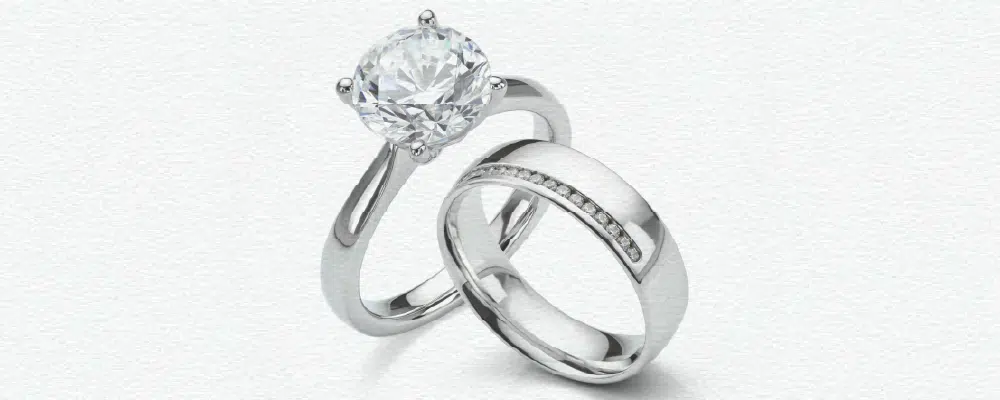
Why Choose Lab-Grown Diamonds for Your Bridal Set?
The primary value of choosing lab grown diamonds for your bridal set is the ability to achieve a spectacular, diamond-heavy look (like an eternity band) without the premium price of mined stones.
As we honor the history of these beautiful traditions, it’s also important to embrace the wonderful choices available to modern couples. One of the most significant developments I’ve seen in my career is the rise of lab-grown diamonds. For many couples I work with, this has become the preferred choice for both their lab grown engagement rings and the accompanying wedding band.
What I always explain to my clients is that lab-grown diamonds are not imitations. They are real diamonds. The Gemological Institute of America (GIA) confirms this fact. These diamonds are optically, chemically, and physically identical to their mined counterparts. They possess the same fire, scintillation, and brilliance. The only difference is their origin. This modern approach often allows you to choose a larger or higher-quality diamond for your budget. Additionally, you can make an ethical and sustainable choice you can feel proud of.
This modern approach often allows you to choose a larger or higher-quality diamond for your budget. A 2 carat diamond solitaire engagement ring or even a 3 carat solitaire engagement ring becomes an attainable luxury, all while making an ethical and sustainable choice you can feel proud of.
This choice extends beautifully to wedding bands. Whether you desire a shimmering pavé band or a dazzling eternity ring, opting for lab created diamond wedding rings means you can achieve that spectacular, diamond-forward look without compromise. It’s about having a timeless style, created with modern consciousness.

What Are the Top 5 Wedding Band Styles for Solitaire Rings?
Based on decades of jewelry experience, the top 5 wedding band styles for solitaire rings are the Plain, Pavé, Eternity, Contoured, and Mixed Metal bands. Over my many years in the trade, I’ve seen countless pairings. These five styles, in my opinion, consistently create the most stunning and meaningful combinations.
Plain Band: The Classic Choice
A classic plain band is the quintessential choice for a solitaire because its smooth, unadorned metal allows the center diamond to remain the undisputed star. It is the quintessential choice if you are looking for a traditional wedding band for solitaire engagement ring that exudes understated elegance.
-
Why it works – This band lets the solitaire diamond truly be the star. Its smooth, unbroken surface provides a perfect, elegant backdrop. It feels traditional, dependable, and speaks of a love that needs no extra frills. For women who prefer a minimalist aesthetic, a gold diamond wedding band—or a simple platinum one—creates a look that never goes out of style and is incredibly versatile for daily wear.
-
A deeper look – The width and profile of a plain band can be tailored to match the solitaire’s band. A wider, flat band gives a bolder, more contemporary feel, while a thin, rounded band maintains a delicate look. For my clients, I often recommend trying different widths to see how they feel on the hand.
The choice of metal—platinum, yellow gold, rose gold—should ideally match the engagement ring for a seamless, cohesive set. This choice is so important that we have a full guide on choosing the perfect gold for your wedding ring.
Pavé Band: Adding Delicate Sparkle
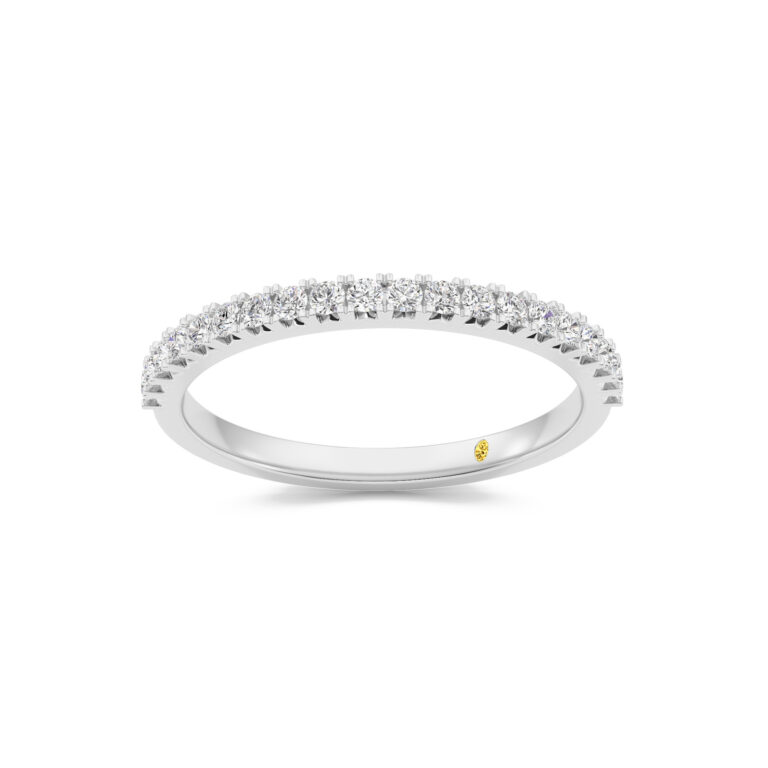
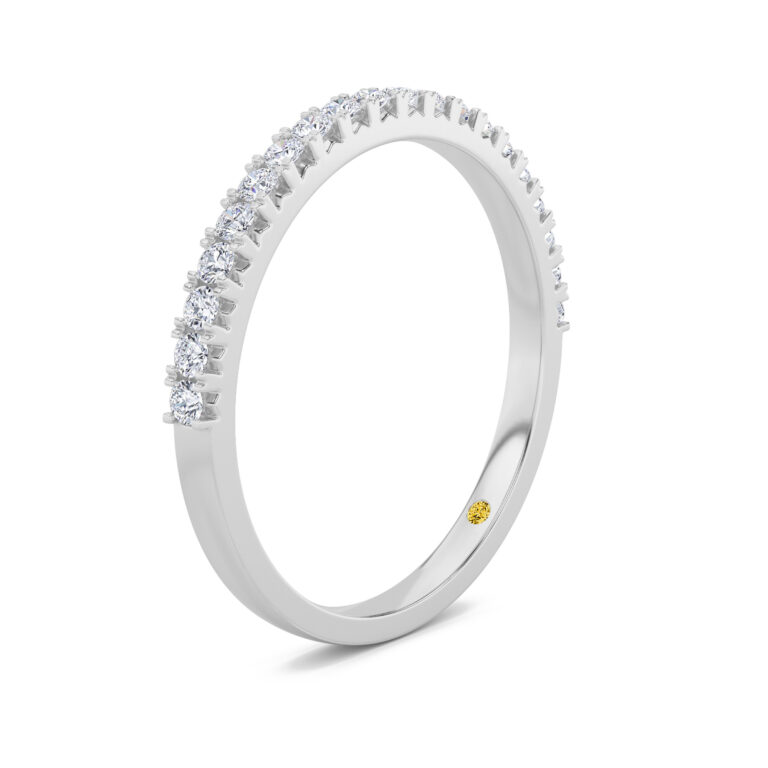
A pavé band features tiny diamonds set closely together along the shank, adding a shimmering halo of light around the solitaire without overpowering the main stone. For those who crave a bit more sparkle, a pavé diamond band is the ideal companion. Pavé (pronounced ‘pa-vay’) is a setting style where a jeweler sets tiny diamonds closely together, creating a continuous surface of brilliance.
Why it works – A pavé band adds a shimmering halo of light around the solitaire. It enhances the engagement ring’s brilliance without overpowering it. The delicate nature of the small diamonds creates a refined, sophisticated look. This style is a favorite among women who love a bit of glamour but still value a clean design.
A deeper look – The key is to match the pavé diamonds to the quality of your solitaire. We use the same technique in our stunning pavé diamond engagement rings, where the setting style—micro-pavé, French pavé, or U-cut pavé—also affects the final look.
Furthermore, a narrow wedding band with a micro-pavé setting will make your solitaire’s center stone appear 10-20% larger by creating a minimal, brilliant background that draws all the eye’s focus to the primary diamond. This simple principle of visual hierarchy is a key reason we often design our sets with slender, engineered bands.
For a comprehensive guide on pairing settings, check out our article on the Wedding Band to Match Engagement Ring.
Eternity Band: Maximum Luxury
An eternity band features a continuous circle of diamonds around the entire ring, creating a high-contrast, opulent look against a simple solitaire.
A diamond eternity band features diamonds that encircle the entire ring, symbolizing never-ending love.
-
Why it works – This is the most luxurious and dazzling option. The continuous sparkle of the diamonds creates a magnificent visual contrast with the solitary stone, adding a layer of opulence. It’s a bold statement of commitment that resonates with couples who want a ring that is as strong and enduring as their love.
-
A deeper look –Eternity bands come in many forms, from simple round diamonds to more unique shapes like emerald, princess, or baguette cuts. The choice of diamond shape can create a fascinating contrast or a harmonious flow.
I’ve found that baguette-cut eternity bands, with their clean, geometric lines, look incredibly modern and sophisticated alongside a classic round brilliant solitaire. Those who appreciate vintage inspired engagement rings often choose this pairing. Be aware that jewelers cannot resize eternity bands, so a perfect fit from the start is crucial.
Since these cannot be resized easily, you must know exactly what you are looking for. Read our Diamond Wedding Band Buying Guide before you buy to ensure the perfect fit.
Contoured Band: The Flush Fit Solution
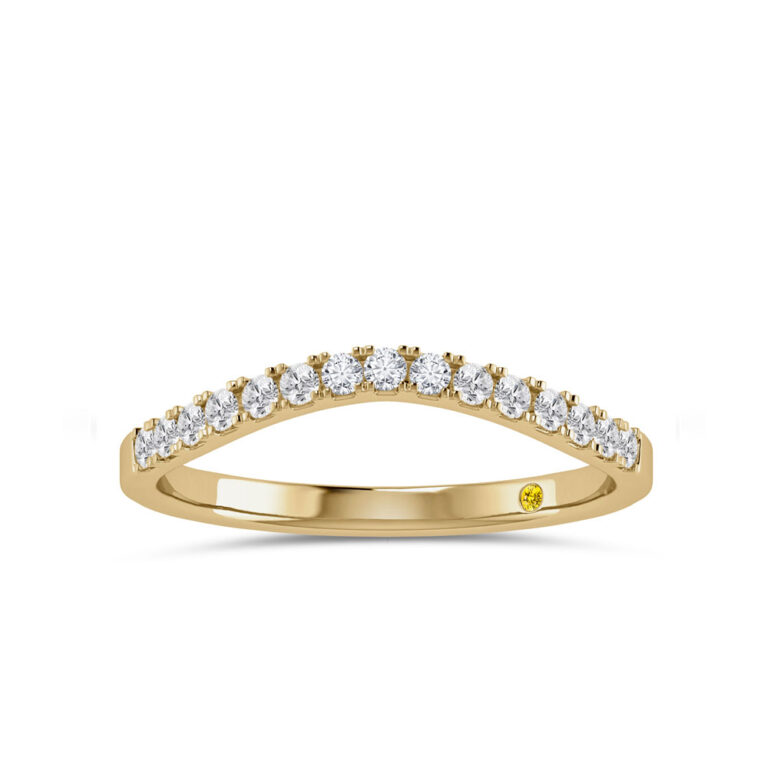
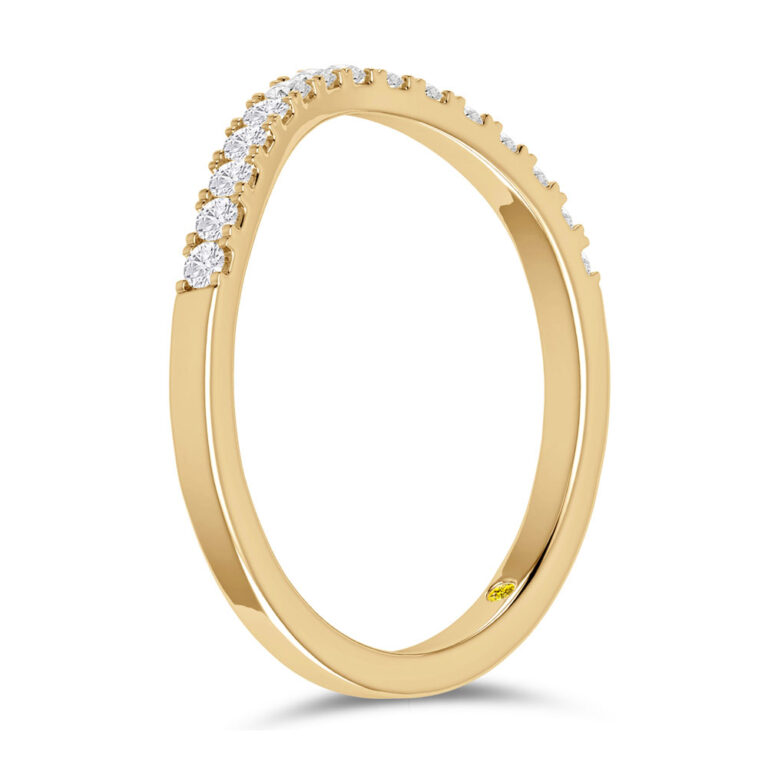
A contoured band (or curved band) is specifically designed to wrap around the base of a low-profile solitaire, eliminating the gap for a seamless, flush fit.
Why it works – This style eliminates the “ring gap” that can sometimes occur between an engagement ring and a straight band. It creates a unified, flowing look as if the two rings were made for each other. For women who prioritize a neat, seamless fit, a contoured design is the perfect wedding band for solitaire engagement ring pairings. It’s a modern and elegant way to wear a bridal set.
A deeper look -The challenge with contoured bands is their specificity. They are often made to fit a particular engagement ring. My advice is to have a contoured band made by the same jeweler who created the engagement ring, ensuring a perfect match.
I’ve seen many beautiful sets where the curve of the band mirrors the line of the solitaire’s prongs, creating a beautifully custom made engagement ring. When working with fancy cuts, this engineering becomes even more critical.
If you are researching the ideal wedding bands for emerald cut engagement rings, you must know that the band’s contour must be precisely cast to accommodate those incredibly sharp corners. The exact curvature must match the angles perfectly to avoid hitting the sharp point of the pavilion, which will cause chipping, guaranteeing zero metal-on-metal wear on the center stone.
Mixed Metal Band: Modern Contrast
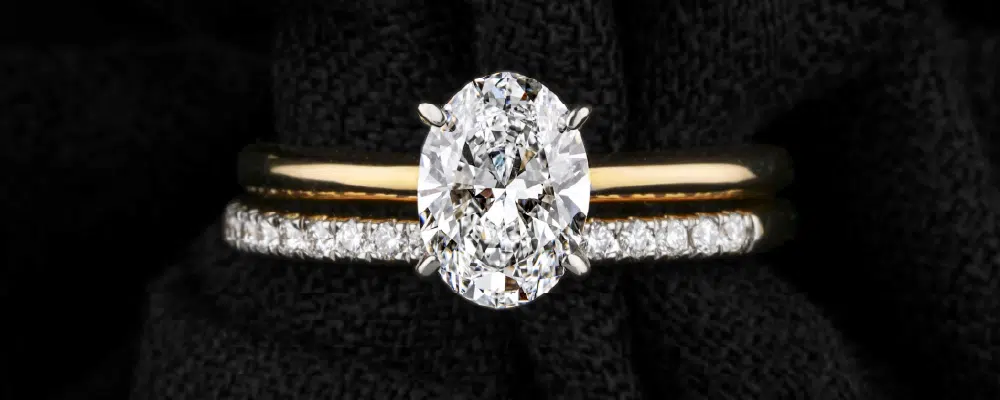
A mixed metal band pairs a different gold color (like Rose or Yellow) with the solitaire to create a contemporary, fashion-forward contrast. Breaking from tradition, a mixed-metal band pairs a different metal color with the solitaire. For instance, a white gold or platinum solitaire with a yellow or rose gold wedding band.
-
Why it works – This is for the couple who isn’t afraid to be unique. Mixing metals adds a contemporary, fashionable edge to the classic bridal set. It creates visual interest and allows for a more personalized expression of style. I’ve noticed this trend is particularly popular among younger couples who are moving away from traditional norms.
-
A deeper look –This is for the couple who isn’t afraid to be unique. Mixing metals adds a contemporary, fashionable edge to the classic bridal set. It creates visual interest and allows for a more personalized expression of style, which you can see in our full collection of unique wedding rings. I’ve noticed this trend is particularly popular among younger couples who are moving away from traditional norms.
For more information on the different types of bands and how they complement each other, be sure to read my full article: Diamond vs. Plain Wedding Bands – Which One Suits You Best?
Solitaire Ring Pairing Guide
| Wedding Band Style | Best For | Sparkle Level |
|---|---|---|
| Plain Metal | Minimalists and those with active lifestyles | Low (keeps focus on the solitaire) |
| Pavé Band | Couples wanting subtle glamour | Medium |
| Eternity Band | Luxury lovers seeking a strong “wow” factor | High |
| Contoured Band | Flush fit with low-set engagement rings | Variable |
| Mixed Metal | Fashion-forward and modern styling | Low to Medium |
The “Flush Fit” vs. “Gap” Debate: Technical Considerations
A “flush fit” occurs when your wedding band sits tightly against your engagement ring without any visible space, a look that offers superior protection by reducing leverage on the setting. However, achieving this with a solitaire depends entirely on your ring’s “gallery height”—if the diamond’s basket sits too low on the finger, a straight wedding band will hit the prongs, creating an unavoidable “gap.”
A low-set solitaire, which places the diamond’s culet as close to the finger as possible for maximum protection, creates a structural barrier that blocks a straight band from sliding underneath. In contrast, a high-set solitaire elevates the stone, creating sufficient vertical space between the finger and the setting structure for a traditional, straight band to fit perfectly underneath the pavilion. This is an essential mechanical detail that dictates whether you need a contoured solution or a straight band.
While some brides embrace this gap for a distinct, stacked aesthetic, be aware that the constant metal-on-metal rubbing between a loose-fitting band and your solitaire’s prongs can slowly erode the gold over time. For those who want to eliminate any guesswork about fit, a lab grown bridal set is the perfect solution. Jewelers design these sets as a single, cohesive pair, guaranteeing that the wedding band sits in perfect harmony with the engagement ring.
Trending Solitaire Pairings for 2025: The “Cigar” Band and Open Spaces
Current bridal trends are moving away from perfectly matching thin sets toward bold contrasts, with the “Cigar Band” (a 4mm-6mm wide plain gold band) becoming the top choice for oval and emerald-cut solitaires. This chunky gold aesthetic provides a modern “anchor” to the delicate solitaire, creating a mixed-weight look that feels curated rather than bought as a kit.
Another rising trend is the “Open Gap” wedding band—a ring with a literal opening in the center—designed to frame elongated stones like pears or marquises without needing a custom curve, offering a geometric, Art Deco vibe.
How Do You Choose the Right Width and Proportion?
Choosing the right width and proportion requires balancing the visual weight of the wedding band against the size of your solitaire diamond to ensure neither piece overpowers the other.
-
The “Rule of Balance”: A general rule of thumb is that if you have a massive center stone (2 carats or larger), a slightly wider band (2.5mm – 3mm) provides necessary structural and visual support. Conversely, a delicate solitaire often shines brightest when paired with a thin, “whisper-thin” band that emphasizes the stone’s size by contrast.
-
Finger Length Matters: You must also consider your finger shape; long, slender fingers can handle stacked, wide bands beautifully, whereas shorter fingers might feel overcrowded by a thick set.
-
Comfort Considerations: Remember that wider bands tend to trap moisture and feel tighter on the finger than thin ones, so you may need to size up slightly if you choose a bold, chunky style.
-
Matching vs. Contrasting: Some brides prefer the “twin set” look where the engagement and wedding band widths match perfectly, while others enjoy the “curated” look of mixing a thin solitaire band with a thick, textured wedding ring.
-
Deep Dive: If you are still debating between a bold statement loop or a delicate thread of gold, read our detailed comparison of Large Wedding Ring Vs Subtle Bands.
How Do You Wear the Set Correctly?
Traditionally, the wedding band is worn first on the left ring finger so that it sits “closest to the heart,” with the engagement ring stacked on top of it to protect the bond.
To facilitate this tradition during the actual wedding ceremony, many brides temporarily move their engagement ring to their right hand, leaving the left ring finger bare for the groom to slide on the band. However, modern freedom allows for flexibility; some women with active lifestyles choose to wear only the band daily. For a breakdown of cultural traditions and comfort tips regarding stacking, read our guide on How to Wear Your Wedding Band.
How Do You Care for Your Diamond Wedding Band?
Maintaining the sparkle of your wedding band for solitaire engagement ring sets requires regular cleaning to remove the build-up of lotions, oils, and debris that naturally accumulate between the two rings.
Because the wedding band sits flush against the solitaire, “diamond rub” is a real risk where the diamonds on one ring can scratch the metal or prongs of the other. Beyond cleaning, you should have your jeweler inspect the prongs every six months. For a step-by-step tutorial on which household products are safe, read our expert article on How to Clean and Maintain Your Diamond Wedding Ring.
Platinum vs. 14K Gold: A Durability Check
When choosing a metal, understand that Platinum and Gold age differently. Platinum is a “sticky” metal, meaning when it scratches, the metal is merely displaced rather than lost, making it the most durable option for eternity bands. Conversely, when 14K or 18K gold gets scratched, microscopic amounts of metal are removed. If you plan to wear a diamond-heavy eternity band next to a gold solitaire, the harder platinum prongs of the band can “chew” through the softer gold prongs of your engagement ring, so we always recommend matching your metal hardness.
Solitaire Setting vs Wedding Band Compatibility Guide
| Solitaire Setting Type | Solitaire Footprint / Basket Shape | Recommended Wedding Band Profile | Key Technical Constraint to Solve |
|---|---|---|---|
| Low-Set Solitaire | Round or Oval Basket | Contoured (Curved) Band | Must eliminate the “gap” where the straight band hits the basket, ensuring zero rubbing on the diamond’s pavilion. |
| High-Set Solitaire | High-Basket or Cathedral Setting | Traditional Straight Band | Sufficient vertical gap exists; no technical engineering needed for a flush fit. Focus on bandwidth matching. |
| Fancy Cut Solitaire | Emerald, Princess, or Radiant | Precision-Casted Contoured Band | The contour must match precise corner angles to avoid contact with sharp pavilion points, reducing the risk of chipping. |
| Lab-Grown Solitaire | All Setting Heights | All Styles (e.g., Pavé) | Ensure brilliance matching: small diamonds in the band should match the center stone in color and clarity. |
Buyer’s Guide: Ring Gaps & Durability
A practical buyer’s guide for pairing bands must address the ring gap (whether the bands sit flush) and the durability of the setting for your specific lifestyle.
My decades of experience have taught me that the most beautiful ring is one that is practical and comfortable. Beyond the visual appeal, here are two crucial factors I always discuss with my clients, regardless of their budget or style preference.
The Ring Gap
The space between the two rings is a matter of personal preference. A high-profile solitaire with a classic prong setting might allow a straight band to sit perfectly flush. However, a lower-profile or basket-style setting often requires a contoured or a custom-fit band to avoid a gap. I always encourage clients to try on different combinations to see which feel and look right on their hand.
Exploring these beautiful options is an exciting part of the journey. However, I often tell my clients that the simplest path to a flawless look is to consider a pre-matched set.
For those who want to eliminate any guesswork about fit, a solitaire bridal set is the perfect solution. Jewelers design these sets as a single, cohesive pair. This guarantees that the wedding band sits in perfect harmony with the engagement ring. It is the most direct way to achieve that beautiful, seamless look. You will never have to worry about finding a separate, matching piece.
Lifestyle and Durability
Take a moment to consider your daily life. Are you an active woman? Do you work with your hands? If so, you might prefer a more durable option. Look for a low-profile wedding band for solitaire engagement ring pairing.
Great choices include plain metal or channel-set diamond bands. A channel-set band uses a solid wall of 14k white or rose gold to create a smooth, durable barrier around the small lab-grown diamonds, which is a perfect match for a very active lifestyle.
On the other hand, you might have a less hands-on routine. In that case, an intricate pavé band—which uses incredibly subtle prongs that require a bit more delicacy—could be the perfect fit. I often give this advice to my male customers: consider your partner’s lifestyle. It may seem like a small detail. However, it shows you have truly thought about her.
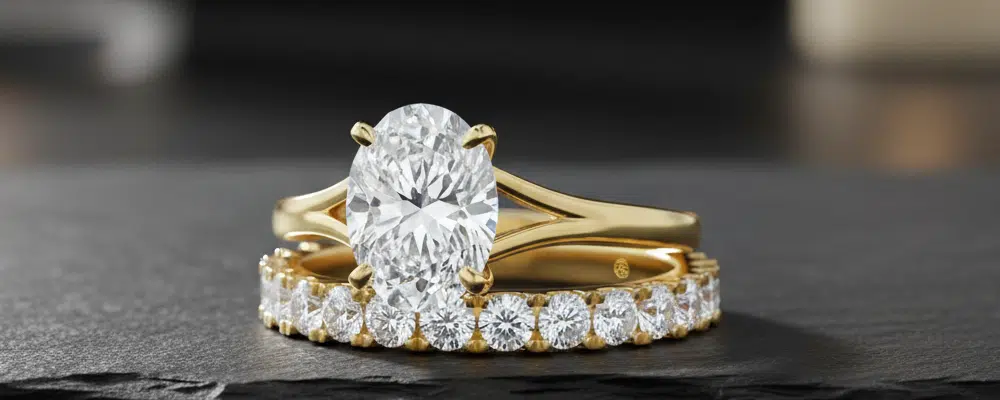
The Verdict: Your Perfect Solitaire Pairing
Ultimately, the perfect wedding band for solitaire engagement ring is one that balances your desire for sparkle with your daily lifestyle needs. Whether you choose a plain band to honor tradition or a mixed-metal stack to be unique, your choice adds a new chapter to your love story.
Looking for a bit of luck on your big day? Don’t forget the traditions! Read about the Something Borrowed, Something Blue Meaning to add a layer of sentimental charm to your wedding ensemble.