Finding the perfect ring for a proposal is only the first step in building your bridal set. After securing the main stone, many clients visit my office feeling overwhelmed by the next phase: matching a wedding band to the engagement ring such that the band complements, rather than overshadows, their engagement ring.
Over my 35 years in fine jewelry manufacturing, I have found that building a truly flawless bridal set requires balancing two critical elements: structural integrity and intelligent design. Structurally, the wrong band can cause irreversible friction damage to an engagement ring over time. Aesthetically, the goal is to enhance the center stone’s brilliance without competing with it.
By applying professional setting techniques to protect your jewelry, and prioritizing premium lab-grown diamonds to maximize your budget, you can build a durable, stunning set that reflects a modern, smart investment. If you are just beginning this journey, learning how to pick the perfect diamond ring for your proposal sets the ideal foundation
How Does Setting Height Affect Your Wedding Band Choice?
Setting height dictates whether a wedding band can slide flush underneath the center stone or if it requires a curved design to prevent a gap. I frequently demonstrate this structural reality to couples in my office.
If you have a high-profile cathedral setting, a straight band will usually sit perfectly flush against it. Because of this flush fit, there is minimal unwanted movement. Consequently, the rings are less likely to grind against each other.
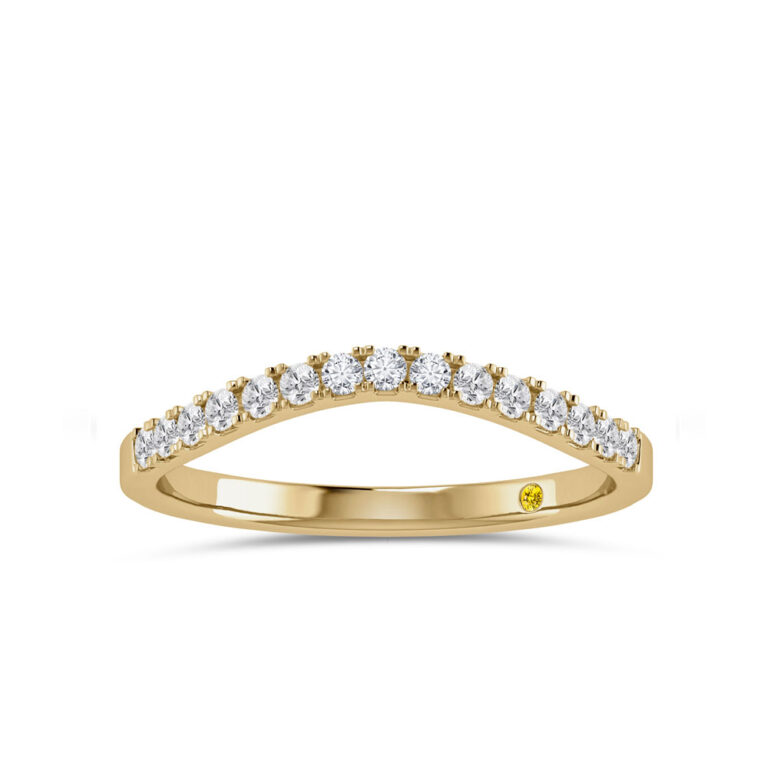
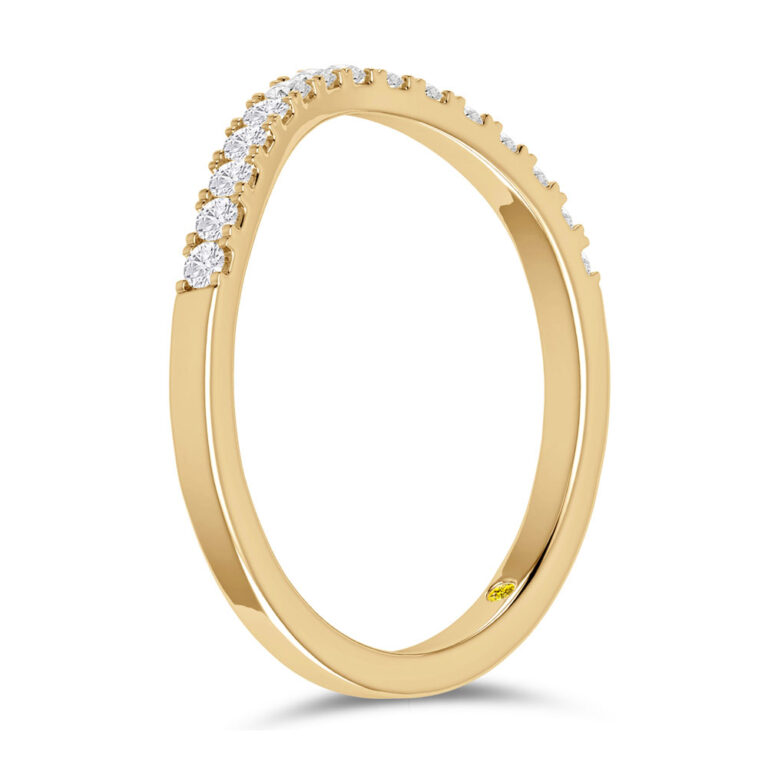
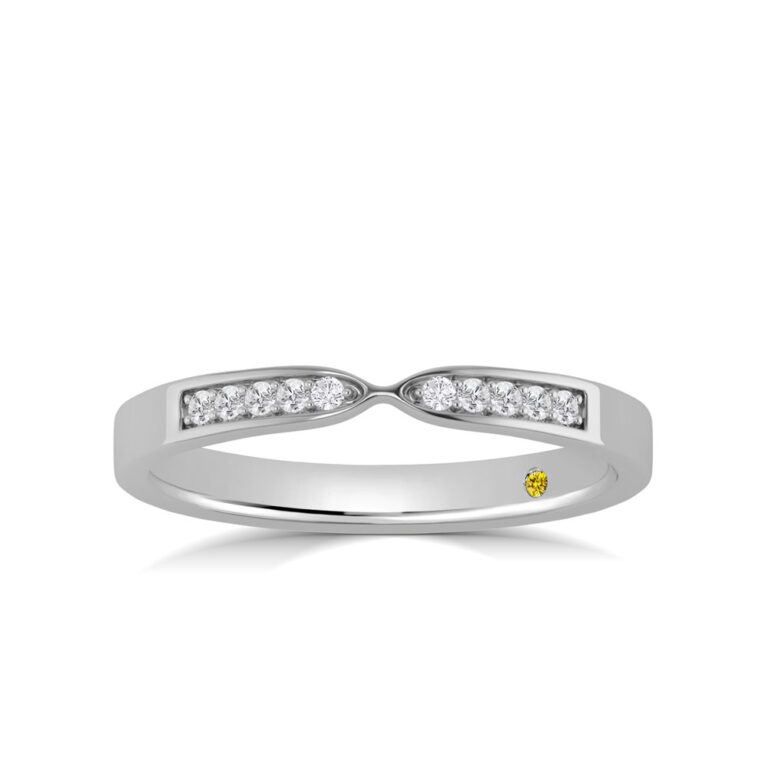
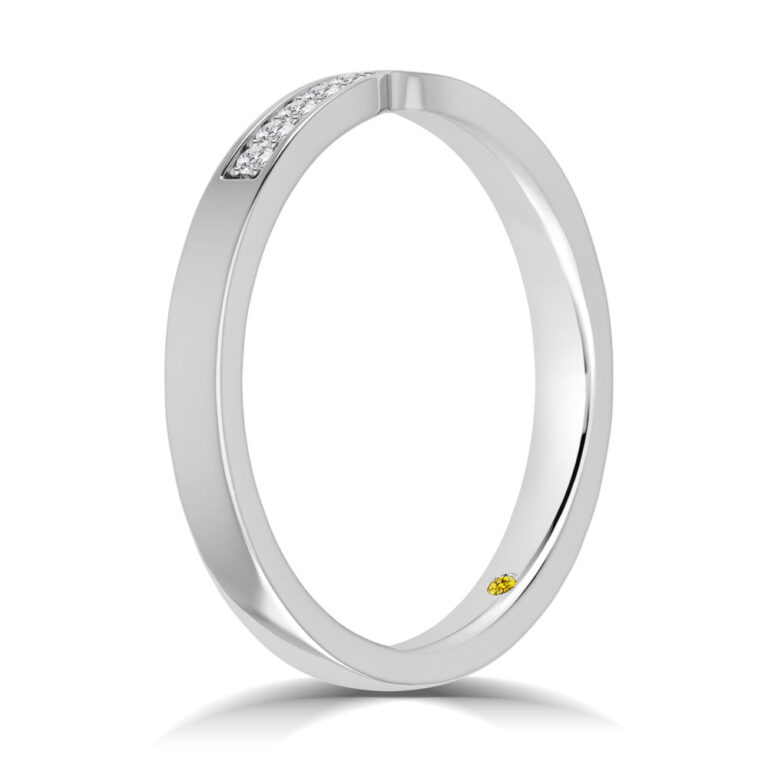
Conversely, a low-profile setting keeps the center diamond close to the finger for safety. To accommodate this lower basket, you must use a contoured shape. As a result, exploring our collection of 14k white gold curved bands provides the perfect geometric solution.
This specialized shape wraps elegantly around the center stone, preventing structural rubbing while enhancing the visual footprint of your ring.

Why Must You Match Gold Karats in a Bridal Set?
Matching gold karats in a bridal set ensures both rings share the same metal hardness, preventing the harder ring from wearing down the softer one. Over three decades, the most common repair I handle involves unmatched metals destroying each other.
Solid gold is the absolute best choice for milestone jewelry. However, 14k gold and 18k gold have different levels of durability. Because 14k gold contains more reinforcing alloys, it is more scratch-resistant than 18k gold.
Therefore, if you pair a 14k band with an 18k engagement ring, the 14k metal will slowly eat away at the 18k prongs through daily friction. To avoid this costly damage, you must align the karat weights.
If you are starting your journey, selecting one of our certified 18k yellow gold lab grown engagement rings means you must pair it with an 18k yellow gold band. As an added benefit, matching the exact alloy ensures the color and brilliance remain perfectly consistent across your hand.
Can You Mix Diamond Shapes Between Your Rings?
Mixing diamond shapes creates a textured, high-contrast look that elevates a standard bridal set into a bold, personalized stack. For instance, pairing an elongated center stone with a band of brilliant round diamonds adds incredible visual depth.
However, to achieve this mixed-shape aesthetic successfully, there is one strict rule: the diamond color and clarity grades across all stones must match perfectly. Because mixing shapes draws the eye to the distinct cuts, any discrepancy in quality will immediately stand out.
This is exactly where lab-grown diamonds become the ideal solution. Because they are physically and optically identical to mined diamonds—but without the mining markups—you can easily source pristine, perfectly matched stones. It allows you to invest in a higher total carat weight and flawless clarity for your band. So, whether you are contrasting an elongated stone with rounds, or framing a brilliant round center with an emerald-cut band, you can build a stunning, modern aesthetic without compromising on quality

Matching Wedding Bands to Engagement Ring Styles
I created this reference table based on the most common structural profiles I evaluate daily.
| Engagement Ring Style | Ideal Wedding Band Type | Key Benefit |
|---|---|---|
| High-Profile Cathedral | Straight Diamond Band | Sits completely flush without gaps. |
| Low-Profile Basket | Contoured / Curved Band | Wraps around the stone to prevent rubbing. |
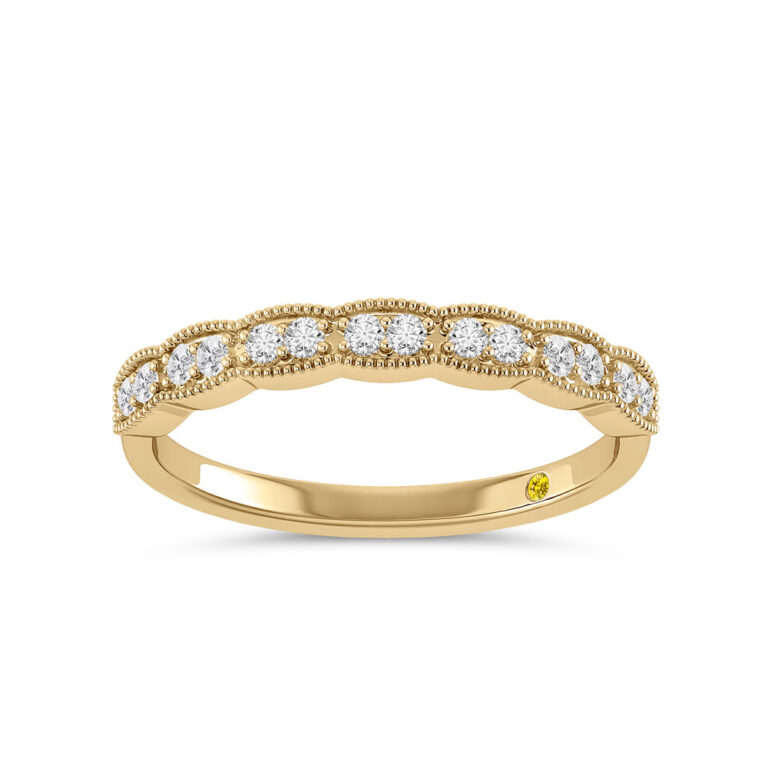
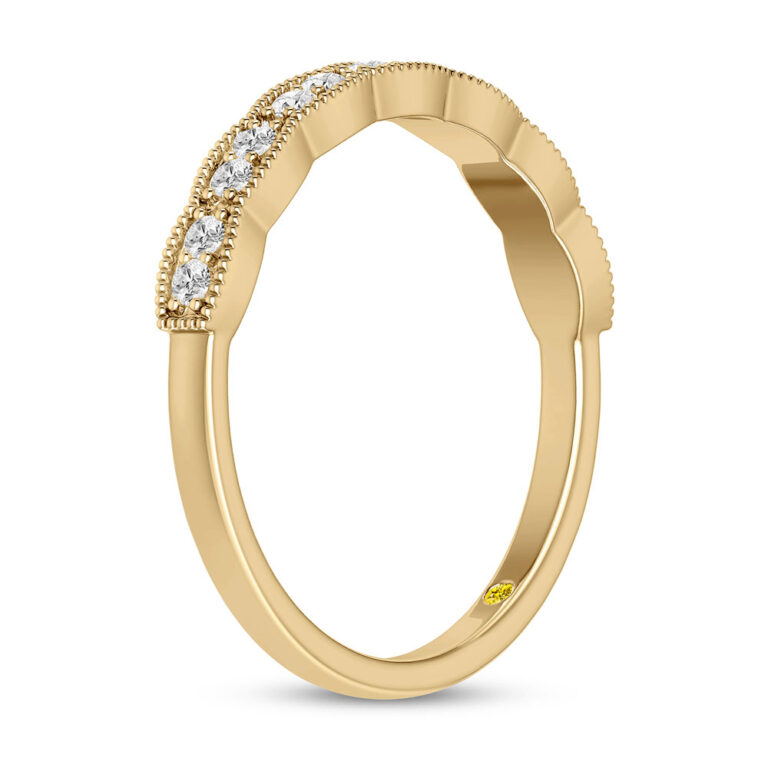
| Vintage Style Engagement Rings / Halo | Notched / Pavé Bands | Accommodates wider center settings safely. |
| Thick / Wide Band | Matched Wide Band | Displaces skin evenly; creates visual balance. |
Conclusion
Knowing how to match your wedding band to your engagement ring requires both artistic vision and structural planning. At La Joya Jewelry, we engineer every bridal set to last a lifetime.
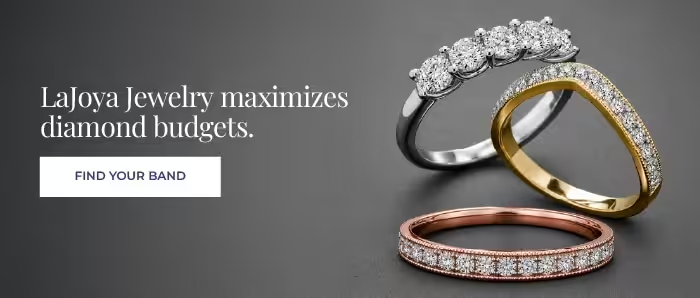
By utilizing solid gold and premium lab-grown diamonds, you are guaranteed uncompromising quality and an intelligent investment for your future when you browse La Joya Jewelry’s diamond bridal sets.